Appearance on Sampo TV YouTube Channel
With his term as Governor of the Financial Supervisory Service set to expire in early June, Lee Bokhyun dismissed speculation about joining the Democratic Party, stating, "I will not enter politics, but even if I do, it would be within the conservative sphere." He also argued that if the conservatives (People Power Party) lose sight of the value of expanding directors' fiduciary duties to shareholders, as proposed in the Commercial Act amendment, they will not be able to win in the election phase.
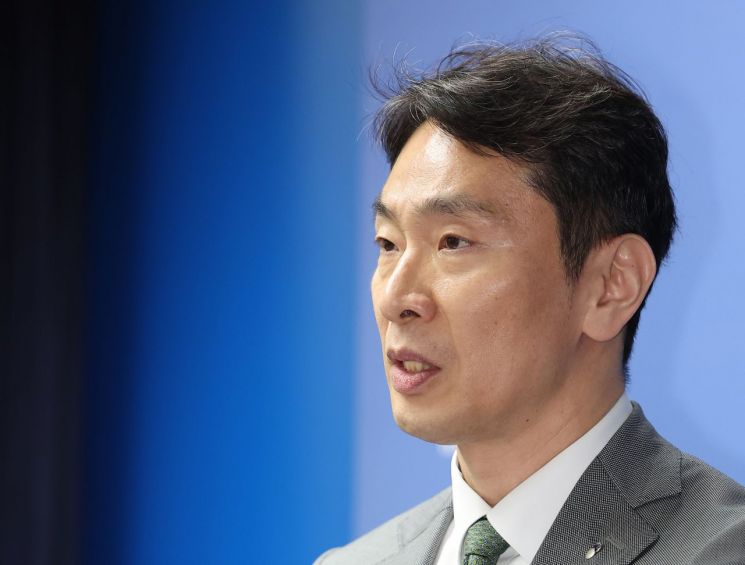
"That will not happen" - Lee dismisses speculation about joining the Democratic Party
Appearing on Sampo TV on the 27th, Lee responded to some market speculation that he might side with the Democratic Party by saying, "I am a conservative and a market-oriented person," and added, "There is no chance I would join the Democratic Party."
He continued, "If I intended to enter politics, wouldn't I have run last year? The current situation is much worse, so it doesn't make sense to suddenly decide to enter politics now. I also don't think I am mentally prepared to make such a personal sacrifice." He added, "I'm still young and have served in public office for 25 years, so I think it would be better to pursue other activities. I have said before that I would move to the private sector, meaning I do not intend to enter politics."
In particular, Lee gave a candid assessment that the People Power Party may find it difficult to win in the upcoming June presidential election if it opposes the Commercial Act amendment, which centers on shareholder protection. Previously, regarding the amendment, which passed the National Assembly led by the Democratic Party, Lee publicly opposed the government’s veto and declared he would stake his position on the line.
On this day as well, when asked whether it was unusual for the FSS Governor to risk his position over the Commercial Act amendment, Lee said, "Currently, if a company does not suffer losses, directors are not held responsible even if shareholders lose everything. This is why a legal amendment to protect shareholders is necessary." He argued, "Labeling those who advocate for amending the Commercial Act as unconditional reformists, or those who call for changes to the Capital Markets Act as anti-business, is the wrong approach. The claim by opponents that there is no fiduciary duty in the United States is a harmful lie."
He also pointed out that the conservative bloc has lost the conservative value of 'protecting shareholder value.' Lee said, "With so many people investing in stocks, advocating for fair market rules aligns with conservative values. In that sense, if conservatives lose sight of this value, they cannot win in the election phase."
However, regarding the Democratic Party’s announcement that it would push for a 'stronger' version of the Commercial Act amendment after failing to pass it again in the National Assembly, Lee expressed concerns about the potential for excessive criminal penalties. He said, "The opposition party is pushing for a spicier version, making political compromise impossible. We need to create a rational discourse and address how to mitigate criminal penalties and reduce side effects."
"Hanwha Aero, tightening the hat string under the biggest plum tree" - criticism
Regarding Hanwha Aerospace’s rights offering, for which he made two correction requests, Lee offered pointed criticism: "You shouldn't intentionally tie your hat string under a plum tree, but they did it under the biggest tree." He continued, "3.6 trillion won is the largest rights offering since the founding of Korea. Whether it is necessary or not is something that needs to be explained to shareholders, but just before this, 1.3 trillion won was sent elsewhere." He added, "From the perspective of the FSS, we have the right to ask why they tied the hat string under the plum tree." He further clarified, "I don't know if this is related to succession issues. However, what we are asking for in the securities registration statement is enough information for shareholders to make their own judgments."
Regarding criticism that the process of clearing up real estate project financing (PF) is slow, Lee said, "Of the total, 23 trillion won, or 10%, is toxic PF, and by the end of June, all of this will be cleared, leaving about 10 to 11 trillion won." He explained that there has been meaningful progress amid repeated concerns about a crisis.
Lee also partially acknowledged criticism that market intervention in response to surging household loans was excessive, but explained, "If we had left it alone, the monthly increase would have exceeded 10 trillion won, surpassing 200% of the annual target." He stated, "One of the macro risks cited for Korea is the excessively high household debt ratio, which can create financial risks and interest rate burdens, suppressing aggregate demand and hindering growth." He added that the financial authorities' goal is to manage household debt, clarifying that it is not possible to control the price of specific real estate properties through household debt measures.
© The Asia Business Daily(www.asiae.co.kr). All rights reserved.

















