With his term set to expire in early June, Financial Supervisory Service Governor Lee Bokhyun dismissed speculation about his future, stating, "I will not enter politics, but even if I do, it will be within the conservative sphere," making it clear that he has no intention of joining the Democratic Party of Korea.
Appearing on SamproTV on the 27th, Governor Lee addressed market speculation that he could align with the Democratic Party, saying, "I am a conservative and a market-oriented person," and added, "There is no chance that I would join the Democratic Party."
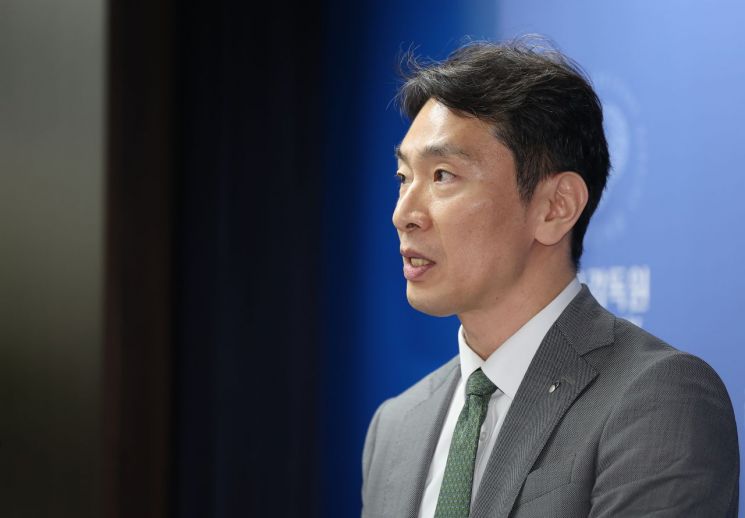
He went on to say, "If I were going to enter politics, wouldn't I have run last year? The current situation is much worse, so it doesn't make sense for me to suddenly decide to enter politics now. Frankly, I don't think I am mentally prepared for that level of self-sacrifice." He continued, "I am still young and have served in public office for 25 years, so I think it would be better to pursue other activities. I have said before that I would move to the private sector as a way of making it clear that I do not intend to enter politics."
Governor Lee also offered a candid assessment of the upcoming June presidential election, warning that the conservative side may find it difficult to win if it does not present fair rules for the capital market. Previously, he had publicly opposed the government's exercise of veto power against the Commercial Act amendment bill, which was passed by the National Assembly under the leadership of the Democratic Party, stating that he would "stake his position" on the matter.
On this day as well, when asked whether it was unusual for the FSS governor to risk his position over the Commercial Act amendment, he responded, "Currently, if a company does not suffer losses, directors are not held accountable even if shareholders lose everything. That is why legal reform to protect shareholders is necessary." He argued that "labeling everyone who supports amending the Commercial Act as a reformist, or everyone who supports amending the Capital Markets Act as anti-business, is the wrong approach," and countered, "The claim that there is no fiduciary duty in the United States, as some opponents argue, is a harmful lie."
However, he expressed concern about the potential for excessive criminal penalties, which has been cited as a side effect of the "stronger Commercial Act amendment" that the Democratic Party has repeatedly announced. He said, "The essence of the legal amendment is how to incorporate the principle of shareholder protection," and added, "The opposition party has proposed a 'spicy' version, which has made political compromise impossible." He further stated, "We need to create a rational discourse and address how to mitigate criminal penalties and other side effects," emphasizing that politicians must also clarify the criminal liability risks that companies are concerned about.
© The Asia Business Daily(www.asiae.co.kr). All rights reserved.

















