Concerns Rise Over Supply Chains in Secondary Batteries, Automotive, Electronics, and Petrochemicals
"U.S. Trade Sanctions Have Greater Negative Impact Than Chinese Export Controls"
52% of Domestic Export Companies Say "No Countermeasures Established"
As the trade war between the United States and China intensifies, more than half of domestic export companies expect supply chain procurement conditions to worsen this year compared to last year. In particular, companies expressed concern that U.S. trade sanctions would have a greater negative impact on supply chain crises than China's raw material export controls.
The Korea International Trade Association’s Institute for International Trade and Commerce released a report on April 27 titled "Trump’s Second Term: Perceptions of Supply Chain Risks and Implications for Korean Companies due to U.S. and Chinese Export Controls." The report contains the results of a survey on supply chain crises conducted from February 24 to March 10 among 740 domestic manufacturing companies with export performance of over $500,000 as of last year.
According to the survey results, 53.4% of responding companies expect global supply chain procurement conditions to "worsen" compared to last year after the start of Trump’s second term. Meanwhile, 41.4% said conditions would be "similar to last year," and only 5.5% expected them to "improve."
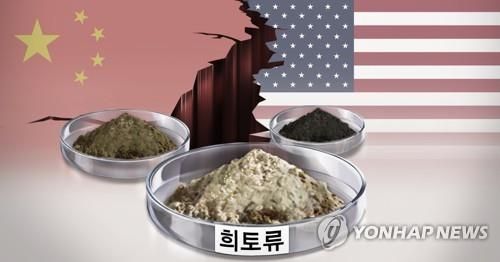 As the trade war between the United States and China intensifies, more than half of domestic export companies expect supply chain procurement conditions to worsen this year compared to last year. Yonhap News
By company size, the proportion of mid-sized companies (55.1%) and small companies (53.5%) expecting worsening conditions was about 1.5 times higher than that of large companies (36.8%).
By industry, the highest level of supply chain concern was seen in furniture and interior (76.9%), followed by textiles and apparel (65.4%), secondary batteries (63.9%), automobiles and auto parts (60.7%), home appliances and smart devices (59.4%), chemicals and petrochemicals (56.4%), machinery and equipment (56.2%), steel and metals (55.8%), and electric and hydrogen vehicles (54.5%).
Among export companies, 79.6% said the supply chain crisis caused by U.S. trade sanctions was "serious" (30.9% very serious, 48.8% somewhat serious). In contrast, only 42.4% said the supply chain crisis caused by China’s raw material export controls was "serious" (11.8% very serious, 30.7% somewhat serious). This indicates that companies perceive "U.S.-origin risks" as more serious than "China-origin risks."
Regarding whether they have established response plans for these supply chain crises, more than half (51.8%) of export companies said they "have not established response plans or have no countermeasures." Only 17% of companies said they were utilizing government supply chain support policies. As many as 83% of respondents said they "do not utilize" such policies.
The reasons given included: "Government support is needed, but we do not know what support measures are available" (48.2%), and "Government support is needed, but the necessary support measures do not exist" (28.7%).
Among respondents, 48.6% evaluated the government’s supply chain support policies as "insufficient." The most needed government support measures were: "expansion of financial support" (60.0%), "support for diversification of suppliers" (42.3%), "easing of related industry regulations" (29.2%), and "support for research and development (R&D)" (23.6%).
© The Asia Business Daily(www.asiae.co.kr). All rights reserved.

















