Gangnam District Leads Nationwide in Land Price Growth
Upward Trend Continues, but Pace Slows Compared to Previous Quarter
In the first quarter of this year, Gangnam-gu in Seoul recorded the largest increase in land prices among all basic local governments nationwide. Although the pace has slowed somewhat, land prices across the country continued to show a steady upward trend.
According to the first-quarter land price fluctuation data compiled by the Ministry of Land, Infrastructure and Transport and Korea Real Estate Board, nationwide land prices rose by 0.50% in the first quarter of this year. The increase was slightly lower than the 0.56% recorded in the fourth quarter of last year, but was a slight rise compared to the 0.43% seen in the first quarter of last year. On a quarterly basis, land prices have continued to rise steadily since recording a decline in the first quarter of 2023.
The Seoul metropolitan area posted a 0.66% increase, while non-metropolitan regions recorded 0.22%. Both figures were slightly lower than the growth rates in the fourth quarter of last year. By region, Seoul saw an increase of 0.80% and Gyeonggi Province rose by 0.57%, both surpassing the national average. All other metropolitan governments, including Incheon, recorded rates below the national average. Jeju was the only metropolitan government to see a decline in land prices.
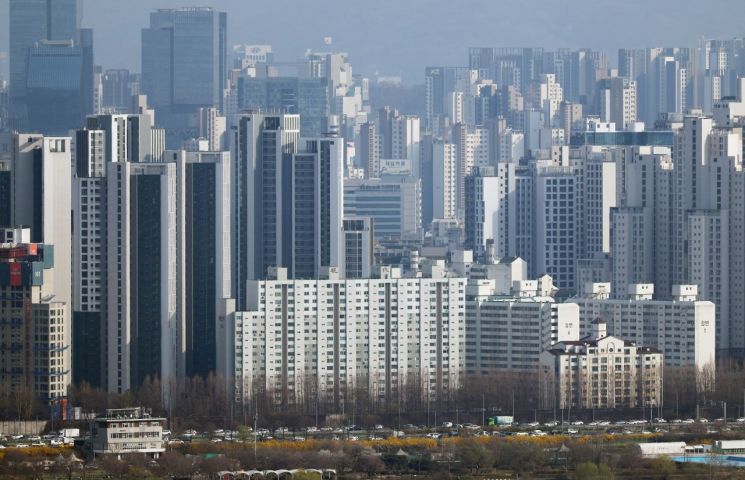 Apartments in Seocho-gu and Gangnam-gu viewed from near the Han River in Seoul. Photo by Yonhap News
At the city, county, and district level, Gangnam-gu in Seoul saw a 1.30% increase. Yongin Cheoin-gu, which ranked first in the nation for land price growth for two consecutive years on an annual basis, followed with a 1.26% rise, and Seocho-gu in Seoul came next at 1.16%. Gangnam-gu in Seoul has continued to show a pronounced upward trend in land prices since the second half of last year. In Yongin, land prices rose significantly due to new semiconductor cluster developments and land development projects.
Out of 252 city, county, and district units nationwide, 51 recorded increases above the national average. The increases were mainly concentrated in the Seoul metropolitan area, while regions with declining populations saw relatively slower growth. On a monthly basis, the land price growth rate last month was 0.008%, marking the 25th consecutive month of increase since the upward turn in March 2023.
The total number of land transactions (including land with attached buildings) in the first quarter was 433,000 parcels (285.8 square kilometers). This figure was slightly lower than both the same period last year and the previous quarter. By region, five metropolitan and provincial governments, including Gwangju and Sejong, saw increases, while the remaining 12 experienced declines.
© The Asia Business Daily(www.asiae.co.kr). All rights reserved.

















