Direct and Indirect Impact of U.S. Tariffs...
Korean Companies Capable of Addressing Issues Through Supply Chain Diversification
Growth Forecast Revision Requires Monitoring Trade Conflicts and Fiscal Policy Responses First
Lee Changyong, Governor of the Bank of Korea, stated that "recent trade conflicts are certainly a major headwind for the Korean economy, which is heavily export-oriented."
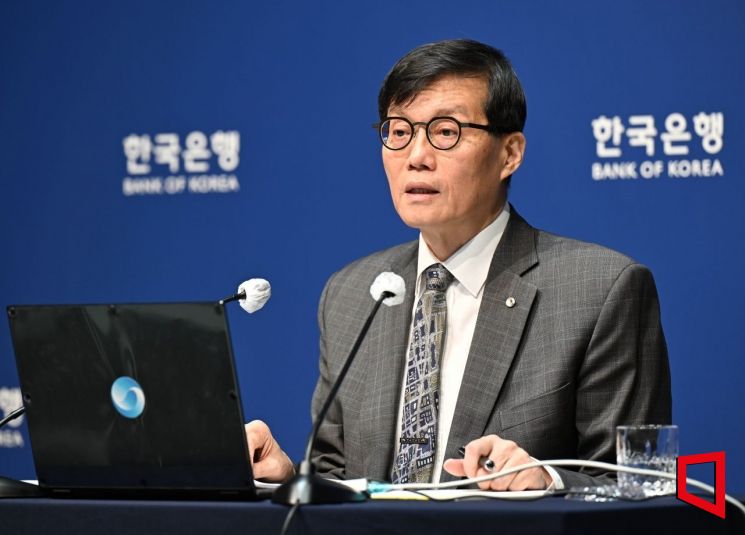
In an interview with CNBC in the United States on April 24, Governor Lee commented on the impact of U.S. tariffs on Korea. He said, "We will be directly affected by U.S. tariffs, but we will also be indirectly affected by U.S. tariffs imposed on other countries," citing examples such as semiconductor production in Vietnam, automobile and electronics production in Mexico, and Korean battery production in Canada.
He emphasized that Korean companies have made efforts to diversify supply chains and therefore have some capacity to address tariff issues. Governor Lee stated, "Over the past five years, we have diversified our supply chains, and especially in response to China's growing competitiveness and political issues, we have reduced our dependence on China. Since our companies have prepared quickly compared to competitors from other countries, even before the onset of trade conflicts, they should be able to adapt." He also projected that the recent imposition of tariffs would accelerate supply chain diversification even further.
Regarding the possible downward revision of this year's growth forecast, he said, "Economic and trade ministers will have talks with the United States tomorrow, so we will be able to consider this after that," adding, "It is difficult to anticipate the Bank of Korea's outlook at this time, as we need to see whether trade conflicts will intensify or ease, and how we might respond through fiscal policy."
© The Asia Business Daily(www.asiae.co.kr). All rights reserved.
![Clutching a Stolen Dior Bag, Saying "I Hate Being Poor but Real"... The Grotesque Con of a "Human Knockoff" [Slate]](https://cwcontent.asiae.co.kr/asiaresize/183/2026021902243444107_1771435474.jpg)
















