Trump Hints at Possible Easing of Auto Parts Tariffs
U.S. Automotive and Parts Industries Urge Government to Defer Tariffs
Industry Breathes Sigh of Relief... Hopes for Further Easing Measures
S&P: "U.S. Production Could Drop by 940,000 Units This Year If Tariffs Imposed"
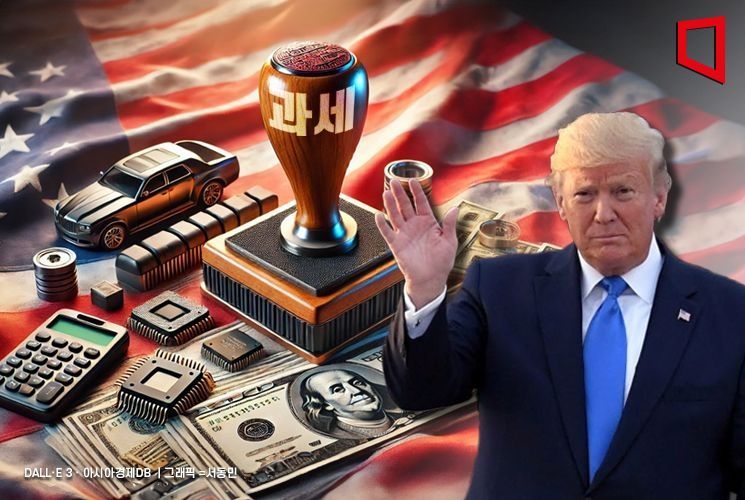
With U.S. President Donald Trump signaling the possibility of exempting certain auto parts from tariffs, both domestic and international automotive industries are expressing relief. This easing of tariffs is expected to significantly impact not only the production and exports of the U.S. Big Three automakers but also those of domestic automakers. The industry is also hopeful for additional easing measures.
According to local media outlets such as the Financial Times (TF) on the 23rd (local time), President Trump is considering plans to exempt certain auto parts from tariffs to support domestic companies. Specifically, auto parts would be excluded from the 20% tariff imposed on Chinese products under the pretext of the fentanyl issue, as well as from the 25% tariffs on steel and aluminum.
The automotive industry views this move by the Trump administration as a measure to support the U.S. auto industry. If tariffs are imposed, not only foreign automakers but also the 6.8 million vehicles produced by Detroit's Big Three?GM, Ford, and Stellantis?would be affected.
The Center for Automotive Research, a U.S. private research institute, estimated that the additional costs imposed on the entire U.S. auto industry due to the Trump administration's tariffs would amount to $107.7 billion, with $41.9 billion?about 40%?borne by the Detroit Three.
Accordingly, the U.S. Big Three automakers have actively conveyed their requests to the government to defer the imposition of tariffs. On the 21st, six organizations representing the U.S. automakers and parts industry also sent a letter to the U.S. Department of the Treasury and the Department of Commerce, requesting a relaxation of the tariff measures.
The organizations appealed, "Most companies have not secured the capital to cope with the disruption caused by sudden tariffs," adding, "Many companies will face production shutdowns, layoffs, and bankruptcy." They also stated, "While we agree with restructuring the supply chain to focus on the U.S., it is impossible to reorganize the global supply chain in just one day or even within a few months."
The Trump administration aimed to increase domestic auto production through the imposition of tariffs. However, experts predict that, contrary to this intention, U.S. production volumes will actually decrease this year and next year. Disruptions in global supply chains could lead to reduced auto production not only in the U.S. but also in South Korea and Japan.
According to a report released on the 24th by market research firm S&P Global Mobility analyzing the impact of the Trump administration's tariffs, this year's passenger car production in North America is expected to decrease by 940,400 units compared to last year. Next year, a further decrease of 778,000 units is projected. These declines are attributed to production adjustments due to tariffs and reduced demand resulting from higher consumer prices.
The firm also projected that, in the case of South Korea, production would decrease by about 112,000 units this year and about 203,000 units next year. For Japan, production is expected to decrease by 300,000 units each year, indicating a relatively larger decline.
An industry official stated, "By easing tariffs on auto parts, we have at least avoided the worst-case scenario for now," adding, "Indiscriminate imposition of tariffs can worsen profitability not only for automakers but also for parts suppliers. For small parts suppliers, this is a matter of survival."
© The Asia Business Daily(www.asiae.co.kr). All rights reserved.

















