Installation of Long-Duration ESS Capable of Storing Energy for Over Four Hours
Grid Stabilization Expected in Jeju with High Levels of Renewable Generation
LS Electric has broken ground on an ESS (Energy Storage System) construction project aimed at stabilizing the power grid in Jeju, a region facing severe oversupply issues due to the expansion of renewable energy generation such as solar and wind power.
LS Electric announced on the 24th that it held a groundbreaking ceremony on the 23rd for a 10MW PCS (Power Conversion System) battery 40MWh ESS construction project in Hallim-eup, Jeju City. The ceremony was attended by about 50 people, including local residents of Hallim-eup where the ESS will be installed, as well as representatives from Korea Power Exchange, Korea Electric Power Corporation, IGIS Asset Management, Kunhwa, SPV, and EcoGrid Solution.
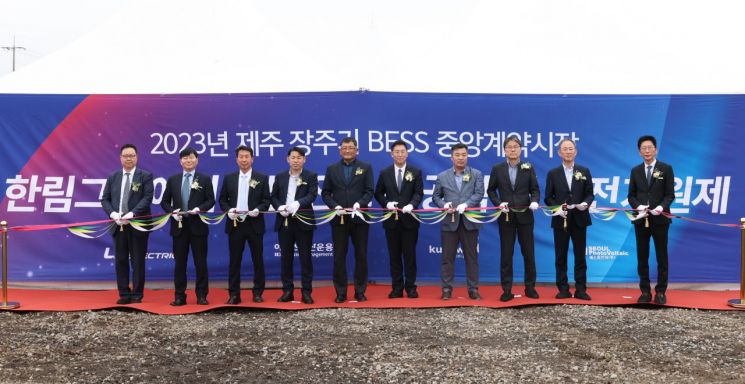 LS Electric announced on the 24th that it held a groundbreaking ceremony on the 23rd for a 10MW PCS (Power Conversion System) battery 40MWh ESS construction project in Hallim-eup, Jeju City. LS Electric
By building a large-scale, long-duration ESS, the project is expected to contribute to the stabilization of the power grid in Jeju, where there is a high volume of renewable energy generation, by storing excess electricity and supplying it in a timely manner when demand surges.
In November 2023, LS Electric formed a consortium with IGIS Asset Management, Kunhwa, and SPV, and was selected as the project operator for the Hallim-eup area in the 'Jeju Phase 1 Long-Duration BESS (Battery Energy Storage System) Construction Project.' The project is scheduled to be completed and begin commercial operation in November 2025. LS Electric is responsible for EPC (engineering, procurement, and construction), and will also handle operation and maintenance (O&M) for the next 15 years.
An ESS is a system that temporarily stores generated electricity for use when supply is insufficient. ESS can be categorized as long-duration or short-duration depending on the storage period. Long-duration ESS typically allows for storage and discharge for more than four hours, making it effective for alleviating renewable energy output restrictions and stabilizing the grid. Short-duration ESS is mainly used for frequency regulation of volatile renewable energy sources such as solar and wind power.
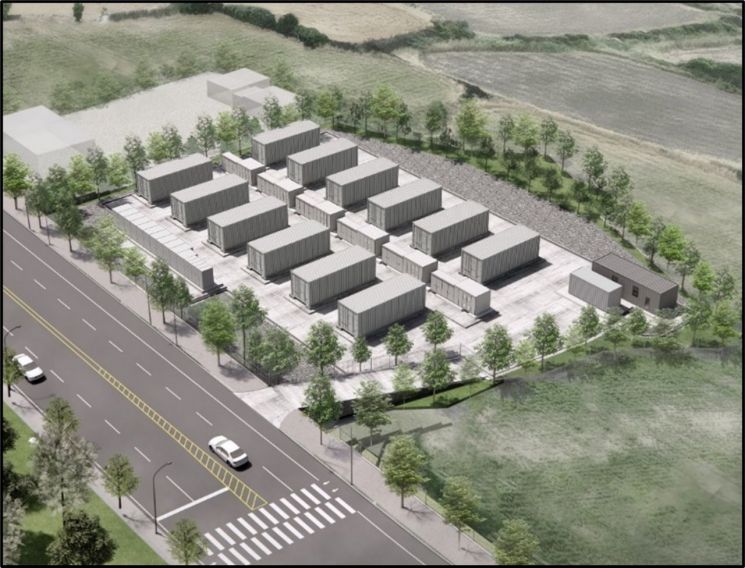
Recently, as renewable energy generation has increased significantly, the importance of long-duration ESS?which can store surplus electricity produced during the day and transmit it during periods of high demand?has grown. Jeju, where solar and wind power generation is prevalent, is a prime example. In Jeju, electricity generated from renewables often exceeds consumption, leading to frequent output control measures.
Son Changhee, head of the Smart Energy Division at LS Electric, stated, "We will actively communicate with local residents as well as stakeholders such as Korea Power Exchange and Korea Electric Power Corporation to complete the project and do our utmost to stabilize the grid in Jeju. Starting with this project, we aim to achieve tangible results in large-scale ESS construction projects in Korea, making the smart energy business a key future growth engine for LS Electric."
© The Asia Business Daily(www.asiae.co.kr). All rights reserved.


















