"Significant Impact Expected for OEMs Relying on DDR4"
"Memory Manufacturers Accelerate Product Transition"
Major foreign media outlets reported on April 23 that Samsung Electronics is gradually discontinuing the production of the older DDR4 DRAM.
Taiwanese news outlets, including Taiwan Business Times, reported that Samsung has halted production of certain LPDDR4 8Gb items on its 10nm-class (1z) process, and that Micron has also notified customers of its intention to discontinue the supply of existing DDR4 memory modules for servers.
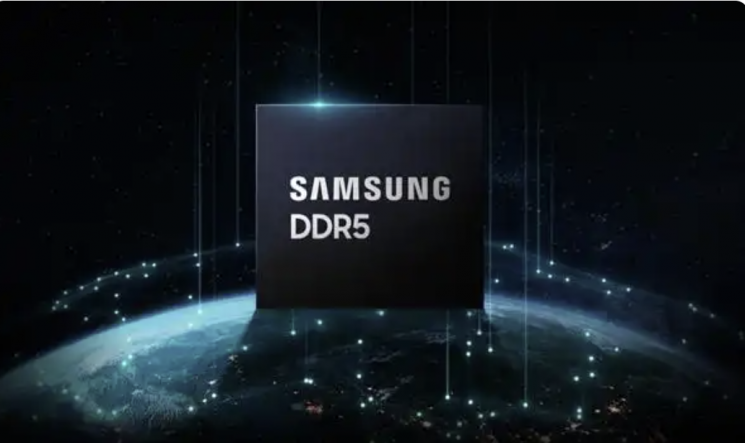 Samsung Electronics will gradually discontinue the production of the older DDR4 DRAM. China Kuaikezi
DDR4 accounted for about 30% of Samsung Electronics' memory sales last year. LPDDR is a low-power DRAM mainly used in mobile devices. In particular, the older LPDDR4 product is primarily installed in low-cost smartphones in China.
Currently, Samsung Electronics is reportedly converting its existing DRAM production lines to produce higher-end products such as DDR5.
On this day, Chinese local media outlet Kuaikezi, citing Taiwanese news, reported, "SK hynix is also reducing its DDR4 production capacity, lowering its production share to 20%," and added, "This reflects an industry-wide trend in which memory manufacturers are accelerating product transitions and investing more resources in high-end products such as high-bandwidth memory (HBM) and DDR5."
The report continued, "Samsung has notified customers that the order deadline for 8GB LPDDR4 products is this coming June, with the final shipment scheduled for December 10," and added, "Some 8GB and 16GB DDR4 SODIMM and UDIMM modules are also expected to be gradually discontinued."
Experts believe that the sharp decrease in supply will have a significant impact on OEMs that rely on DDR4. Some have also suggested that this is a result of the tariffs triggered by President Donald Trump.
Chinese market research firm TrendForce stated, "Overall market uncertainty remains high and the outlook is still unclear," adding, "Due to the effects of mutual tariffs imposed by the United States, both suppliers and buyers appear to be adjusting their strategies to cope with policy uncertainty."
© The Asia Business Daily(www.asiae.co.kr). All rights reserved.

















