Expansion of Mandatory Nutrition Labeling to Over 30 Food Categories
Korean Sticker Labeling Now Permitted for Export Food Products
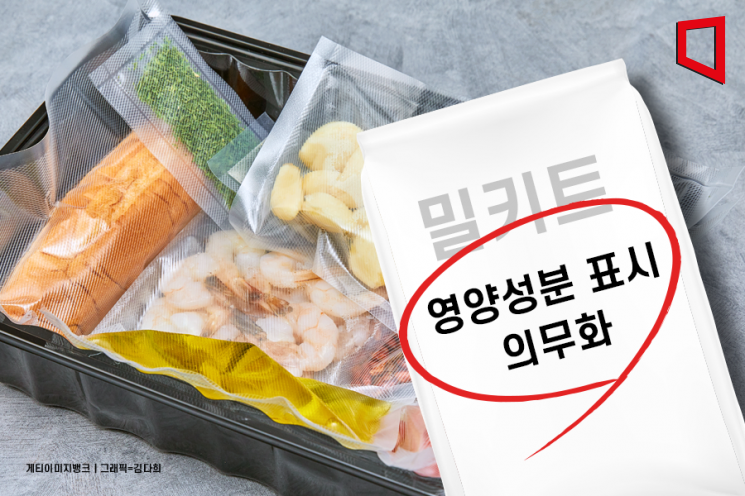
Nutritional information labeling will become mandatory for "meal kits" (ready-to-cook ingredient sets) that are sold with pre-prepared ingredients just before cooking. This measure aims to enhance consumers' right to know by indicating the calorie, carbohydrate, and sodium content of meal kit products, and to reduce confusion in the industry.
According to the distribution industry on April 24, the Ministry of Food and Drug Safety has announced a revision of the "Food Labeling Standards" that includes these changes, and the new regulations will take effect from January 1 next year.
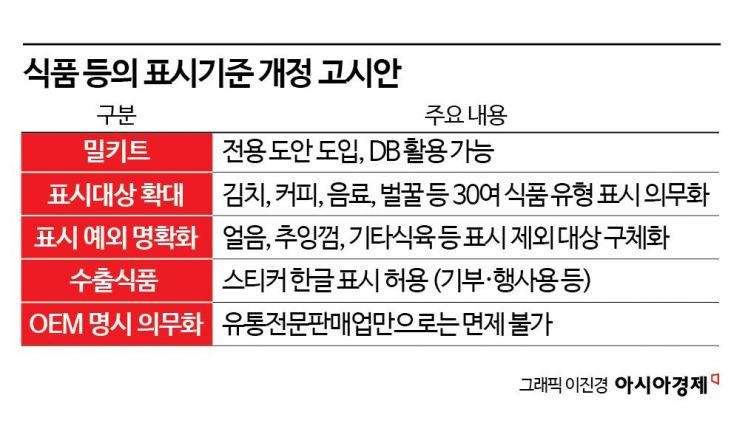
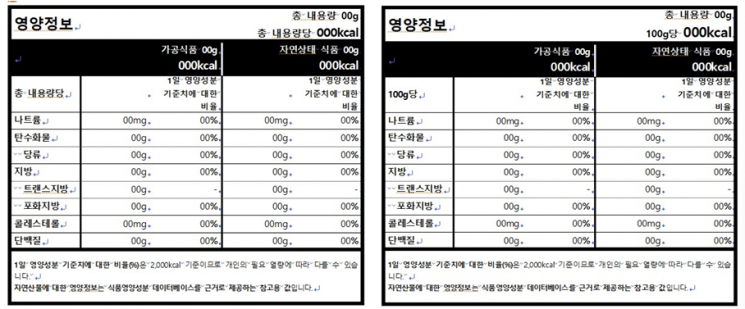
The most notable change in this revision is the mandatory nutritional labeling for meal kits. Until now, it was unclear how to indicate the nutritional content for meal kits, as they contain a mix of raw ingredients and processed foods. To address this issue, the Ministry of Food and Drug Safety has prepared a dedicated nutritional labeling template for meal kits. If the kit includes uncooked raw ingredients, companies can use values provided by the Ministry's nutritional database for labeling. This is expected to be highly effective, as both large corporations and small food companies can provide nutritional information to consumers without undergoing complicated analysis processes.
More than 30 additional food categories, including snacks, kimchi products, honey products, seasoned seaweed, beverages, and coffee products, have been added to the list of foods required to display nutritional information. Previously, these foods either only displayed calories or, in some cases, were exempt from nutritional labeling altogether. Even products known as health foods, such as "honey" or "royal jelly," must now indicate calories and the five key nutrients (carbohydrates, protein, fat, sodium, and sugars).
Certain products with almost no calories or little benefit in providing nutritional information have been classified as exceptions. Ice products, chewing gum, and unprocessed eggs (other eggs) are excluded from the labeling requirement.
The standards for using food type names have also been revised. For "processed starch products," the term "starch" must be used in the product name, but was previously prohibited in the food type labeling. To prevent confusion, the new standard clarifies that "starch" should be used in the product name but not in the type name.
For kimchi products, only "baechu kimchi" (napa cabbage kimchi) is subject to calorie labeling, while yeolmu kimchi (young radish kimchi) and gat kimchi (mustard leaf kimchi) are exempt. This measure takes into account differences in nutritional content and actual consumption amounts.
Until now, if export food products printed only in foreign languages were distributed domestically, they often had to be discarded due to the inability to provide Korean labeling. With this revision, the Ministry of Food and Drug Safety will allow Korean labeling in the form of stickers for products not intended for direct sale, such as those donated, used for events, or supplied to cafeterias. This measure aims to reduce food waste and prevent resource wastage, and is also expected to significantly ease inventory burdens for small food companies.
Additionally, foods produced under the Original Equipment Manufacturer (OEM) system must now be clearly labeled as "OEM products." OEM refers to a system where a manufacturer produces goods that are then sold under a distributor's brand. For example, when a large supermarket commissions a supplier to produce its private brand (PB) products and sells them under the supermarket's brand, this is considered OEM. Until now, it was unclear whether such products needed to display only the distributor's name or also the manufacturer's name. The new revision clearly stipulates that the phrase "OEM product" must be indicated, clarifying the responsibilities between manufacturers and distributors.
© The Asia Business Daily(www.asiae.co.kr). All rights reserved.



















