Examples of Logistics Processes Using AI and Machine Learning
Demand Forecasting and Inventory Management Enable "Rocket Delivery"
Small Business Owners Can Also Use Logistics Infrastructure Through Rocket Growth
Goal to Establish Nationwide "Cousegwon" Based on Logistics Innovation
Coupang announced on April 23 that it is participating in the "2025 International Logistics Industry Expo," hosted by the Ministry of Land, Infrastructure and Transport, to showcase Coupang's logistics innovations powered by artificial intelligence (AI).
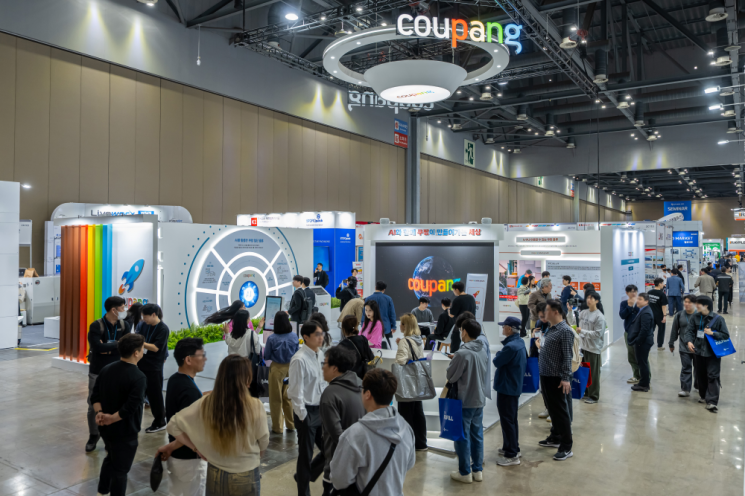 Visitors attending the 2025 Logistics Industry Expo, held until the 25th at Kintex Exhibition Hall 1 in Ilsan, are exploring the Coupang booth. Photo by Coupang
This event, held until the 25th at Kintex Exhibition Hall 1 in Ilsan, is the largest logistics industry exhibition in Korea, offering a glimpse into the future technologies, trends, and outlook of the logistics sector. More than 150 logistics companies are participating, with over 750 booths installed.
During the event, Coupang is operating a booth under the theme "A World Created by Coupang with AI." The company is explaining how it has revolutionized its entire logistics system using AI and machine learning technologies, and is introducing the positive impact of these innovations on society as a whole, including consumers, sellers, and workers.
Coupang's AI and machine learning predict demand for tens of millions of products in advance to optimize inventory management. The system moves products that are expected to be purchased by customers to nearby logistics centers before orders are placed, establishing a foundation for same-day and next-day delivery.
AI and automation technologies also play a central role in improving the operational efficiency of logistics centers. Coupang is introducing advanced logistics processes such as "random stow," which guides optimal shelf placement and worker movement when goods are received; "AGV (automated guided vehicles)," which bring shelves with products to workers to make their jobs easier; and "sorting robots," which automatically sort products by delivery destination.
In the delivery stage, AI recommends not only the optimal loading positions for products inside delivery vehicles but also the most efficient delivery routes, enabling fast and accurate deliveries. Thanks to these technologies, a safer and smarter working environment has been created for employees.
Coupang is also actively expanding its "Cousegwon" (areas eligible for Rocket Delivery) and creating local jobs by expanding logistics infrastructure that incorporates advanced technologies such as AI. Currently, Rocket Delivery service is available in 182 out of 260 cities, counties, and districts nationwide (70%), and Coupang is continuing to invest in logistics with the goal of making Rocket Delivery available across the entire country by 2027.
As a result of these investments, as of September 2024, the combined number of employees at Coupang and its logistics subsidiaries (Coupang Fulfillment Services and Coupang Logistics Services) exceeded 80,000, making it the second largest employer in Korea. In addition, through Coupang's "Rocket Growth" service, small business owners can easily utilize AI-based advanced logistics systems, and Coupang is supporting their growth by providing opportunities for overseas expansion, establishing a mutually beneficial model.
A Coupang representative stated, "Based on vast data from over a trillion transactions, we have deeply integrated AI technology into every stage of the logistics process, from order prediction to delivery completion, building an innovative logistics system." The representative added, "Logistics infrastructure based on AI and automation technologies is the key competitive edge that enables Rocket Delivery," and continued, "We will continue to do our best to usher in an era of Rocket Delivery for everyone in Korea through ongoing technological innovation."
© The Asia Business Daily(www.asiae.co.kr). All rights reserved.

















