Connecting the Beolgyo Tidal Flat, Deukryangman Bay, Boseong River, and Juam Lake as an Ecological Axis
A Leap Toward Becoming a Globally Recognized Ecological City, "Pristine Boseong"
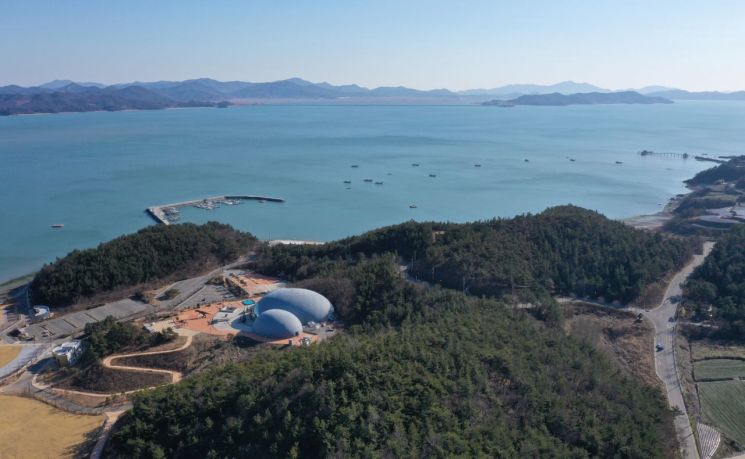
Boseong County in South Jeolla Province announced that it will officially pursue the designation of the entire county as a UNESCO Biosphere Reserve in 2026 by connecting the Beolgyo Tidal Flat, Deukryangman Bay, and the Boseong River and Juam Lake as a single ecological axis.
Biosphere Reserves are areas designated by UNESCO among regions with globally outstanding ecosystems, where local communities actively participate to achieve both biodiversity conservation and sustainable development.
Alongside World Natural Heritage Sites and Global Geoparks, Biosphere Reserves are one of UNESCO's three major nature conservation systems. They hold particular significance in that they harmoniously integrate conservation, development, and support.
Boseong County divided the entire county into three zones?Beolgyo Tidal Flat, Deukryangman Bay, and the Boseong River and Juam Lake?and conducted a comprehensive analysis of ecological environment, history and culture, and the local economy. The county also established concrete management plans for sustainable development.
The "core areas" have been designated as legally protected zones such as wetland protected areas, fishery resource protection zones, marine environment conservation areas (Ministry of Oceans and Fisheries), natural monument protection zones, water source protection areas, and wildlife protection zones.
The "buffer zones" are set as the Juam Lake waterfront area surrounding the core zones, eco-friendly agricultural production areas (including the core area of the nationally important agricultural heritage Boseong tea fields), and inland environment conservation areas. These are intended to protect the core ecosystems and promote eco-friendly use. The "transition zones" refer to areas outside the core and buffer zones, and will be utilized as spaces where the local community, businesses, and residents collectively practice sustainable development.
The county has taken thorough and step-by-step measures for the designation process. In April of last year, at a meeting of the Korean National Committee for UNESCO's Man and the Biosphere (MAB) Programme, the preliminary application was reviewed and received a positive evaluation, stating that "the area fully meets the requirements for designation as a biosphere reserve based on its diverse ecological and cultural heritage." Accordingly, the county submitted the Korean-language application in September of last year, and completed an on-site inspection and supplementary measures by the Korean National Committee for UNESCO MAB in December. Following this roadmap, the county plans to submit the final Korean and English applications to UNESCO headquarters by July 31.
The county possesses the Beolgyo Tidal Flat, which is registered as a UNESCO World Natural Heritage Site, and offers a rare example of organically connecting marine and inland ecosystems through Deukryangman Bay, the Boseong River, and Juam Lake.
In addition, the county has eco-friendly agricultural resources such as the tea fields managed as Nationally Important Agricultural Heritage No. 11, and has established a sustainable development model that encompasses ecological tourism, the local economy, and cultural heritage conservation.
Kim Cheolwoo, the county governor, stated, "If the entire Boseong County is designated as a UNESCO Biosphere Reserve following the inscription of the Beolgyo Tidal Flat as a UNESCO World Natural Heritage Site, it will become a turning point to promote the value of pristine Boseong to the world." He added, "We will not stop at protecting the ecological environment, but will work together with residents to realize a sustainable future."
© The Asia Business Daily(www.asiae.co.kr). All rights reserved.

















