Part of "Making America Healthy Again"
Full Implementation Targeted by Next Year
Robert Kennedy Jr., U.S. Secretary of Health and Human Services, will announce a policy to gradually ban the use of eight petroleum-based food colorings. These petroleum-based food colorings are currently used extensively in cereals, sports drinks, carbonated beverages, candies, and snacks in the United States, so this measure is expected to have a significant impact on the food industry.
According to the New York Times (NYT) on the 21st (local time), the Department of Health and Human Services announced that Secretary Kennedy is scheduled to unveil measures at an event in Washington, D.C. on the 22nd that will prohibit food manufacturers from using eight artificial colorings. The department described this measure as "an important step forward in the administration's efforts to make America healthy again" and stated that it will be fully implemented by 2026.
 Robert Kennedy Jr., U.S. Secretary of Health and Human Services, will announce a policy to gradually ban the use of eight petroleum-based food colorings. The photo is for illustrative purposes only and is not directly related to the article. Photo by Reuters Yonhap News
Secretary Kennedy has long argued for the removal of certain chemicals from food. During the last presidential election, he supported President Donald Trump and pledged, "If I become the head of health, I will comprehensively address the issue of artificial food colorings and ultra-processed foods." He has specifically claimed that these colorings can cause hyperactivity and other neurobehavioral issues in children.
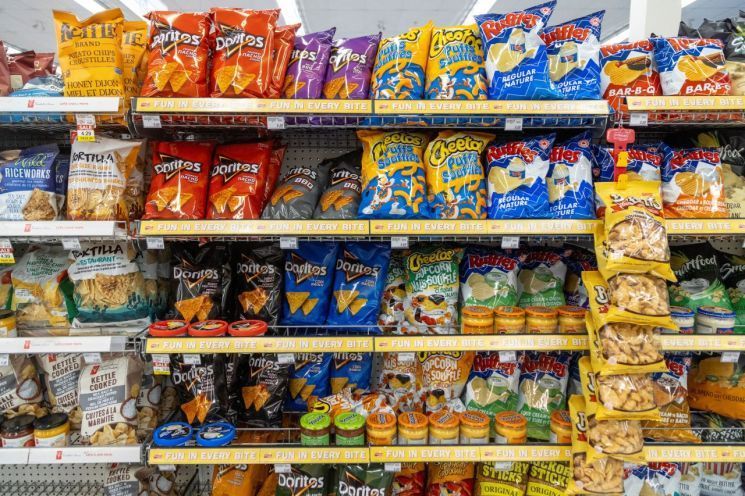
The colorings that Secretary Kennedy seeks to gradually ban, such as Blue No. 1, Red No. 40, and Yellow No. 5, are widely used in the U.S. food industry. Currently, a total of 36 colorings are approved for use in food and pharmaceuticals in the United States, of which 8 are artificial colorings. Among snacks, candies, and beverages distributed in the U.S., 90% contain at least one artificial coloring.
This measure is expected to have a significant impact on major food companies such as General Mills, Kraft Heinz, and PepsiCo. These companies argue that there is not enough scientific evidence linking the use of artificial colorings to health outcomes.
In contrast, consumer groups are welcoming the ban on artificial colorings. U.S. environmental organizations have long argued that artificial colorings have no nutritional value and actually make unhealthy foods appear more appealing, thereby harming consumers' health.
© The Asia Business Daily(www.asiae.co.kr). All rights reserved.

















