Development and Adoption of AI Design Tools by Companies
"Designers Who Communicate Well with AI Have the Advantage"
Design services utilizing artificial intelligence (AI) are rapidly proliferating. Tasks once considered the exclusive domain of experts?ranging from image generation to presentation creation and emoticon production?have now become everyday technologies accessible to anyone. Recently, both domestic and international companies have been introducing AI design tools optimized for their own brands, leading to significant changes in the overall workflow across the industry.
According to industry sources on April 23, the Korean design platform MiriCanvas recently launched a new AI design feature called 'MiriCle.' MiriCle is an integrated AI design tool that automatically generates images, presentation drafts, and written content based solely on text input. In addition to image generation, it also offers 'AI Presentation' and 'AI Writing' features, which automatically suggest layouts depending on the nature of the content.
These services, which allow anyone to easily engage in design, are also receiving explosive responses in the global market. Within just one week of launching its image generation feature in March, ChatGPT generated approximately 700 million images worldwide. The number of paid users increased by more than 4.5 million during the same quarter, surpassing a cumulative total of 20 million. With the introduction of a paid model that allows unlimited image generation, the use of these tools for content creation is spreading rapidly.
Companies are also building their own AI tools to improve the efficiency of internal design tasks. The mobile financial platform Toss developed an in-house image generation tool called 'Tosst,' enabling even non-designers to easily create results in line with the company’s brand style. By training the tool on more than 2,000 graphic assets owned by the company, any employee can produce images that reflect Toss’s brand identity.
Platforms for professional designers are also becoming more advanced. LG operates a design platform called 'Atelier' based on its large-scale multimodal AI, EXAONE. Developed in collaboration with Parsons School of Design, this platform has been trained on hundreds of millions of image-text data pairs, allowing users to generate images that reflect specific styles and contexts simply by providing textual instructions.
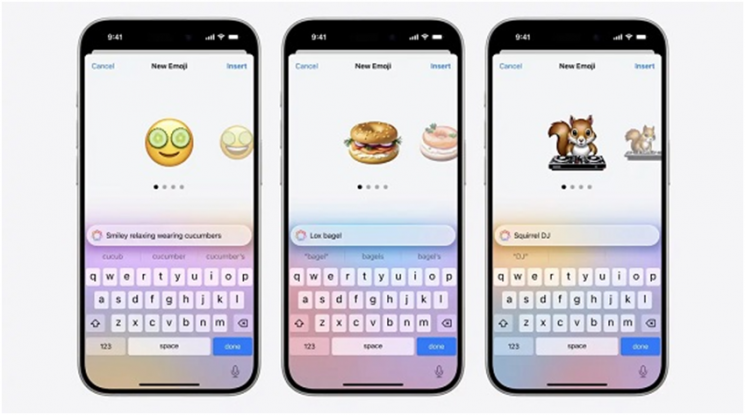
AI design technology is also being widely used in everyday life. Apple's recently introduced 'Genmoji' feature allows users to create customized emoticons based on their descriptions, enabling emoticons to convey not only simple emotions but also nuanced context for different situations.
Lee Kyungjun, a professor at Kyung Hee University's Department of Big Data Application, stated, "In the past, it was enough to be good at design, but now we are in an era where 'designers who can articulate their ideas well to AI' have an advantage. Unlike architectural design, which requires scientific precision, pure visual design is more forgiving of AI's logical errors, so it may actually be replaced by AI even more quickly."
© The Asia Business Daily(www.asiae.co.kr). All rights reserved.


















