Hosted by Lawmaker Jongshik Heo, Chaired by Aerospace Expert Heejeong Lee
Heo: "Public Healthcare Needed for Emergency and Infectious Disease Response Near Airport"
A policy forum will be held at the National Assembly to discuss strategies for establishing public healthcare infrastructure to address the emergency medical service gap in Incheon International Airport and the Yeongjong area, as well as to respond to international infectious diseases.
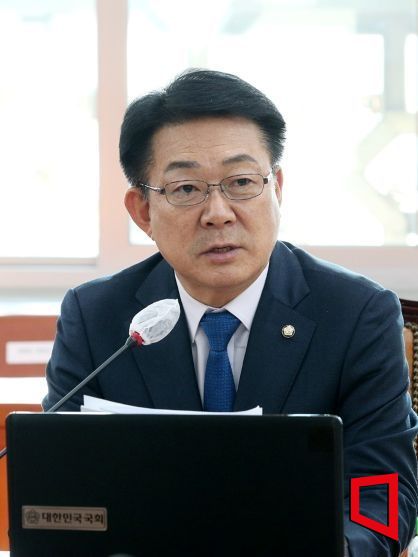
Jongshik Heo, a lawmaker from the Democratic Party of Korea representing Dong-gu and Michuhol-gu Gap in Incheon, will host a policy forum titled "Strategies for Establishing Public Healthcare around Incheon Airport" at 10 a.m. on April 23 in a small conference room at the National Assembly Library.
This forum is the fifth in the "Incheon Issues Resolution Series" planned by Heo, and has been organized to bring public attention to policy measures for the airport area's medical system in light of incidents such as the Muan Airport aircraft accident and the "emergency room transfer" case involving a pregnant woman in the Yeongjong area.
The forum will be chaired by Heejeong Lee, Deputy Director of the Aerospace Industry-Academia Convergence Institute. Presentations will be delivered by Jeongsoo Lim, Director of the Public Healthcare Division at Gachon University Gil Medical Center, and Jinwhi Baek, Director of the Regional Emergency Medical Center at Inha University Hospital.
Panelists include Seungah Cho, Director of the Public Healthcare Division at the Ministry of Health and Welfare; Minsik Kim, Senior Advisor at the law firm Gwangjang; Wonjun Cho, Chief Policy Advisor for Health and Medical Affairs at the Democratic Party of Korea; Kwangwoon Park, Chair of the Carbon Neutrality Committee for Jung, Ganghwa, and Ongjin regions of the Democratic Party of Korea; and Jonggu Kang, reporter at Yonhap News Agency.
Chandae Park, Acting Party Leader and Floor Leader of the Democratic Party of Korea, stated in a written congratulatory message, "The private sector is reluctant to establish a general hospital in Yeongjong due to profitability concerns, while the public sector is hesitant due to financial burdens. The Democratic Party will make every effort to improve the system and engage in legislative activities with a sense of responsibility."
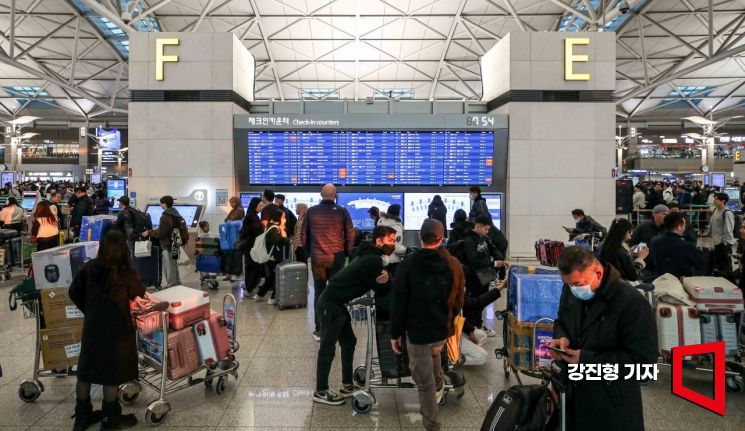
Although Incheon Airport is a world-class hub used by 106 million people annually, it is considered a medically underserved area due to the absence of a general hospital-level medical institution. In case of an emergency at the airport or in the Yeongjongdo area (which has a resident population of 120,000), patients must cross either the Incheon Bridge (21.4 km) or the Yeongjong Bridge (4.4 km) to reach the Incheon mainland. It takes approximately 30 km by car to reach Inha University Hospital in Jung-gu.
Previously, Incheon City had been working to attract a branch of a national university hospital to the Yeongjong area, but progress has been slow.
As an alternative, Heo has proposed amendments to the Incheon International Airport Corporation Act and the Infectious Disease Prevention and Control Act, providing a legal basis for the airport corporation to participate in the establishment and operation of hospitals and for the installation of a specialized infectious disease hospital with national funding.
Heo stated, "Yeongjong, as a city with a world-class airport, must establish a public healthcare system capable of responding to emergencies, trauma, and infectious diseases. The Democratic Party of Korea will continue to promote feasible policies to ensure that the construction of a general hospital in Yeongjong is included in the party's presidential campaign pledges for the Incheon region."
© The Asia Business Daily(www.asiae.co.kr). All rights reserved.


















