Maintenance Project Associations Take Years to Liquidate After Dissolution
Kim Youngho: "9 Billion Won in Liquidation Reserve Has Disappeared"
It has been revealed that nearly 1 trillion won has been spent by maintenance project associations after completing reconstruction or redevelopment projects and before their final liquidation. Some associations have been found to have been undergoing liquidation procedures for more than 10 years.
According to nationwide data on liquidated associations submitted by the Ministry of Land, Infrastructure and Transport to Kim Youngho, a member of the Democratic Party of Korea, as of January this year, a total of 327 associations across the country have been confirmed to have completed liquidation. When these associations were dissolved, their remaining funds amounted to approximately 1.388 trillion won, but this has now decreased by over 900 billion won to 486.7 billion won. A significant portion of this money should have gone to the association members, but this was not the case.
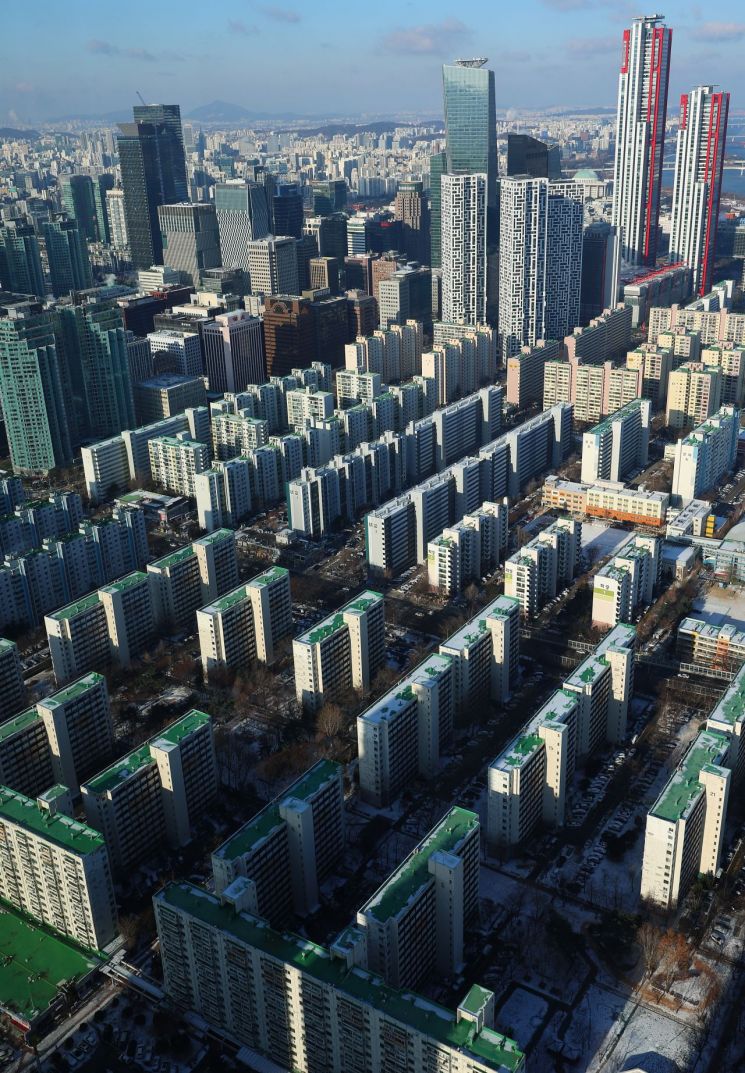 View of an apartment complex in Seoul from the 63 Art Center in Yeouido, Seoul. The photo is not directly related to the article. Photo by Yonhap News
Typically, maintenance project associations undergo a liquidation process after completing their projects and dissolving. Even after dissolution, associations must go through a final liquidation procedure to settle debts and credits or to handle lawsuits. This process is closely related to the property rights of each individual member. In the industry, there have been ongoing issues where associations, even after completing projects, do not dissolve but instead maintain their status, allowing chairpersons or employees to receive salaries or bonuses from retained funds. This has been criticized as "liquidation pensions."
The amendment to the Act on the Maintenance and Improvement of Urban Areas and Dwelling Conditions, which was proposed by Kim and came into effect last year, aims to prevent such issues by strengthening the supervisory authority of the Ministry of Land, Infrastructure and Transport and local governments. This includes requiring the submission of documents related to the liquidation process and requesting investigations. This is why it is referred to as the "liquidation pension prevention law."
Seoul has the highest number of liquidated associations, with 156 associations holding 958.3 billion won in remaining funds at the time of dissolution. After going through the liquidation process, only 283.1 billion won remains, meaning that over 70% has been spent. There was even an association that was dissolved in 2010 but has not completed liquidation for nearly 15 years.
In Busan, 46 associations started liquidation with 62.2 billion won, but only 17.1 billion won remains, meaning about 73% has been spent. Associations in Daegu had 68.4 billion won, but now only about 24.1 billion won is left. In Daegu, some associations that dissolved in 2008 are still in existence.
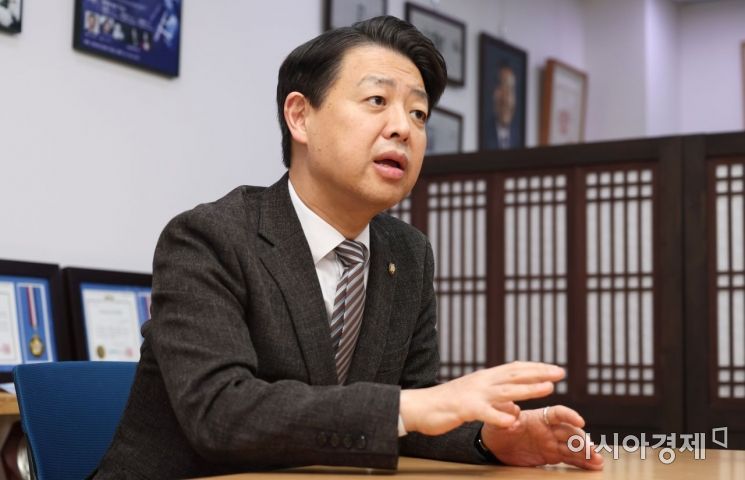
Out of the 327 liquidated associations nationwide, 60 associations currently have unconfirmed remaining funds, despite investigations by the Ministry of Land, Infrastructure and Transport and local governments. According to Kim's office, the main reason for incomplete liquidation is ongoing lawsuits, although there are various other factors. On April 18, Kim proposed an amendment to the Act on the Maintenance and Improvement of Urban Areas and Dwelling Conditions to establish a legal basis for creating an association information disclosure system, aiming to improve access to information for association members, who are stakeholders in these liquidation associations.
The amendment also includes provisions to allow association members to access related documents even after the completion of maintenance projects and to extend the document retention period from five years to ten years. Kim stated, "The government must urgently establish institutional measures to recover money unjustly spent by intentionally delaying liquidation through lawsuits and to ensure that such funds are rightfully returned to the association members."
© The Asia Business Daily(www.asiae.co.kr). All rights reserved.