Suspension of New Purchases of American Soybeans and Corn Since January 16
Preemptive Action in Response to Trump's High-Tariff Pledge on Chinese Goods
U.S. Agricultural Sector Sends Letter to Trump: "Resume Negotiations with China"
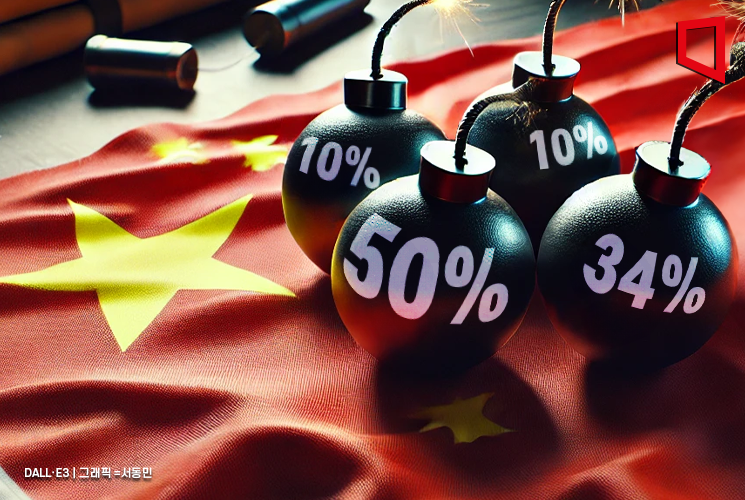
It has been confirmed that China stopped purchasing American soybeans and corn even before the inauguration of U.S. President Donald Trump, in anticipation of a trade dispute with the United States. This move is seen as a response to President Trump's high-tariff policy and is interpreted as a measure targeting the agricultural sector, which forms his core support base.
Nihon Keizai Shimbun (Nikkei) reported on the 21st, citing data from the U.S. Department of Agriculture, that Chinese companies had not signed a single contract to purchase American soybeans or corn since January 16. This means China had stopped buying American soybeans and corn even before President Trump took office on January 20.
Instead, there has been an increase in contracts with undisclosed export destinations, which are believed to be mostly third countries such as Brazil. According to the Brazilian Association of Soybean Producers, China signed contracts to purchase about 2.4 million tons of Brazilian soybeans during one week in early April. Nikkei assessed this as an unusually large volume, equivalent to about one-third of China's monthly soybean consumption.
Since President Trump’s first term, China has steadily reduced its dependence on U.S. agricultural products. As a result, the proportion of American soybeans in China’s imports fell from 40% in 2017 to 20% last year, while the share of Brazilian soybeans increased from 50% to 70% during the same period.
Beyond soybeans, China’s imports of American cotton in March and wheat in the first quarter both plummeted by 90% compared to the same period last year. Imports of American crude oil also dropped by 30% in the first quarter alone.
As the U.S.-China trade war intensifies, anxiety is growing within the American agricultural sector. In fact, during Trump’s first term, the U.S. agricultural industry suffered losses of about $26 billion during the first trade war and lost more than 10% of its market share in China.
Caleb LeGrand, president of the American Soybean Association, recently sent a letter to the Trump administration requesting the prompt resumption of negotiations with China. Nikkei reported, "American agriculture is now much weaker than it was during the first Trump administration."
However, although China appears to be taking a tough stance against the United States on the surface, it is also deeply concerned about rising import prices. Soybeans, of which China relies on imports for 80%, are used as feed for pigs, and pork is an essential ingredient on Chinese dining tables. If soybean prices rise and pork prices increase as a result, there are concerns that public sentiment in China could deteriorate.
Nikkei noted, "If the price of pork, which is indispensable on Chinese tables, rises, public dissatisfaction could be directed at the Chinese Communist Party regime," adding, "Some point out that the Tiananmen Square incident, in which the 1989 pro-democracy movement was violently suppressed, was partly triggered by rising pork prices."
© The Asia Business Daily(www.asiae.co.kr). All rights reserved.

















