Wunv Mountain offers ticket discounts based on BMI
Free admission for those classified as obese... Part of weight management efforts
Rising obesity rates in China... National-level response underway

An event at a famous tourist destination in China is drawing attention for offering discounts or free admission based on visitors' Body Mass Index (BMI). According to the Chinese media outlet Guangmingwang on April 17, Wunv Mountain in Benxi City, Liaoning Province, recently launched a promotion where ticket prices are discounted or waived depending on a visitor's BMI. BMI is calculated by dividing a person's weight (kg) by the square of their height (m) and is used internationally as an indicator of body weight status. According to this standard, a BMI of 18.5 to 23.9 is considered normal weight, 24 or higher is overweight, and 28 or higher is classified as obese.
The event, according to the media, is being held under the slogan, "Exchange your weight for a ticket; while you lose weight, we’ll pay your admission." If a tourist’s BMI falls between 24 and 27.9, they receive a 50% discount on the admission fee. If their BMI is 28 or higher, they are granted free admission.
Wunv Mountain does not have a cable car to the summit, so visitors must either take a shuttle bus or hike up. The distance from the visitor center at the foot of the mountain to the entrance is 7.8 kilometers, and walking the round trip takes about three hours, which also helps with weight loss. A representative of the tourist site told the media, "The admission fee is 70 yuan (approximately 14,000 won) per person. There are scales and height measurement devices at the entrance so visitors can measure their BMI on site. From April 7 to 15, a total of 3,480 people visited, and among them, 1,320 received discounts. Most of those who qualified for the discount were men," the representative explained.
Seven out of ten Chinese adults predicted to be overweight or obese
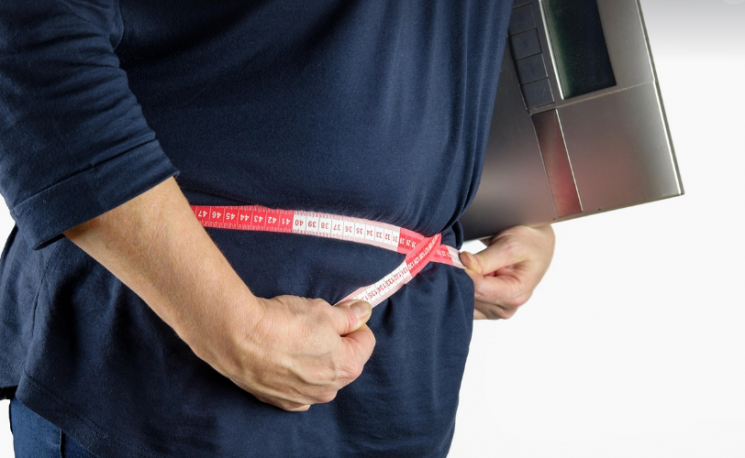
This event was planned in line with the "Year of Weight Management," an initiative promoted by China’s National Health Commission. At a press conference on livelihood issues held during the third session of the 14th National People's Congress last month, Lei Haichao, director of the National Health Commission, announced, "We are designating 2025 as the Year of Weight Management. We will continue to promote actions for weight control and actively raise public awareness."
As the obesity trend continues among Chinese people, the issue of childhood and adolescent obesity is also becoming a public concern. According to the "Weight Management Guidelines" released by the National Health Commission, if the current trend continues, the overweight and obesity rate among Chinese adults will reach 70.5% by 2030, and 31.8% among adolescents. In response, Director Lei stated, "Currently, the obesity problem among the population has become one of the most critical factors threatening a healthy and happy life. There are also reports showing a close link to the sharp rise in chronic disease incidence." The National Health Commission has announced the "Healthy China 2030 Plan," aiming to strengthen weight management among the population by 2030.
Director Lei emphasized, "Weight loss depends largely on individual willpower," but also noted, "Sufficient social support is needed, so we are preparing to promote weight management, encourage medical institutions to establish weight clinics, and provide professional counseling platforms. Weight management is not temporary but should be practiced throughout the entire life cycle, making early habit formation important. We will also strengthen education in this area," he stressed.
© The Asia Business Daily(www.asiae.co.kr). All rights reserved.


















