Survey Shows Daily Life Difficulties Persist Despite Treatment
2 in 10 Patients Diagnosed with Other Immune Diseases Concurrently
More than half of patients with inflammatory bowel diseases such as ulcerative colitis or Crohn's disease continue to experience symptoms like diarrhea, bloody stools, and cramping abdominal pain even after receiving treatment, and many struggle with daily life due to feelings of depression and anxiety.

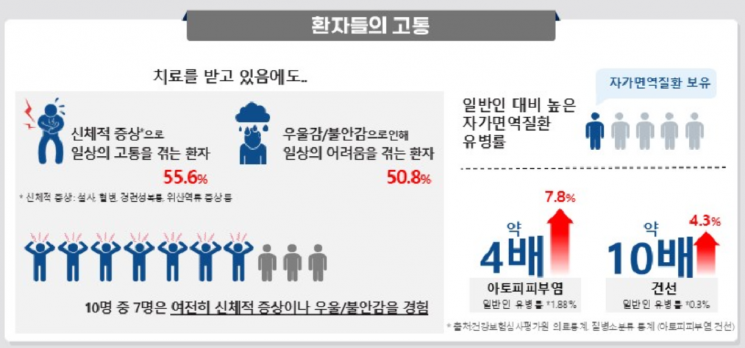
According to an online survey conducted by the UC Saranghoe (Ulcerative Colitis Patient Association) and the Crohn Family Saranghoe (Crohn's Disease Patient Association) on April 18, targeting 399 domestic patients with inflammatory bowel disease, 54.6% of respondents reported that they still suffered from physical symptoms such as bloody stools, diarrhea, and cramping abdominal pain despite ongoing treatment. Additionally, 50.9% experienced psychological issues such as anxiety or depression, and reported that these issues made daily life difficult.
Ulcerative colitis is a chronic inflammatory bowel disease of unknown cause, characterized by inflammation limited to the mucosa or submucosa of the colon. Crohn's disease is also a chronic inflammatory bowel disease that can occur anywhere along the digestive tract, from the mouth to the anus. These diseases usually develop at a young age and can persist for life, but with accurate diagnosis and consistent management, patients can maintain a quality of life and life expectancy comparable to those without the disease.
Among these patients with inflammatory bowel disease, 17.8% had also been diagnosed with another immune-related disease. The rate of atopic dermatitis diagnosis was 7.8%, which is about four times higher than the prevalence in the general population (1.88%). For psoriasis, the rate was 4.3%, more than 10 times the general prevalence (0.3%). Additionally, 3.0% had been diagnosed with rheumatoid arthritis, 2.3% with ankylosing spondylitis, 0.8% with psoriatic arthritis, 0.5% with hidradenitis suppurativa, and 0.3% with lupus.
Regarding treatment goals, the most common response was to maintain a stable condition (defined as alleviating symptoms so that daily life is not significantly affected) for as long as possible (41.4%), followed by living a normal life (31.8%), complete disappearance of symptoms (8.8%), and mucosal healing (6.8%). Active communication with medical staff during the treatment process is important to achieve these goals, but only 26.3% of respondents said they discuss treatment goals at every medical appointment, while 30.1% said they do not communicate about treatment goals at all.
Even when choosing important medications to achieve treatment goals, 4 out of 10 patients felt that their doctors did not provide sufficient explanations. When asked about the most trusted sources for information about medications, doctors ranked highest (45.9%), followed by patient associations (29.3%) and the internet (12.3%).
In terms of medications, patients prescribed the latest targeted therapies such as biologics or oral JAK inhibitors/S1P receptor modulators?typically used for severe cases?reported a higher treatment satisfaction rate (53.6%) compared to those treated with conventional therapies like 5-ASA, steroids, or immunosuppressants, which are used for mild to moderate cases (42.6%). Regarding methods of drug administration, the majority of patients without prior experience with targeted therapies (81.9%) said they would prefer oral medications for their convenience if starting such treatments, followed by intravenous injections (10.6%) and subcutaneous injections (7.5%).
Lee Minji, president of the UC Saranghoe, stated, "Patients with inflammatory bowel disease should be aware that other immune-mediated inflammatory diseases can develop concurrently, and they should clearly explain their condition to medical staff during consultations to facilitate early diagnosis and treatment." She added, "Medical professionals should also actively consider multidisciplinary collaboration with relevant specialists when issues beyond inflammatory bowel disease arise."
© The Asia Business Daily(www.asiae.co.kr). All rights reserved.


















