China's Overall Shipments Up 3.3%
iPhone Hit by Subsidies for Low-Priced Smartphones
Global Market Share Rises to 19% on Preemptive Buying
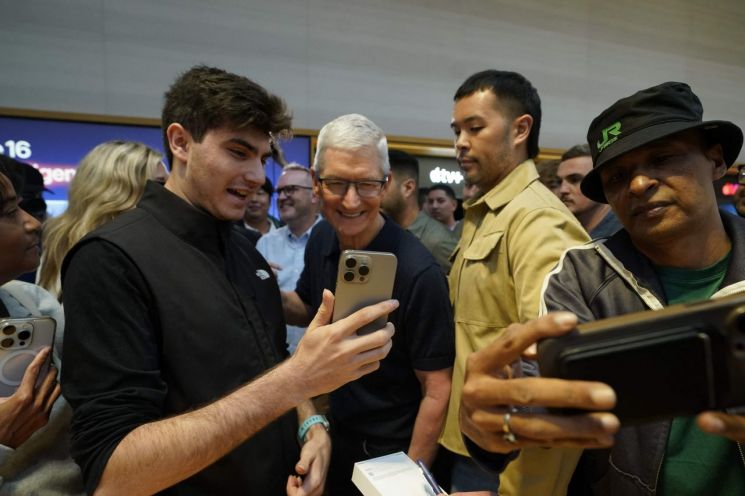 Apple CEO Tim Cook is taking a commemorative photo with customers at the iPhone 16 launch event held in New York on September 20 last year. Photo by AFP
Due to the Chinese government's subsidy policy for low-priced smartphones, Apple’s iPhone suffered losses and recorded shipments of 9.8 million units in the Chinese market in the first quarter. This represents a 9% decrease compared to the previous year, with its market share declining for the seventh consecutive quarter.
On April 17 (local time), Reuters reported this information, citing market research firm IDC. During this period, overall smartphone shipments in the Chinese market increased by 3.3%, but iPhone shipments declined.
Apple’s market share in China also fell from 17.4% in the previous quarter to 13.7%, ranking fifth. This marks a continued decline for seven consecutive quarters.
Will Wong, an IDC analyst, explained that Apple was unable to take advantage of the new government subsidy benefits that drove smartphone growth due to its premium pricing structure. Under the government subsidy policy announced in January, Chinese consumers can receive a 15% rebate on the purchase price when buying smartphones and other home appliances priced under 6,000 yuan.
In contrast to the decrease in shipments in the Chinese market, global iPhone shipments in the first quarter reached 57.9 million units, a 10% increase compared to the same period last year. Its global market share also rose from 17.5% to 19.0%. However, this was not due to a sudden surge in demand, but rather a result of stockpiling inventory in anticipation of tariffs on Chinese-made products.
IDC analyzed, "The surge in supply was a strategy to mitigate rising costs and supply chain disruptions, and first-quarter shipments were inflated beyond estimates based on actual consumer demand."
Meanwhile, the Donald Trump administration in the United States had imposed a 145% tariff on Chinese imports but later decided to exclude electronic products such as smartphones from reciprocal tariffs.
© The Asia Business Daily(www.asiae.co.kr). All rights reserved.

















