KDCA Confirms Infection in Woman in Her 80s in Namwon, North Jeolla Province
"Avoid Exposing Skin During Outdoor Activities"
The Korea Disease Control and Prevention Agency (KDCA) announced on April 18 that the first case of Severe Fever with Thrombocytopenia Syndrome (SFTS) this year has been confirmed.
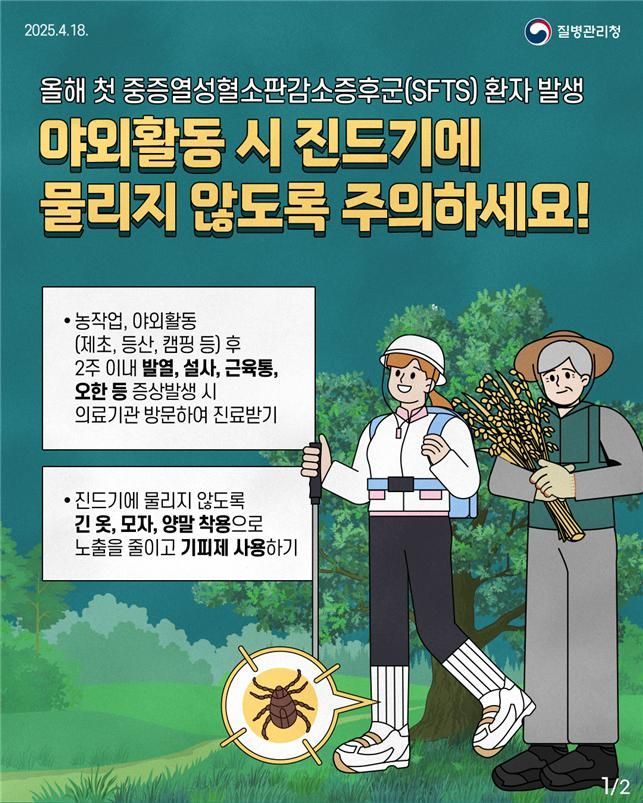
SFTS is transmitted through bites from Haemaphysalis longicornis ticks carrying the SFTS virus. The first patient this year is a woman in her 80s residing in Namwon, North Jeolla Province. She was bitten by a tick while working on her farm near her home and subsequently experienced symptoms including vomiting, fever (38.1 degrees Celsius), general weakness, and loss of appetite. She visited a medical institution and tested positive for SFTS through a confirmatory diagnostic test.
The occurrence of the first SFTS case this year is similar to the timing of the first cases in the past three years: April 11 in 2022, April 5 in 2023, and April 23 last year.
SFTS is a highly fatal infectious disease with no available treatment or preventive vaccine, and it primarily occurs between April and November. Symptoms such as high fever (38-40 degrees Celsius), diarrhea, muscle pain, chills, and headache typically appear within two weeks after a tick bite. In severe cases, patients may die due to decreased platelet and white blood cell counts.
Since SFTS was designated a notifiable infectious disease in 2013, a total of 2,065 cases have been reported up to last year, with 381 deaths, resulting in a fatality rate of approximately 18.5%. By region, the cumulative number of cases is as follows: Gyeonggi Province with 344 cases (16.7%), Gangwon Province with 290 cases (14.0%), North Gyeongsang Province with 279 cases (13.5%), and South Gyeongsang Province with 193 cases (9.3%). In 2024, among 170 SFTS patients, males accounted for more than half with 97 cases, and those aged 60 or older accounted for 142 cases, representing 83.5% of the total.
The most common risk factors for infection were working in rice paddies and fields (including orchards and greenhouses), visiting graves, and weeding. Therefore, it is recommended to wear separate work and daily clothes, and to seek medical attention if symptoms such as fever or diarrhea develop within two weeks after agricultural or outdoor activities.
Since 2013, there have been a total of 30 secondary SFTS infections in individuals who were not directly bitten by ticks. Among them, 27 were healthcare workers who became infected while diagnosing or treating SFTS patients or suspected cases in medical institutions.
Ji Youngmi, Commissioner of the KDCA, stated, "SFTS cases are occurring nationwide, especially after agricultural or outdoor activities. To avoid tick bites, people should wear long-sleeved clothing, hats, and socks to minimize exposed skin, use repellents, and visit a medical institution immediately if they develop high fever or digestive symptoms within two weeks after outdoor activities."
© The Asia Business Daily(www.asiae.co.kr). All rights reserved.

















