Health Research Institute Inspects 20 Locations Including Group Cafeterias
All Facilities Using Groundwater for Food Found Safe from Norovirus
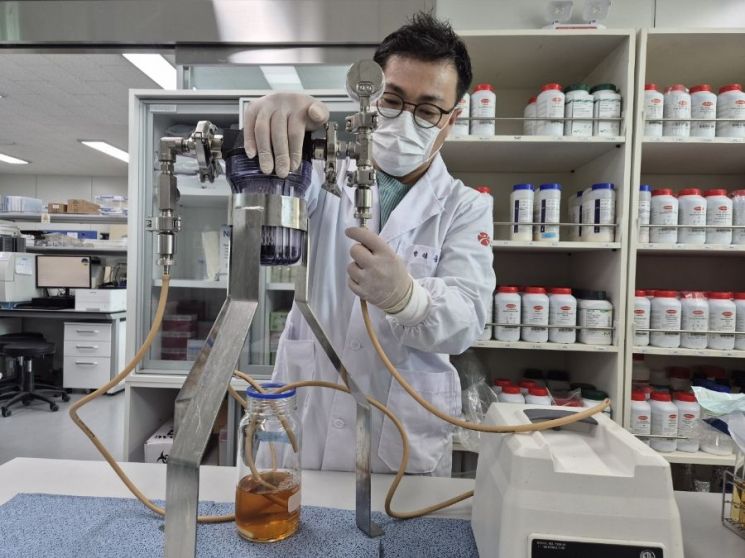 An employee of the Gwangju Institute of Health and Environment is examining norovirus in groundwater samples. Provided by Gwangju Institute of Health and Environment
The Gwangju Institute of Health and Environment announced on April 18 that all facilities using groundwater as food water, such as group cafeterias, were found to be safe after investigating norovirus contamination in the groundwater.
According to the institute, norovirus tests were conducted on groundwater at 20 facilities since February, including seven food manufacturing and processing businesses, six group cafeterias (including social welfare facilities), and five general restaurants. Norovirus was not detected at any of the 20 sites.
This investigation was a proactive safety inspection targeting groundwater used as food water, carried out to strengthen hygiene management for food water. The city of Gwangju and five autonomous districts jointly visited the sites, collected groundwater samples currently in use, and conducted tests.
Norovirus is a major pathogen causing acute gastroenteritis, mainly occurring in winter and spring. It can be transmitted through consumption of vegetables washed with contaminated groundwater, raw seafood, or contact with infected individuals. After an incubation period of 24 to 48 hours, symptoms such as diarrhea, vomiting, and fever may appear. Special caution is required for children, the elderly, and others with weakened immune systems.
Jung Hyuncheol, director of the Gwangju Institute of Health and Environment, emphasized, "For facilities using groundwater as food water, regular cleaning, disinfection, and other hygiene management are essential." He also urged, "During winter and spring, please ensure that food is thoroughly cooked before consumption and strictly follow personal hygiene guidelines."
© The Asia Business Daily(www.asiae.co.kr). All rights reserved.

















