Japanese Supreme Court Rules Full Forfeiture of Retirement Allowance for Kyoto City Bus Driver Who Embezzled 1,000 Yen
Lawsuit Over Dismissal and 12 Million Yen Severance Lost After Lower Court Reversal
Korean Case Revisited as Ham Sanghoon Nominated for Constitutional Court; Appellate Court Deemed "Dismissal Justified"
Supreme Court Upholds Dismissal of Bus Driver Who Embezzled 2,400 Won
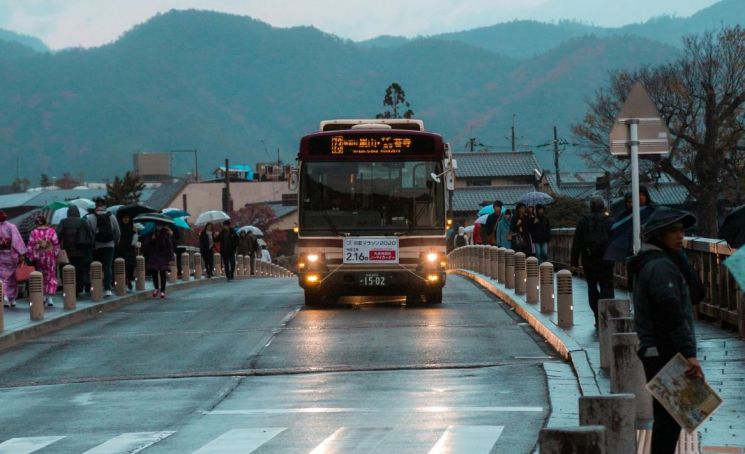
A Japanese bus driver who was dismissed for embezzling a bus fare of 1,000 yen (approximately 10,000 won) filed a lawsuit demanding the cancellation of the dismissal and a retirement allowance worth hundreds of millions of won but lost the case. This is a similar case to that of a bus driver in Korea who was dismissed for embezzling a fare of 2,400 won.
On the 17th, Japan's Yomiuri Shimbun reported, "The Supreme Court ruled that the full non-payment of retirement allowance to a former Kyoto municipal bus driver dismissed for embezzling a 1,000 yen fare was 'lawful'." According to the report, the bus driver had worked as a driver for Kyoto City’s municipal bus service since 1993, and in 2022, it was discovered that he had embezzled a single 1,000 yen bill, which was part of the fare. Consequently, Kyoto City disciplined and dismissed the man and decided to withhold the entire retirement allowance amounting to about 12 million yen (approximately 120 million won).
The bus driver filed a lawsuit demanding the cancellation of the disciplinary dismissal and the decision to withhold the retirement allowance. On July 1, 2023, the first trial at the Kyoto District Court dismissed all of the plaintiff’s claims. However, in February of the following year, the second trial at the Osaka High Court recognized the disciplinary dismissal as lawful but ruled that the full non-payment of the retirement allowance was an "excessive measure" and canceled it. Nevertheless, the Supreme Court judged that "the embezzlement act seriously undermines the proper operation of the municipal bus business," and it was difficult to see Kyoto City's disciplinary action as illegal, ultimately concluding that the full non-payment of the retirement allowance was legally valid.
In Korea, it was brought back into the spotlight that Ham Sang-hoon, a presiding judge of the Seoul High Court who was nominated as a Constitutional Court justice candidate by Prime Minister and Acting President Han Duck-soo, had previously ruled that the dismissal of a bus driver who embezzled a fare of 2,400 won was justified. In January 2014, bus driver Lee (surname) collected 11,600 won from four adult passengers during a bus operation but recorded in the operation log that he received 11,000 won as student fares. In other words, he recorded 44,000 won instead of 46,400 won and did not pay the difference of 2,400 won to the company.

In April of the same year, the company dismissed Lee, accusing him of embezzling the fare. Lee, who lost his job after 17 years of service, filed a lawsuit claiming that the non-payment of the fare could have been a mistake and that the dismissal was excessive and invalid. The first trial court ruled in Lee’s favor. The Jeonju District Court first trial recognized that Lee’s failure to remit 2,400 won constituted embezzlement of transportation revenue, which was grounds for dismissal under the collective agreement agreed upon by labor and management. However, considering that Lee had no prior fare-related issues during his 17 years of employment, the embezzled amount was minimal, and he had no other disciplinary records, the court judged the dismissal to be an excessive penalty.
Additionally, compared to another driver who embezzled 800 won three times and received a suspension, the court found that dismissing Lee for a single embezzlement was unfair in terms of disciplinary equity. The court also considered the company’s insufficient measures, such as not installing mechanical cash management devices on buses to allow drivers to focus solely on safe driving. The first trial court declared the dismissal invalid, stating, "It is difficult to hold the plaintiff responsible to the extent that the employment relationship cannot continue according to social norms."
The first trial ruling was overturned in the appellate court where Judge Ham presided. The second trial court stated, "It is reasonable to view that Lee’s failure to remit the fare was intentional rather than a mistake, and even though the embezzled amount was small, it constitutes a responsible reason that makes it socially unacceptable to continue the employment relationship." The first and second trial courts thus issued completely opposite opinions on whether the "2,400 won embezzlement" was a socially acceptable reason to continue employment.
The second trial court also ruled that the dismissal did not violate "disciplinary equity" pointed out by the first trial court. While the other driver who received a suspension admitted the wrongdoing and pleaded for leniency, Lee showed no remorse, even staging a one-person protest. In June 2017, the Supreme Court finalized the ruling that Lee’s dismissal was justified.
© The Asia Business Daily(www.asiae.co.kr). All rights reserved.


















