Manufacturing Business Outlook Index at 68 in Q2
Domestic Market Slump and US Reciprocal Tariffs Add to Burden
46.8% of Surveyed Companies Lower Sales Targets Compared to Last Year
Only 15.9% Expect an Increase
A warning light has been lit for the manufacturing industry in Busan in the second quarter of 2025. Amid the prolonged high exchange rate and domestic market stagnation, concerns are rising across the local manufacturing sector as the shock from the high tariff policies of the Trump administration in the United States is added to the mix.
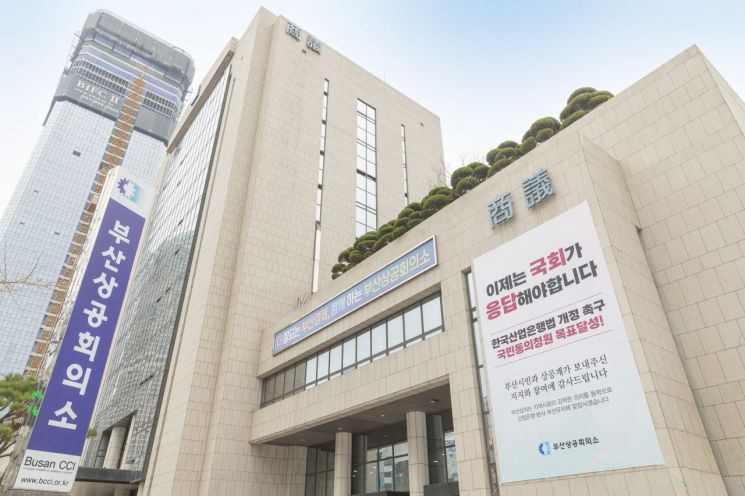
The Busan Chamber of Commerce and Industry (Chairman Yang Jaesaeng) announced on the 17th the results of its '2025 Q2 Busan Manufacturing Business Survey Index.' The Business Survey Index (BSI) indicates an improvement in business conditions if it is above the baseline of 100, and a deterioration if it is below.
The BSI for the second quarter recorded 68, remaining in the 60s for the second consecutive quarter, showing that business sentiment among companies continues to worsen amid a complex domestic and international crisis. Despite the base rate cut in February, companies are expected to continue facing burdens from debt and deteriorating profitability due to the high exchange rate.
By management sector, all areas?including sales (70), operating profit (67), facility investment (71), and financial conditions (66)?fell below the baseline of 100. For local companies already burdened by high raw material prices, the imposition of reciprocal tariffs by the US is feared to further drive up raw material costs and intensify corporate burdens.
By industry, most sectors?including chemicals and rubber (93), electrical and electronics (79), and automobiles and parts (62)?presented negative outlooks due to the prolonged domestic market slump and worsening global trade issues. Among them, primary metals (37) had the lowest outlook, affected by the slump in the construction industry and the US administration's high tariffs on steel and aluminum.
Regarding this year's sales targets, 46.8% of surveyed companies reported downward adjustments compared to the previous year, and 51.2% said they had reduced their investment plans. This is analyzed as a sharp decline in expectations for this year's performance due to the slump in related industries, rising raw material costs, high exchange rates, and ongoing trade risks.
The factor expected to have the greatest impact on business performance in the first half of this year was sluggish domestic demand (33.0%). This was followed by rising raw and subsidiary material prices (19.5%), continued high exchange rates (17.3%), tariff policies from Trump (15.5%), domestic political uncertainty (8.5%), and funding and liquidity issues (5.6%).
It was found that 30.2% of local companies are directly or indirectly affected by US tariff policies. These companies export finished products to the US (32.9%), export parts and raw materials to the US (26.3%), export parts and raw materials to China (22.4%), and export parts and raw materials to countries other than China such as Mexico and Canada (15.8%).
In this situation, 47.4% of local companies expressed concerns about deteriorating profitability due to high tariffs. This is because most of the region's key industries, such as automobiles, parts, and steel, are closely related to products subject to tariffs, directly impacting profitability. However, since it is inherently difficult for companies to respond to changes in trade policy, 81.6% of responding companies said they had not prepared any clear self-rescue measures.
A member of the research team at the Busan Chamber of Commerce and Industry stated, "Local companies are already struggling due to the economic downturn, and with US trade policies changing daily, companies are virtually helpless," emphasizing, "The government needs to implement strong measures, such as expanding corporate financing and engaging in active trade diplomacy, to minimize the impact of tariffs and prevent companies from being pushed to the brink."
© The Asia Business Daily(www.asiae.co.kr). All rights reserved.

















