Ten Naval Vessels Including Mine-Laying Ships Nampo and Wonsan Participate
The South Korean and U.S. navies conducted a joint mine warfare exercise in the waters east of Pohang.
The Navy announced on the 16th that the South Korean and U.S. forces conducted a joint mine warfare exercise in the waters near Pohang from the 7th to the 15th. This joint mine warfare exercise between South Korea and the U.S. has been held 10 times since its first execution in 2014.
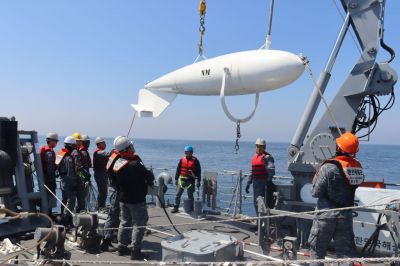
The exercise, participated by the South Korean Navy's 52nd Mine Warfare Squadron and the U.S. Navy's 7th Mine Countermeasures Squadron, was conducted to improve the combined mine warfare capabilities of both navies by practicing joint operational procedures including mine warfare command and control and power operation, as well as proficiency in operating manned and unmanned mine countermeasure assets.
The exercise involved 10 South Korean and U.S. naval vessels and 3 helicopters, including the South Korean Navy's mine-laying ships Nampo (MLS-II, 3,000 tons) and Wonsan (MLS-I, 2,600 tons), mine hunting ship (MHC, 450 tons), minesweeper (MSH, 730 tons), submarine rescue ship Cheonghaejin (ASR-I, 3,200 tons), submarines, explosive ordnance disposal (EOD) teams, as well as the U.S. Navy's minesweeper Warrior (SMCM, 1,300 tons), mine countermeasure helicopter MH-53E, and expeditionary mine countermeasures units.
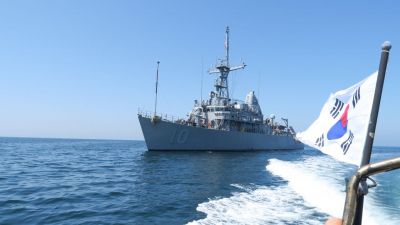
During the exercise, the South Korean and U.S. navies conducted realistic mine warfare training including ▲ deployment of surface and underwater protective mines ▲ mine detection and identification using minesweepers, mine countermeasure helicopters, and unmanned underwater vehicles (UUVs) ▲ operation of mine disposal equipment ▲ mine clearance using mine disposal vehicles (MDVs) ▲ underwater mine detonation by explosive ordnance disposal (EOD) teams.
Colonel Lee Taek-seon, commander of the 52nd Mine Warfare Squadron, said, "Through the comprehensive nine-day mine warfare exercise, we improved operational capabilities and were able to explore future directions for mine warfare development based on lessons learned during the training." He added, "We will continue to conduct realistic mine warfare exercises to further strengthen our ability to protect key ports and maritime traffic routes in times of emergency."
© The Asia Business Daily(www.asiae.co.kr). All rights reserved.


















