"Expression of Dissatisfaction and Suspicion Over South Korea's Counterintelligence Capabilities"
Science and Technology Community on Alert as Israel and Taiwan Also Added to the List
The effectiveness of the U.S. Department of Energy's (DOE) measure to place South Korea on the Sensitive and other designated Countries List (SCL) took effect on the 15th (local time), raising concerns in the science and technology community, which is expected to be directly impacted.
The DOE conducts various advanced scientific research such as artificial intelligence (AI), nuclear power, and quantum technologies through its 17 national laboratories, leading to voices expressing concerns that cooperation and sharing of advanced technologies currently underway between South Korea and the U.S. may face restrictions.
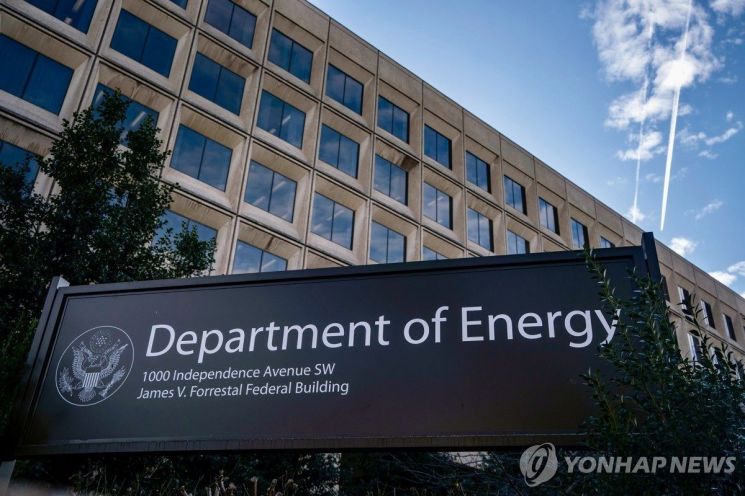 The U.S. Department of Energy (DOE) has listed South Korea on the Sensitive Countries List (SCL). Photo by Yonhap News
Sensitive countries can be designated due to reasons such as U.S. national security, nuclear non-proliferation, regional instability, threats to national economic security, and support for terrorism. Among U.S. allies, Israel and Taiwan, in addition to South Korea, are also on the list.
South Korea’s inclusion on the DOE’s sensitive countries list is believed to primarily serve as a warning against the increasingly vocal "South Korea’s independent nuclear armament theory" that gained momentum around the start of the second Trump administration. There are also theories that it reflects concerns about some South Korean researchers’ violations of regulations and doubts about South Korea’s counterintelligence capabilities.
An anonymous figure from the science and technology sector said, "There are theories that a South Korean researcher who had access to DOE-affiliated research facilities was caught trying to export nuclear reactor blueprints, or that the list inclusion reflects distrust in South Korea’s counterintelligence capabilities due to fears that information shared during cooperation might leak to other countries (especially China), or that disputes with U.S. companies during the Czech nuclear power plant bidding process influenced the decision," adding, "Ultimately, it seems to be a warning regarding South Korea’s recent actions."
In fact, South Korea was listed as a sensitive country whenever nuclear armament theories surged in the 1980s and 1990s. Officially confirmed periods include January 1986 to September 1987 and January 1993 to June 1996, with the first designation as a sensitive country reportedly in 1981. The Park Chung-hee administration’s push for nuclear armament and social unrest were causes for the listing, and the 1991 declaration of denuclearization of the Korean Peninsula was reportedly one measure to exit the sensitive country status.
Another figure in the science and technology community said, "It appears to be a manifestation of dissatisfaction or suspicion toward South Korea," expressing concern that "while nothing major will happen immediately, uncomfortable situations may arise in future research cooperation."
The DOE added South Korea to the SCL as an 'Other Designated Country' in early January during the Biden administration, and this measure took effect from this day. Once designated as a sensitive country, submitting related materials at least 45 days in advance and obtaining separate approval is required when visiting DOE-affiliated laboratories, and additional security procedures apply when DOE employees or affiliated researchers visit or contact South Korea.
Domestic institutions cooperating with major DOE research organizations and technology fields are already complying with regulations such as obtaining approval 45 days in advance, so they expect no significant changes due to the sensitive country designation.
Government-funded research institutes have also continued planned cooperation with the DOE. On the 14th (local time), the Korea Atomic Energy Research Institute signed a memorandum of understanding (MOU) on nuclear technology cooperation with the DOE-affiliated Argonne National Laboratory (ANL) headquarters in Illinois, U.S., agreeing to strengthen nuclear research and development partnerships in various fields, including advanced reactor technologies.
In particular, it is reported that there was no significant impact on security technology cooperation, including newly added collaboration in next-generation reactor fields such as sodium-cooled fast reactors (SFR) and virtual reactor joint research, which are recently considered strategic technologies.
According to the Ministry of Science and ICT, its affiliated research institutes are currently conducting nine projects with the DOE and its affiliated research institutions, with a budget of approximately 12 billion KRW. However, the science and technology community views that the SCL may act as at least a minimal obstacle in future new cooperation, especially in nuclear-related fields.
A science and technology sector official said, "Generally, the DOE does not disclose the reasons for designating sensitive countries," adding, "However, since various theories mentioned earlier are circulating, it is a situation where we have no choice but to be more cautious when cooperating or pursuing future cooperation."
In response, the government plans to make every effort to have the sensitive country designation lifted through ongoing working-level consultations with the U.S. Department of Energy. A Ministry of Science and ICT official stated, "During working-level consultations, it was reaffirmed that continuous cooperation is expected without obstacles if research cooperation is ongoing or will take place in the future."
© The Asia Business Daily(www.asiae.co.kr). All rights reserved.

















