Necessity of Cooperation in US Naval Vessel Maintenance and Construction
Increase LNG Imports to Enhance Price Negotiation Power
AI and Semiconductor Cooperation: Data Center Investment as a Key Challenge
Experts have diagnosed that South Korea and the United States must seek new growth opportunities through cooperation in key industries such as shipbuilding, energy, and artificial intelligence (AI) amid the rapidly changing global trade environment.
The Korea Chamber of Commerce and Industry (KCCI) and the Korea-America Association held the "Korea-US Industrial Cooperation Conference" on the morning of the 15th at the KCCI in Jung-gu, Seoul, discussing industry-specific cooperation plans in shipbuilding and defense, energy, AI, and semiconductors. About 120 Korea-US experts and businesspeople attended the event.
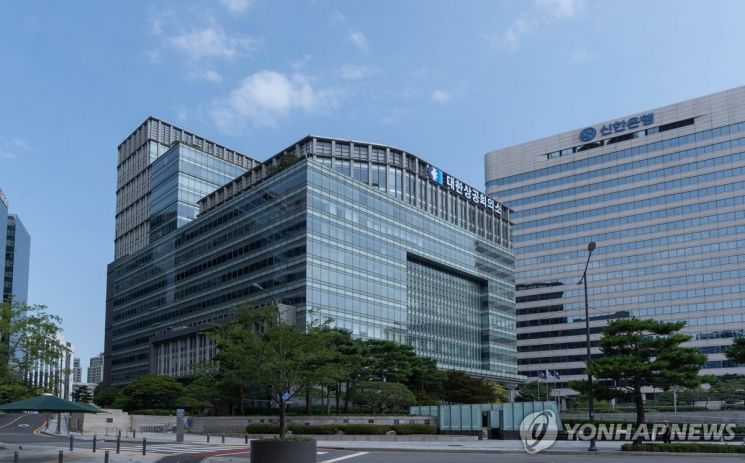 Exterior view of the Korea Chamber of Commerce and Industry building, provided by Korea Chamber of Commerce and Industry
In the shipbuilding and defense sector, the aging of vessels and limitations in construction capacity within the US were pointed out, emphasizing the need for MRO (Maintenance, Repair, and Operations) and construction cooperation with South Korea. Robert Peters, Senior Researcher at the Heritage Foundation, explained, "Due to the surge in maintenance demand for aging vessels, shipyard space is being consumed, causing a vicious cycle that delays the construction of new ships." He added, "Cooperating with South Korea allows combat ships to be repaired quickly in Korea during wartime without returning to the US mainland, and in peacetime, it secures spare capacity at US shipyards." He further suggested, "The repeal of the Jones Act, which mandates the use of US ships for cargo transport between US ports, and the conclusion of a defense free trade agreement (RDP) are necessary."
Jung Woo-man, Executive Director at HD Hyundai Heavy Industries, also stated, "The US Navy’s plan to build 364 ships over 30 years is a challenging task with current capabilities," adding, "Expanding MRO support and cooperation in construction will contribute to improving the US Navy’s combat readiness."
In the energy sector, strategies to expand liquefied natural gas (LNG) imports and strengthen nuclear power cooperation were presented as key solutions. Mark Menezes, Chairman of the US Energy Association, said, "South Korea’s LNG consumption will increase temporarily during its carbon reduction efforts," and added, "Considering the improvement of the US trade balance, expanding imports of US LNG could be a good option."
Professor Yoo Seung-hoon of Seoul National University of Science and Technology also diagnosed, "The US has an excess of natural gas, so South Korea can increase its bargaining power on prices through large-scale imports." Regarding nuclear power cooperation, he stated, "Combining US core technology with South Korea’s construction and operation experience will create strong competitiveness in the global nuclear power market."
Jang Ji-ho, Team Leader at Doosan Enerbility, emphasized, "Strengthening Korea-US nuclear power cooperation by leveraging South Korea’s excellent nuclear supply chain, technology, and price competitiveness, as well as actively exploring joint overseas market entry strategies in Europe, the Middle East, and Asia, is essential."
In the AI and semiconductor sectors, there was a call to expand cooperation so that Korean companies can utilize US-led AI foundation models. Kim Chang-wook, Managing Director and Partner at BCG, said, "South Korea can utilize US AI models, and conversely, when AI big tech companies establish data centers in Korea, they could consider sharing facility investment costs or introducing GPU rental services (GPUaaS)."
Martin Chorzempa, Senior Researcher at the Peterson Institute for International Economics, advised, "Training foundation models requires large-scale GPU clusters, which would be prohibitively expensive for Korea to develop independently," adding, "Economic value should be created by enhancing competitiveness in model utilization and service commercialization."
It was also analyzed that South Korea has a competitive advantage compared to countries like China and India because it is not subject to AI semiconductor import restrictions. Mike Yeo, Head of Microsoft Asia, emphasized, "South Korea is a major supplier of essential AI resources such as high-bandwidth memory (HBM) and semiconductors," adding, "The stronger the cooperation with Korean semiconductor manufacturers, the faster the spread and application of AI technology will accelerate."
Regarding the experts’ diagnoses, Choi Joong-kyung, Chairman of the Korea-America Association, said, "Combining Korea’s production capabilities with the US’s advanced technology will create a powerful synergy between the two countries." Park Il-jun, Executive Vice Chairman of the KCCI, stated, "The two countries are moving from a time of uncertainty to a time of negotiation," adding, "The fundamental solution to the trade deficit and strengthening manufacturing capabilities in the US, as discussed by the Trump administration, will be industrial cooperation that can generate strategic synergy between the two countries."
James Kim, Chairman of the American Chamber of Commerce in Korea, also emphasized, "In the complex global environment, expanding Korea-US industrial cooperation centered on strategic industries such as LNG, shipbuilding, aerospace, and semiconductors must be pursued alongside creating a sustainable trade environment," adding, "Eliminating non-tariff barriers and implementing substantive regulatory reforms will maximize trade potential between the two countries and serve as key factors supporting the success of the '2025 APEC Summit.'"
© The Asia Business Daily(www.asiae.co.kr). All rights reserved.

















