KDCA Begins Surveillance of SFTS Vector, Haemaphysalis longicornis Tick
Nationwide Monitoring Project Launched as High-Risk Season Approaches
No Vaccine or Treatment Available; Prevention Remains Key
The Korea Disease Control and Prevention Agency (KDCA) announced on the 14th that it will begin monitoring the occurrence of the primary vector, the Haemaphysalis longicornis tick, as the season with a high risk of Severe Fever with Thrombocytopenia Syndrome (SFTS) infection approaches.
This year, the tick surveillance project will be conducted at 23 locations nationwide through collaboration between the KDCA's Disease Response Center, the Health and Environment Research Institute, and the Climate Change Vector Surveillance Hub Center.
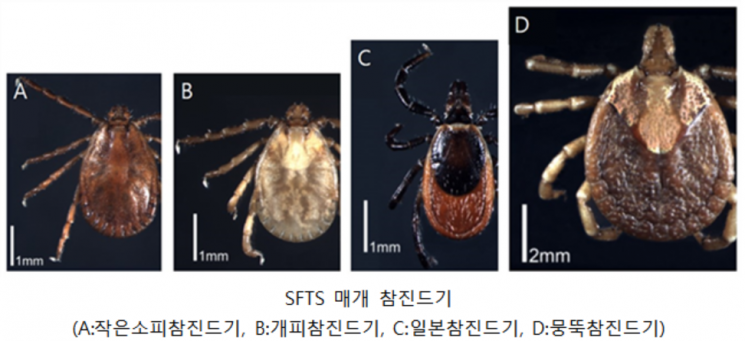
The Haemaphysalis longicornis tick exhibits blood-feeding behavior by parasitizing different hosts at the larval, nymph, and adult stages. As the weather warms in spring, nymphs begin to be active, adults lay eggs in summer, and larvae mainly appear in autumn, causing a rapid increase in population.
Among the ticks that transmit SFTS in Korea, the small Haemaphysalis longicornis tick is the most prevalent. SFTS is mainly transmitted from April to November when the SFTS virus is passed to humans through tick bites. Within 5 to 14 days after being bitten, symptoms related to the digestive system such as high fever, nausea, vomiting, and diarrhea appear.
Since the first SFTS patient was reported in Korea in 2013, a total of 2,065 patients have been reported up to last year, with 381 deaths (fatality rate of 18.5%). There is currently no vaccine or treatment, so prevention is the best measure.
To avoid ticks, it is recommended not to sit or lie down in grassy areas for more than 30 minutes and to avoid entering grass taller than ankle height. Additionally, when engaging in outdoor activities, wear long-sleeved clothing and long pants, and upon returning home, take a shower and check for any ticks attached to the body.
Ji Young-mi, director of the KDCA, stated, "The frequency of contact with ticks may increase due to outdoor activities in spring," and added, "If a tick is found attached to the body, it is difficult to remove the mouthpart directly, and there is a risk of secondary infection, so it is necessary to visit a medical institution for safe removal and treatment."
© The Asia Business Daily(www.asiae.co.kr). All rights reserved.

















