Current Status of Hyundai Motor's Hydrogen Technology
Closely Pursuing Japan, While China Prepares for a Quantum Leap
A 27-Year History of Hydrogen Fuel Cell Development
"Sincere about Hydrogen" - Chairman Chung Euisun's Support
"Do you know Gore-Tex? This is a material called membrane developed by the company that makes Gore-Tex. How this incredible technology is utilized is the core technology of hydrogen fuel cells."
Last March, we met Kim Chang-hwan, Vice President in charge of Electrification Energy Solutions at Hyundai Motor Company, at the Mabuk Research Center, the headquarters of Hyundai Motor's hydrogen development. In his office, there were rolls of membrane material resembling rolled-up wrapping paper and a model enlarged to show the structure of this material. Holding the model in his hand, he passionately explained the structure of the innovative material and its application principles in hydrogen fuel cells. Throughout the interview, his serious expression suddenly brightened.
This thin film, less than 0.1 mm thick, is used as the electrolyte membrane in hydrogen fuel cells. When hydrogen is supplied to the fuel cell, it separates hydrogen ions from oxygen and hydrogen and moves only the hydrogen ions to the anode. "Gore has the technology to make membranes, and Hyundai Motor Company has the technological capability to optimize and utilize this material as the electrolyte membrane for hydrogen fuel cells. By developing technology together, we open new business markets and elevate each company's technological capabilities."
Last year, Hyundai Motor Company and Gore announced plans to jointly develop next-generation hydrogen fuel cell electrolyte membranes to improve the durability and performance of commercial hydrogen electric vehicles. Gore has been supplying electrolyte membranes since Hyundai Motor's first-generation hydrogen electric vehicle, the Tucson iX35, and continues cooperation for over 15 years, including the recently launched new second-generation Nexo.
Vice President Kim joined Hyundai Motor Company around 2014. After earning a Ph.D. in Chemical Engineering from the University of Michigan, USA, he joined Hyundai Motor. Starting with research on internal combustion engine catalysts, he led the development of new technologies related to batteries, hydrogen fuel cells, and hydrogen energy, and spearheaded R&D for sustainable mobility that can replace internal combustion engines.
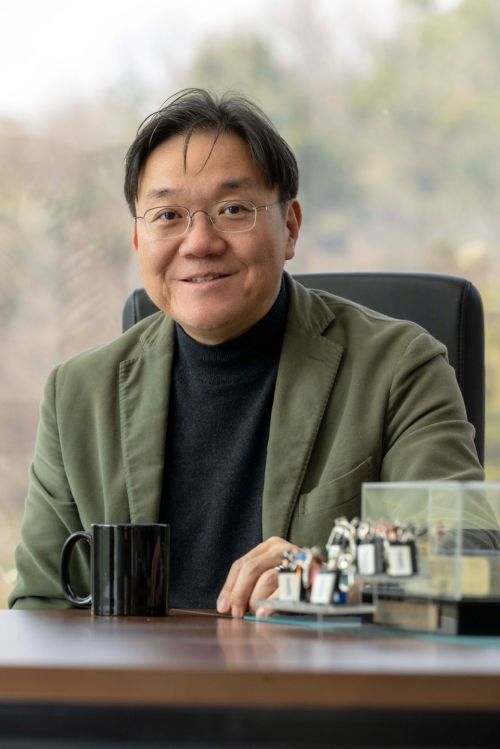 Kim Chang-hwan, Vice President in charge of Electrification Energy Solutions at Hyundai Motor Company, is being interviewed by this publication on the 13th of last month at the Hyundai Motor Environmental Technology Research Center located in Mabuk-dong, Giheung-gu, Yongin-si, Gyeonggi-do. Photo by Hyundai Motor Company
Current Status of Hyundai Motor's Hydrogen Technology
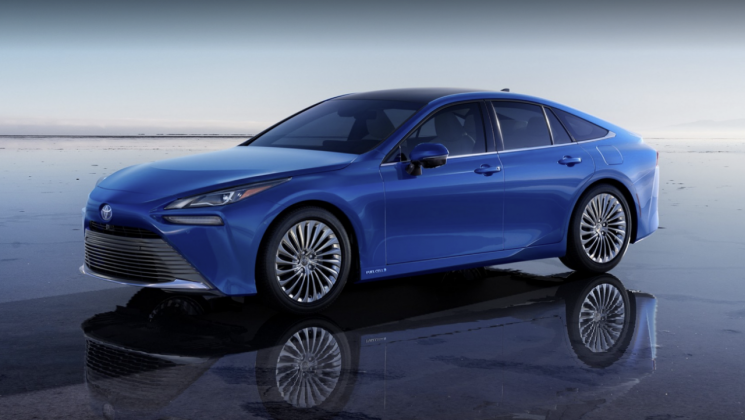
How advanced is Hyundai Motor's hydrogen fuel cell technology in the global market? Currently, brands that have released mass-produced hydrogen electric passenger vehicles worldwide include Hyundai Motor, Toyota, and Honda. Let's compare the recently unveiled new Nexo and its competitor, Toyota Mirai (2nd generation).
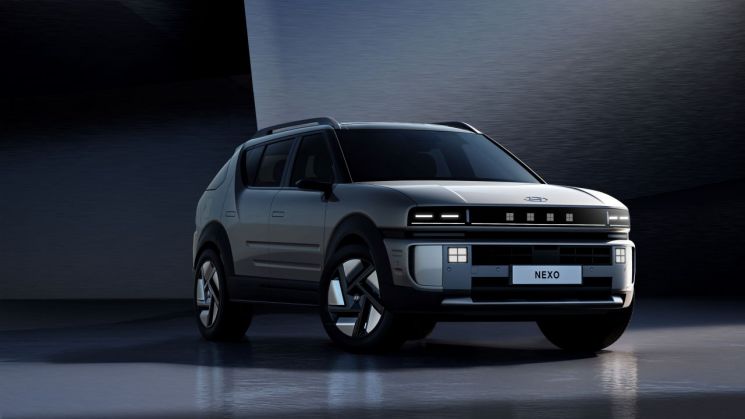
First, the new 2nd generation Nexo, being a recently released model, significantly leads in motor output and driving range. The combined motor output of the new Nexo is 150 kW (204 horsepower), showing overwhelming superiority. Toyota's Mirai and Crown hydrogen electric vehicles have motors producing 134 kW (182 horsepower). Regarding driving range, the 2023 Crown hydrogen electric vehicle achieves about 650 km per charge (based on North American EPA standards), and considering Hyundai Motor's mention of a 700 km range for the new Nexo expected to be released this year, the new Nexo is expected to achieve a driving range similar to or exceeding that of the Mirai and Crown (the new Nexo has not yet received official driving range certification).
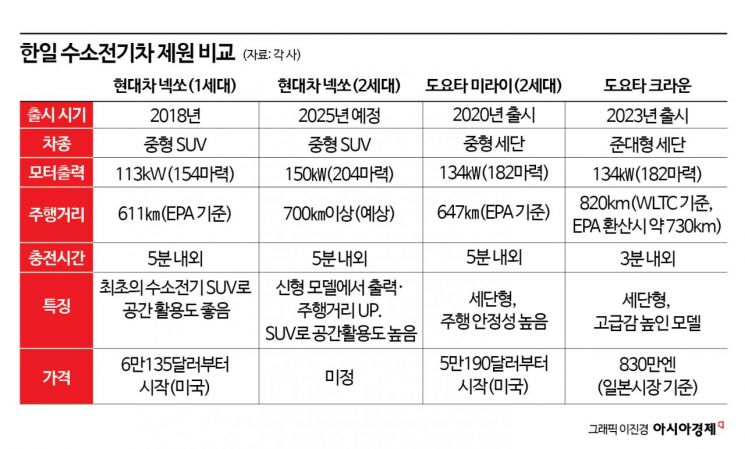
In terms of price, Toyota's Mirai is relatively competitive. In the U.S. market, the 2nd generation Mirai starts in the low $50,000 range, while the Nexo starts from the $60,000 range based on the 1st generation model. For the new 2nd generation Nexo, competitive pricing seems necessary to expand market share.
The competition over hydrogen technology between the two companies is expected to intensify again with the 3rd generation hydrogen fuel cell development project as a turning point. The goal is to reduce the volume of fuel cells and increase output, especially securing strong durability for commercial vehicles. Additionally, lowering prices to secure mass appeal is an important task.
Toyota recently announced plans to apply the 3rd generation fuel cell system starting in 2026 as a countermeasure. Toyota emphasized that the 3rd generation hydrogen fuel cell system has 20% improved fuel efficiency, extended driving range, and significantly reduced costs through improved manufacturing processes. Industry attention is focused on what counterattack card Hyundai Motor will present with a 3rd generation fuel cell that is cheaper and more efficient than Toyota's.
History of Hyundai Motor's Hydrogen Fuel Cell Development
Hyundai Motor began developing hydrogen fuel cells 27 years ago. During a time when South Korea was struggling with the foreign exchange crisis, Hyundai Motor boldly continued technological investments. At that time, Honorary Chairman Chung Mong-koo ordered, "Don't worry about money; let the engineers build the cars they want to make." As a result, Hyundai Motor became the first in the global market to produce mass-produced hydrogen electric vehicles and earned various world-first titles in the hydrogen electric vehicle field, including mass production and export of hydrogen electric large trucks and mass production of hydrogen electric SUVs.
In 1998, Hyundai Motor established a dedicated research team and started the 'Mercury Project' with the American company United Technologies Corporation (UTC), unveiling the first hydrogen electric vehicle, 'Mercury I.' From the 2000s, Hyundai focused on independent technology development and succeeded in developing a hydrogen electric vehicle equipped with a self-developed stack in 2004. In 2005, the Environmental Technology Research Center was established in Mabuk, Yongin, providing a research base for hydrogen electric vehicle development.
In 2010, Hyundai released the ix35 hydrogen electric vehicle prototype based on the Tucson. Hyundai then mass-produced this prototype, achieving the world's first mass production of hydrogen electric vehicles in 2013. Later, in 2018, Hyundai launched the first-generation Nexo, a passenger hydrogen electric vehicle with over 40% increased driving range (609 km) compared to the previous ix35 hydrogen electric vehicle.
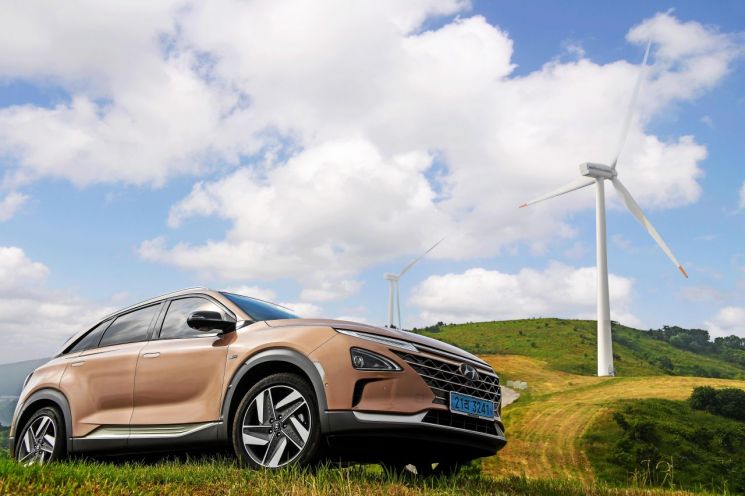 Hyundai Motor Company's first-generation hydrogen electric vehicle Nexo. Provided by Hyundai Motor Company
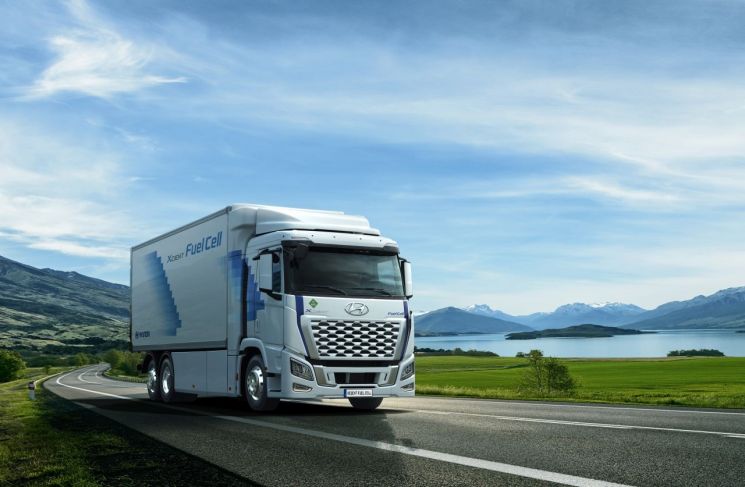
In 2020, Hyundai introduced the world's first mass-produced hydrogen electric large truck, the Xcient, and began exporting to the European market. In the same year, mass production of hydrogen electric city buses also commenced. In 2023, Hyundai unveiled a hydrogen tractor for the U.S. market, marking its entry into the North American medium and large commercial vehicle sector.
In 2024, at CES, the world's largest electronics and IT exhibition, Hyundai revealed a grand plan to create a hydrogen value chain enabling hydrogen production, storage, transportation, and utilization within the group companies. Alongside this, the hydrogen solution 'HTWO Grid,' which maximizes the capabilities of affiliated companies at each stage, was announced. In the same year, Hyundai showcased 'Inisium,' the next-generation model concept car of the passenger SUV Nexo, and in 2025, revealed the specifications and actual vehicle of the 2nd generation new Nexo at the Seoul Mobility Show.
'Sincere about Hydrogen' - Chairman Chung Euisun's Support
"Investment in the hydrogen business is preparation for future generations."
Chung Euisun, Chairman of Hyundai Motor Group, stated this reason for investing in hydrogen technology and business at CES 2024. Until now, shareholders of Hyundai Motor, industry insiders, and technical engineers have raised doubts about the profitability and feasibility of the hydrogen business. However, Chairman Chung clearly expressed that the purpose of the hydrogen business is not profitability but public interest, which quelled such controversies. Few people can readily oppose the belief in making proactive investments for energy independence in the world our children will live in.
Looking at Hyundai Motor Group's hydrogen business progress, it is clear that the investment is more long-term rather than focused on short-term profitability. Vice President Kim said, "The fact that management consistently shows interest in technology without being swayed by external environments or forecasts makes it the best company to work for as an engineer," and added, "Thanks to consistent and full support from management, we have been able to maintain continuity in hydrogen technology development."
Hyundai Motor expects hydrogen electric vehicles to coexist and develop alongside battery electric vehicles (BEVs) equipped with pure batteries. It is anticipated that the eco-friendly vehicle market will open centered on BEVs, using hybrids (HEVs) as a stepping stone, while hydrogen electric vehicles (FCEVs) have high potential for use in commercial vehicles. Experts believe hydrogen vehicles will replace electric vehicles in long-distance and heavy-load transportation sectors, which are difficult to cover with electric vehicles. For pure electric vehicles to travel long distances, high-capacity batteries must be installed. As battery capacity increases, so do the volume and weight of the battery, reducing cargo capacity and fuel efficiency in heavy battery-equipped trucks. Additionally, increased cargo weight leads to more fine dust generated from tires, reducing eco-friendliness.
On the other hand, applying hydrogen fuel cells to long-distance heavy cargo and transport vehicles highlights the advantages of hydrogen energy. Since fuel is charged as hydrogen gas, the weight is lighter, and charging time is much shorter. For currently released passenger vehicles, it takes up to 18 minutes for electric (lithium-ion battery) vehicles to charge 500 km even with rapid charging, whereas hydrogen can be charged within 5 minutes.
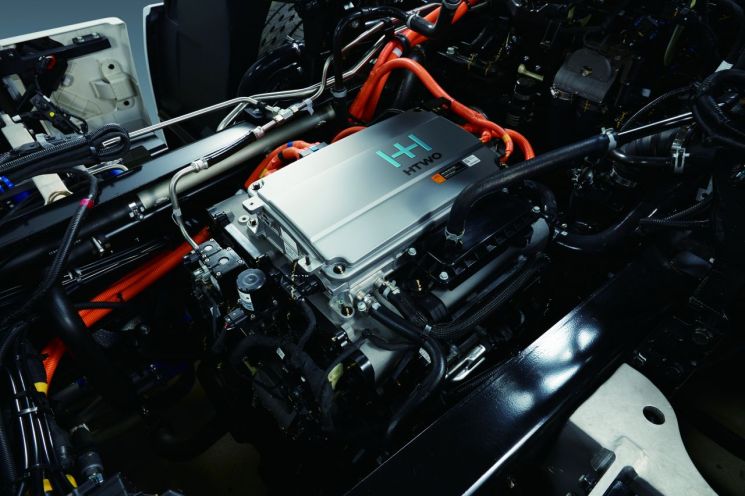
China Preparing for a Quantum Leap in Hydrogen Vehicles
Hyundai Motor's competitor in hydrogen electric vehicles may be China. Global hydrogen experts are paying attention to China's market and technological potential and feeling a sense of urgency. Just as China, the world's largest eco-friendly vehicle consumer market, dominated the global electric vehicle market by creating an electric vehicle ecosystem led by the government, there are concerns that China might seize leadership in the hydrogen electric vehicle and energy markets if not careful. Although the prevailing view is that China's technology still lags behind Korea and Japan in charging time and driving range, considering the growth potential of the Chinese market, it is analyzed to have sufficient potential.
According to SNE Research, last year, China was the largest market for hydrogen electric vehicles globally. The hydrogen commercial vehicle (such as hydrogen buses) market grew rapidly, accounting for more than half (55.3%) of global hydrogen electric vehicle sales. Of the 12,866 hydrogen electric vehicles sold worldwide last year, 7,331 were Chinese brand hydrogen commercial vehicles.
China is accelerating the expansion of the hydrogen energy business under government leadership by announcing national hydrogen energy development plans and recently promoting legislation. China has announced plans to increase cumulative hydrogen electric vehicle adoption to 1 million units by 2030 and included "accelerating the development of the hydrogen energy industry" in government work reports for the first time last year. Simultaneously, hydrogen energy was incorporated into China's Energy Law, directing systematic industrial nurturing and development.
In response, Hyundai Motor is also preparing to enter the Chinese hydrogen energy consumption market. In 2023, Hyundai established a local production and sales corporation in Guangzhou, Guangdong Province, China, capable of producing 6,500 hydrogen fuel cell systems annually, with plans to expand production capacity according to market demand.
© The Asia Business Daily(www.asiae.co.kr). All rights reserved.



















