Number of Vaccines in National Immunization Program: 19 for Children vs. 2 for the Elderly
Shingles Outbreak Approaching, but Vaccine Cost Can Reach 30% of Monthly Income
"In a Super-Aged Society, Infectious Disease Prevention Can No Longer Be Child-Centered"
As the proportion of elderly people rapidly increases and super-aging progresses quickly, voices are emerging everywhere calling for the National Immunization Program (NIP), which is structured mainly around children, to be actively expanded to include the elderly. This is because vaccinations, which can cost tens of thousands of won, may be difficult for many elderly citizens to afford.
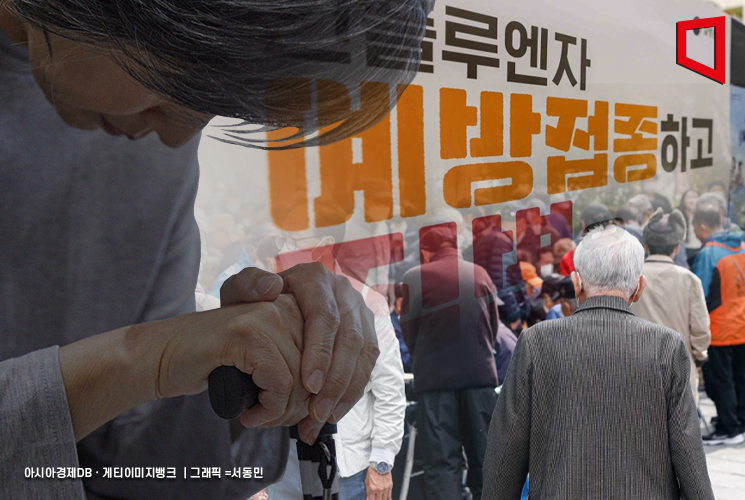
According to the Korea Disease Control and Prevention Agency on the 14th, the current NIP for those aged 65 and older includes only two vaccines: influenza and pneumococcal. In contrast, there are 19 mandatory vaccinations for children under 12 years old. The NIP is a government-supported program that covers the cost of essential vaccinations to prevent infectious diseases. It includes ▲Children’s NIP ▲HPV NIP ▲Hepatitis B vertical transmission prevention program ▲Influenza NIP ▲Elderly pneumococcal National Immunization Program, among others.
However, it is difficult for the elderly to receive vaccines on time due to economic reasons. For example, shingles, which begins to spread from next month, is one such disease. Shingles tends to have a higher prevalence from May to August each year. The Korea Disease Control and Prevention Agency recommends shingles vaccination for adults aged 50 and older, and the incidence rate among those aged 65 and older is about 8 to 10 times higher than that of younger age groups.
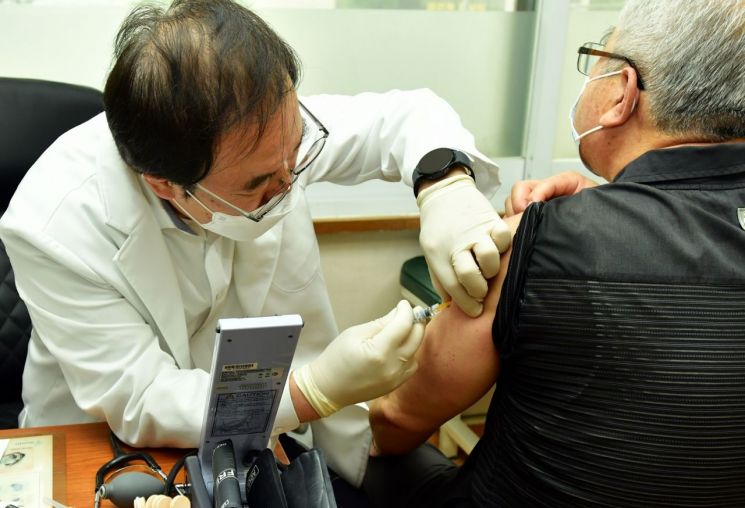
The cost of shingles vaccination ranges from 100,000 to 200,000 won depending on the vaccine type and hospital. Meanwhile, according to the Korea Employment Information Service’s report titled "Status, Causes, and Implications of Employment Increase among People Aged 65 and Older," the average monthly wage of wage workers aged 65 and older was only 750,000 won in 2022. This means that elderly people earning the average wage would have to pay nearly 30% of their monthly income to get the shingles vaccine.
Jo Biryong, director of the Health and Social Development Institute at Seoul National University College of Medicine, said, "In a super-aged society, strategies for infectious disease prevention and healthy life expectancy can no longer be child-centered," adding, "Vaccination is one of the most effective strategies to reduce hospitalizations, complications, and deaths caused by infectious diseases among the elderly." He also noted, "There is accumulating evidence that vaccination can reduce medical expenses and the need for long-term care among the elderly."
Kim Seonwook, professor at the Inpatient Care Center of Bundang Seoul National University Hospital, said, "Some local governments with financial resources already provide additional support for elderly vaccinations," adding, "Even in places that cannot do so, it would be positive if the government could offer more assistance."
There are also calls to consider changing the support method in light of health insurance finances. Vaccines fall under a non-insurance system, not covered by medical insurance. The current structure requires the recipient to bear the full cost or, if included in the NIP, the government covers the entire cost. This system can be a financial burden and act as an obstacle when introducing new vaccines into the NIP.
Director Jo suggested, "One option could be to lower coverage but expand the target group. For some elderly vaccines, allowing partial out-of-pocket payments while designating them as regular vaccination items for certain age groups could encourage responsible health management choices." He also proposed, "Differential support could be considered for risk groups by disease (such as cardiovascular disease patients, diabetes patients, etc.)."
There are also recommendations that medical necessity should be prioritized when considering additional NIP vaccination items. One example is the argument that high-immunogenicity vaccines, which have a strong preventive effect against influenza in the elderly, should be supported. Currently, the elderly receive free vaccinations with existing influenza vaccines, but 80% of deaths still occur among the elderly. High-immunogenicity vaccines activate the immune system to induce a stronger and longer-lasting immune response. In Korea, the high-immunogenicity vaccines available for those aged 65 and older include CSL Seqirus’s "Fluad Quad" and Sanofi’s "Efluelda Tetra."
Choo Eunju, professor of infectious diseases at Soonchunhyang University Bucheon Hospital, said, "Due to decreased immune function, it is difficult for the elderly to expect sufficient preventive effects from existing vaccines alone," adding, "The vaccination of the elderly with high-immunogenicity influenza vaccines is recommended both domestically and internationally, so the medical necessity has been verified. Further policy discussions will be needed."
© The Asia Business Daily(www.asiae.co.kr). All rights reserved.
![Clutching a Stolen Dior Bag, Saying "I Hate Being Poor but Real"... The Grotesque Con of a "Human Knockoff" [Slate]](https://cwcontent.asiae.co.kr/asiaresize/183/2026021902243444107_1771435474.jpg)

















