Korea Customs Service Bans Import of 'EVE Painkillers'
Ingredient Regulated as Narcotic Substance under Korean Law
Sharp Increase in Illegal Imports of Narcotic-Containing Medicines
Authorities Cite Rising Addiction and Public Health Concerns
The 'EVE painkiller,' a popular shopping item during trips to Japan, can no longer be brought into the country.
According to industry sources on the 11th, the Korea Customs Service has banned the import of 'EVE painkillers' since early this month. 'EVE' is a series of painkillers launched by Japan's SS Pharmaceutical in 1985. The currently marketed EVE products include five types: ▲EVE Three Shot Premium ▲EVE Quick Headache Medicine ▲EVE Quick Headache Medicine DX ▲EVE A Tablets ▲EVE A Tablets EX.
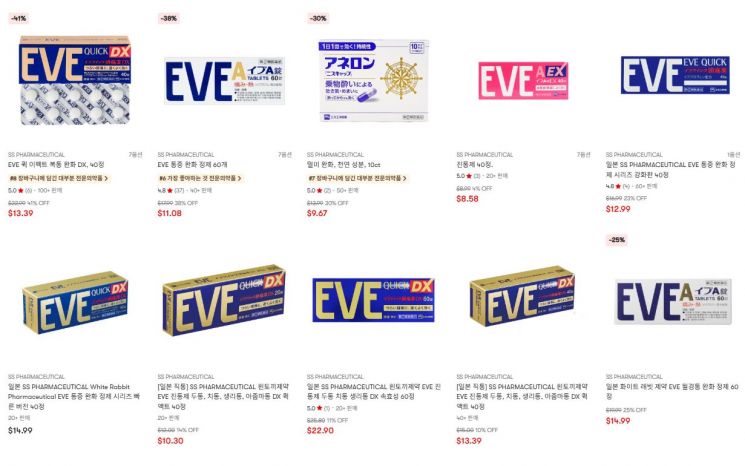
It gained popularity among female Japanese travelers as a must-buy product due to its reputed effectiveness for menstrual pain and other conditions. The issue lies with the ingredient 'allylisopropylacetylurea (allylisopropylacetylsemicarbazide)' contained in EVE painkillers.
Allylisopropylacetylurea is a sedative mainly used in combination with painkillers to alleviate headaches, toothaches, and other pains. This ingredient is one of the 481 narcotic substances regulated under Korea's Narcotics Control Act. While it is classified as a psychotropic drug when used alone, it is not used as a single agent in Korea. However, it directly acts on the central nervous system to reduce pain.
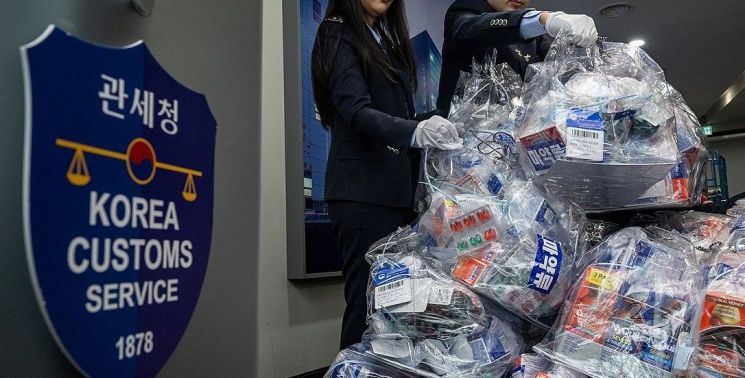
Last month, the Korea Customs Service announced, "Due to the recent surge in illegal importation of narcotic-containing medicines such as cold remedies, sleeping pills, and diet drugs, we will strictly crack down on the illegal importation of narcotic-containing medicines sold abroad into Korea."
According to the Korea Customs Service, the volume of illegally imported narcotic-containing medicines increased about 43 times from 885g in 2020 to 37,688g last year. Compared to the approximately 5.3-fold increase in total narcotics seizures during the same period, this is a steep rise. The number of offenders importing illegal medicines rose 13 times from 19 in 2020 to 252 last year.
The trend of increasing illegal importation of narcotic-containing medicines has continued this year. As of the end of February, there were 65 cases detected, with a total volume of 11,854g, representing a 3.8-fold increase in cases and more than a fivefold increase in volume compared to the same period last year. The Korea Customs Service has identified that harm is increasing as people become addicted to illegal medicines, unaware that they contain narcotic substances, focusing only on their pain-relieving effects. The rise in narcotics addicts abusing illegal medicines as substitute drugs is also cited as a factor driving domestic demand.
© The Asia Business Daily(www.asiae.co.kr). All rights reserved.


















