April Green Book Maintains Gloomy Economic Outlook
Reflects U.S. Mutual Tariffs and 90-Day Grace Period
"Trade and Growth Slowdown Due to Worsening Trade Environment"
The government diagnosed that the worsening external conditions due to U.S. tariffs are holding back our economy. Compared to the previous month, domestic political turmoil has decreased following the impeachment of former President Yoon Seok-yeol, but the negative impact from changes in the trade environment has increased, leading to greater downward pressure on the economy.
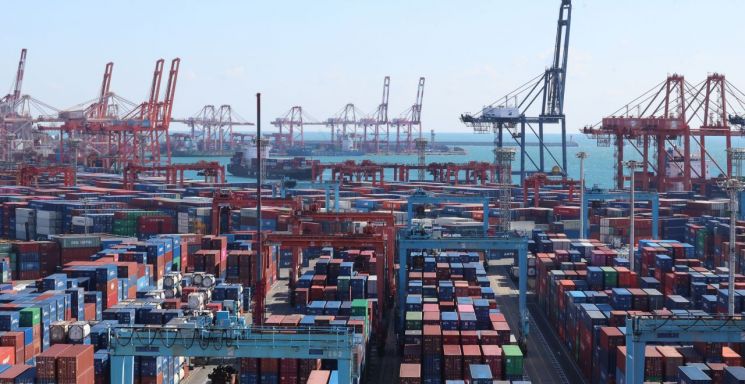
On the 11th, the Ministry of Economy and Finance stated in the April issue of the 'Recent Economic Trends (Green Book)' that "Recently, our economy has experienced delays in domestic demand recovery such as consumption and construction investment, and employment difficulties persist mainly in vulnerable sectors," adding, "Downward pressure on the economy is increasing due to worsening external conditions caused by the imposition of U.S. tariffs."
This month's economic outlook was similar to last month's diagnosis. After expressing concerns about "increased downside risks" related to the economy in December last year, immediately following the declaration of martial law, the ministry has used the phrase "increased downward pressure" for four consecutive months from January to this month, raising the level of concern. Regarding employment, the term "slowdown" was used in January, and from February onward, it was noted that there are "employment difficulties centered on vulnerable sectors."
However, while last month the ministry cited "expanded domestic and external uncertainties" as reasons for increased downward pressure on the economy, this month it viewed that domestic political turmoil has decreased, with the early presidential election schedule confirmed following the Constitutional Court's impeachment ruling. Instead, it diagnosed that worsening external conditions, such as the U.S. mutual tariffs and the 90-day grace period announced this month, have increased downward pressure on the economy. Even though domestic concerns have lessened, the Ministry of Economy and Finance's assessment is that "downward pressure has increased compared to the previous month."
A ministry official explained, "In early April, we reflected the announcement by the Donald Trump U.S. administration of mutual tariffs (25%) on countries including ours," adding, "We adjusted the wording to reflect the situation by using the phrase 'worsening external conditions due to the imposition of U.S. tariffs.'" The official also said, "We included the 90-day grace period related to mutual tariffs," and "Although this somewhat eased the burden, 10% of the mutual tariffs are still applied, and item-specific tariffs (25%) on steel, automobiles, and other products are also applied, so we described the external conditions as worsening."
Key indicators of industrial activity in February all increased. Total industrial production rose 0.6% month-on-month, and retail sales increased by 1.5%. Facility investment and construction investment also grew by 18.7% and 1.5%, respectively, compared to the previous month. However, the government assessment is that it is difficult to foresee economic recovery based on these figures. Production, consumption, and investment indicators have all decreased since November last year, repeatedly showing unstable patterns of triple increases and decreases each month.
Last month's Consumer Sentiment Index (CSI) was 93.4, down 1.8 points from the previous month. In the Composite Business Survey Index (CBSI) for all industries, the previous month's performance rose 1.4 points to 86.7, but this month's outlook fell 2.4 points to 85.6. The February coincident and leading economic indices rose slightly by 0.1 points each compared to the previous month.
Exports last month increased by 3.1% year-on-year, marking two consecutive months of growth. The average daily export value was $2.65 billion, up 5.5%. However, concerns about exports due to worsening external conditions are gradually growing. There are also concerns about sluggish employment in the manufacturing sector and related industries, which are the main drivers of exports. Regarding the global economy, the government diagnosed that "there are concerns about increased volatility in international financial markets and a slowdown in trade and growth due to the deterioration of the trade environment caused by tariffs imposed by major countries."
Regarding the U.S. economy, employment continued to increase steadily, but consumer sentiment sharply declined, and risks related to the introduction of mutual tariffs remain. The Chinese economy is still facing uncertainty due to the U.S.-China trade conflict, and exports have turned to a decline, shrinking by 3.0%.
The Ministry of Economy and Finance stated, "We will make every effort to respond to trade risks, including the swift promotion of essential supplementary budgets to support damages to our companies caused by U.S. tariffs and to strengthen industrial competitiveness," adding, "We will continue and strengthen efforts to recover the livelihood economy, including jobs, construction, and support for small business owners."
© The Asia Business Daily(www.asiae.co.kr). All rights reserved.

















