Momentum for Rate Hikes Weakens Due to Economic Contraction
Trump Raises Issue with Weak Yen
The Bank of Japan (BOJ), facing the May Monetary Policy Meeting, finds itself in a dilemma. Although concerns about economic contraction due to tariffs have weakened the momentum for interest rate hikes, the Donald Trump administration, which is about to negotiate tariffs with Japan, is raising issues about the weak yen, so the BOJ needs to give the impression that it is maintaining its stance on raising interest rates.
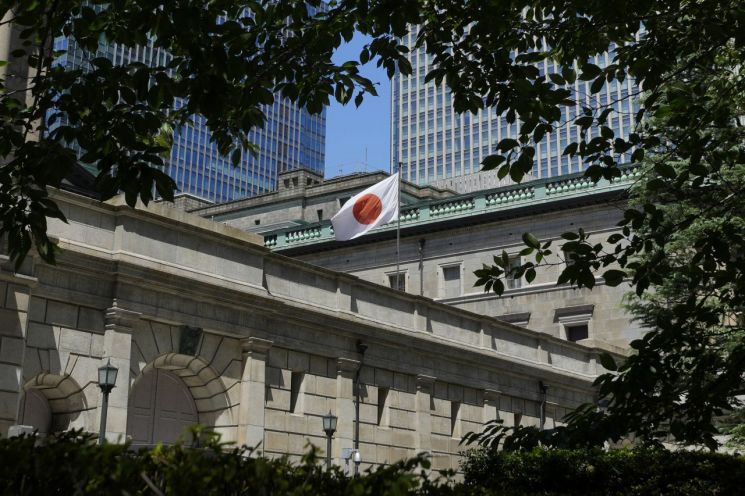
The meeting, held over two days from April 30 to May 1, takes place amid external shocks caused by tariffs. The U.S. has announced high tariffs on Japanese automobiles and other products, exerting downward pressure on the Japanese economy. As a result, the Bank of Japan is facing a situation where it must revise its economic outlook downward.
BOJ Governor Kazuo Ueda stated on the 4th, "The introduction of these automobile tariffs and reciprocal tariffs has increased uncertainty surrounding the domestic and international economy and prices. It could exert downward pressure on the global and Japanese economies through various channels."
As expectations for interest rate hikes retreat, market attention is focused on the BOJ's 'Outlook Report on Economic and Price Developments,' which offers insight into the future path of monetary policy.
Naohiko Baba, Chief Economist at Barclays Securities, expects the BOJ to lower its economic growth forecast for this year from the previous 1.1% to about 0.5%, and under the assumption that the BOJ maintains its monetary policy normalization stance, he believes it will be difficult to lower the forecast below this level.
A sharp reduction in the growth forecast could signal to the outside world that the BOJ will stop raising interest rates. Regarding this, the Nihon Keizai Shimbun (Nikkei) reported, "Governor Ueda said, 'If external conditions change significantly, our economic and price outlook may also change accordingly,' but if the downward revision is too large, it could send the wrong signal of halting rate hikes, so he is taking a cautious stance."
If a strong signal is given to postpone rate hikes, it could provoke President Trump, who is hostile to the weak yen. President Trump has continuously criticized Japan's weak yen. The yen-dollar exchange rate is a major topic in the U.S.-Japan tariff negotiations. Finance Minister Katsunobu Kato stated at the parliament on the 9th, "During communication with the U.S., various mentions including the exchange rate were made, so the exchange rate issue may be included in future discussions. However, specific details have not yet been decided."
In other words, if the economy is slowing and the BOJ appears too dovish (accommodative), the yen depreciation could worsen; conversely, if it pushes only for interest rate hikes, the pressure of economic recession could intensify.
The Nikkei stated, "Currently, Japan faces downside risks to the economy due to tariffs, and realistically, the possibility of early rate hikes has receded. Nevertheless, in preparation for tariff negotiations, the 'interest rate hike stance' must continue to be maintained, requiring delicate policy coordination."
© The Asia Business Daily(www.asiae.co.kr). All rights reserved.

















