Luxury Platform Reborns Faces Complete Capital Erosion
Fashion Platform Brandy, Once Dreaming of Becoming a Unicorn
Audit Opinion: "Doubt About Company's Ability to Continue as a Going Concern"
"Full-Scale Sorting Out of Fashion Platforms Underway"
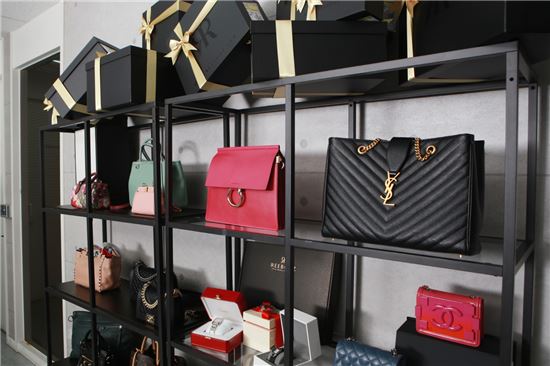 It is an era where even luxury goods are rented. A scene from a famous luxury rental store.
Luxury platform Reborns faced a liquidity crisis last year after falling into complete capital erosion. During the COVID-19 pandemic, the fashion platform Brandy, which dreamed of becoming a 'unicorn' (a company valued at 1 trillion KRW), also received an audit opinion stating "there is doubt about the company's ability to continue as a going concern" due to liquidity risks during the same period. Following the largest domestic luxury platform Ballan, which caused a delay in payment settlements and entered corporate rehabilitation procedures earlier this year, fashion platforms that attracted large-scale investments are also experiencing liquidity crises, signaling a full-scale sorting out in the e-commerce industry.
According to the Financial Supervisory Service's electronic disclosure system on the 14th, Reborns recorded a total capital (net assets) of minus 1.28 billion KRW as of the end of last year, entering a state of complete capital erosion. Capital erosion means that even if the company is liquidated, less money remains than the originally invested capital, making it impossible for investors to recover their funds. When losses continue and total capital becomes negative, it is called complete capital erosion.
Reborns, which attracted venture investment... "Doubt about going concern"
The accounting firm Saesidae, which conducted an external audit of the company, issued an audit opinion stating that "there is a significant uncertainty that raises substantial doubt about the company's ability to continue as a going concern."
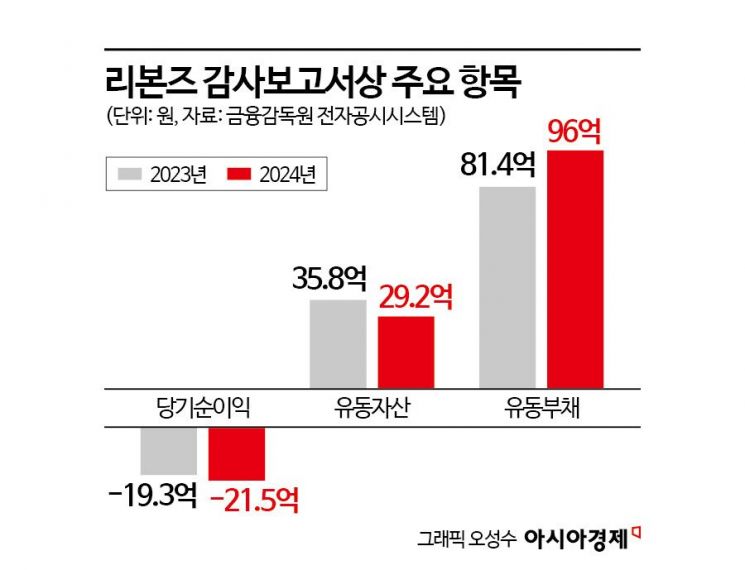
Reborns posted a net loss of 2.1 billion KRW at the end of last year, increasing accumulated deficits to 21.6 billion KRW. As sales plummeted, operating losses nearly doubled, resulting in deficits exceeding the capital stock (2.4 billion KRW) and capital surplus (18 billion KRW) secured through investment attraction. Reborns' sales last year were 13.3 billion KRW, down 4.3 billion KRW from the previous year, and operating losses expanded from 430 million KRW in 2023 to 940 million KRW last year.
Founded in 2009, Reborns is a comprehensive luxury platform, with direct luxury sales (47.9%) and rental fees for luxury items (40%) accounting for most of its revenue. The company grew rapidly during the COVID-19 pandemic due to a surge in online luxury demand driven by 'revenge consumption.' In 2021, it attracted 10.5 billion KRW in Series A investment from venture capital firms including DSC Investment and IBK Industrial Bank.
However, after the transition to the COVID-19 endemic phase, luxury demand shifted offline, and combined with economic downturns, performance declined annually. Reborns' sales, which were 19.7 billion KRW in 2022 when it first disclosed its audit report, dropped to 17.5 billion KRW the following year and further fell to 13.3 billion KRW last year.
As a result, Reborns tightened its belt by reducing product purchases and cutting selling and administrative expenses, but ongoing management difficulties led it to take high-interest loans to secure operating funds. As of last year, it borrowed 1.7 billion KRW (annual interest rate 20%) from the venture capital firm Yuil Technology Investment, 1.5 billion KRW (20%) from Zeus Asset Management Loan, and 1.37 billion KRW (20%) from CareerNet. It also borrowed operating funds from three savings banks last year.
Reborns spent about 1 billion KRW on interest expenses last year. It must repay approximately 4.8 billion KRW over two years, including 1.681 billion KRW this year and 3.2 billion KRW next year. If operating losses continue this year or additional investments are not made, corporate rehabilitation procedures, like Ballan, are expected to be inevitable.
'Next Unicorn' Brandy also faces liquidity crisis
Fashion platform Brandy also fell into complete capital erosion last year. Brandy's operator, Newnex, recorded a total capital (net assets) of minus 30.6 billion KRW as of the end of last year. Notably, current assets that can be liquidated within one year amounted to only 6.9 billion KRW, while current liabilities due within one year were 32.2 billion KRW, exceeding current assets by 25.3 billion KRW. The external auditor Samduck Accounting Firm stated, "Due to current liabilities exceeding current assets, the company is exposed to liquidity risk," and "there is a significant uncertainty that raises substantial doubt about the company's ability to continue as a going concern."
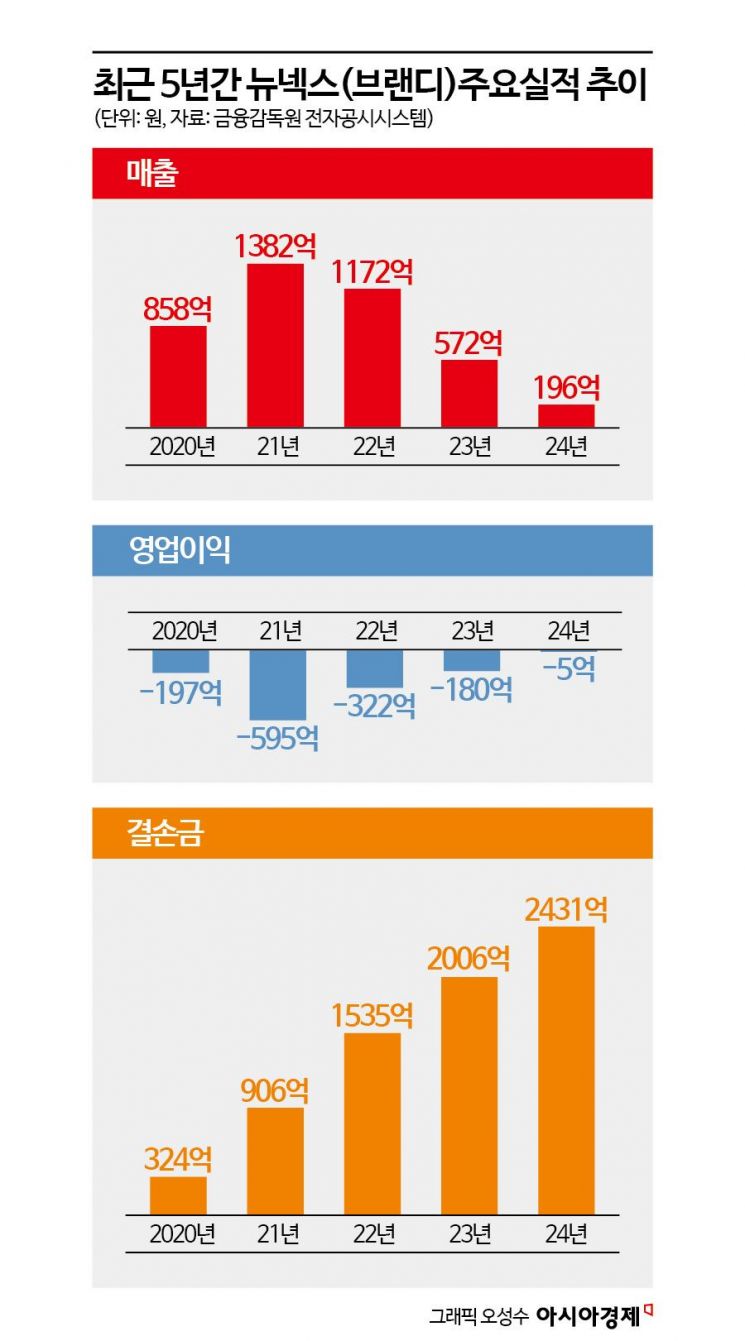
Founded in December 2014, Brandy was known as one of the top three women's fashion platforms along with Ably and Zigzag. After attracting large-scale investments in 2022, it gained attention as a 'next unicorn' with a corporate value exceeding 1 trillion KRW. Newnex expanded its size by acquiring the women's fashion platform 'Seoul Store' in 2022. However, the company's sales also sharply declined after peaking in 2021.
Brandy has been reducing fixed costs through workforce cuts and establishing self-rescue plans. The number of employees at Brandy dropped sharply from 444 at the end of 2023 to 69 at the end of last year, operating with a small team. The auditor Samduck Accounting Firm expressed concern, stating, "The company is working to resolve liquidity risks by reducing fixed costs through workforce cuts and establishing liquidity risk self-rescue plans. However, if these plans fail, the company may not be able to recover or repay its assets and liabilities through normal business activities."
Since last year, the sorting out of fashion platforms has intensified. Fashion platforms that grew rapidly during the COVID-19 pandemic focused on external growth by attracting large-scale investments, but as they exhausted their investment funds and failed to turn a profit, more companies are facing liquidity crises.
Earlier, luxury platform Ballan fell into complete capital erosion in 2023, and without additional investments this year, it failed to return sales proceeds to sellers and filed for corporate rehabilitation last month. Facing a triple crisis of domestic economic recession, high interest rates, and expanding economic uncertainty, fashion companies are weighing harsh restructuring and corporate rehabilitation. An industry insider explained, "In 2020-21, right after COVID-19, user numbers and transaction volumes were important when receiving investments, but since last year's Timf incident, whether profitability is sustainable has become crucial," adding, "sorting out among fashion platforms is underway."
© The Asia Business Daily(www.asiae.co.kr). All rights reserved.
![Clutching a Stolen Dior Bag, Saying "I Hate Being Poor but Real"... The Grotesque Con of a "Human Knockoff" [Slate]](https://cwcontent.asiae.co.kr/asiaresize/183/2026021902243444107_1771435474.jpg)

















