Neighborhood-Level Support for Single-Person Households
Reflecting the Unique Characteristics of Gwanak-gu,
Where the Proportion of Single-Person Households Is the Highest Among Seoul Districts
▲ Training "Companion Managers" as Local Guardians in Daehak-dong
▲ "Smart Wireless Doorbell" Project in Nanhyang-dong and More
Gwanak-gu (Mayor Park Jun-hee), which has the highest proportion of single-person households among Seoul's autonomous districts at 62.7%, has taken the lead in creating a safe and happy living environment for single-person households.
In March, the district announced the '2nd Basic Plan for Single-Person Households' and is now actively implementing customized support projects for single-person households at all 21 neighborhood community centers.
First, Daehak-dong has a single-person household rate of 77.4%, and many middle-aged and older single-person households live in non-residential facilities, making the establishment of a social safety net urgently needed.
Accordingly, the Daehak-dong Community Service Center, in collaboration with the Dong Community Social Security Council and the Gilbeot Sarang Community Happyin, has been promoting the 'Companion Manager Project: Taking Myself Outside, Changing Us' for three years.
The core of this project is to support socially isolated and reclusive low-income middle-aged single-person households through group counseling (drama therapy), capacity-building education, and self-help meetings, initially assisting their social reintegration and ultimately training them as companion managers.
In particular, the trained companion managers not only receive help themselves but also discover other households at risk of isolation and lonely death through community volunteer activities such as lunchbox delivery, thereby adding warm care to neighbors as local guardians.
Additionally, Nanhyang-dong Community Service Center is promoting the 'Warm Notification with Light, Starlight Smart Doorbell Project.'
This project plans to install smart wireless doorbells with LED lights and vibrations for households in need of support, such as single-person households and the hearing impaired, to help confirm visitors, facilitate smooth communication with neighbors, and alleviate daily inconveniences.
Moreover, various support projects reflecting the characteristics of each neighborhood are being implemented.
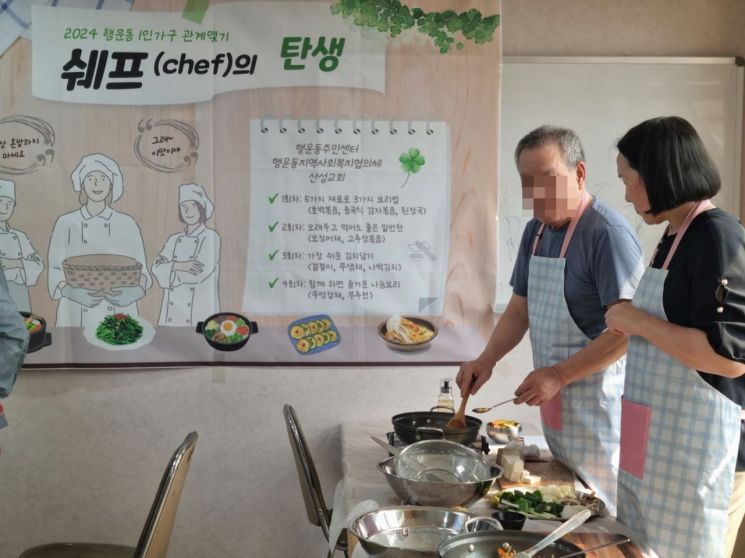
▲ Bedding support and laundry services (Euncheon-dong, Sillim-dong) ▲ Operation of a discovery team for reclusive and isolated youth (Inheon-dong) ▲ Elderly care for those at risk of lonely death (Seorim-dong) ▲ Cooking classes for isolated single-person households (Haengun-dong) ▲ Support for dairy products and side dishes, among other resident-demand-driven, life-oriented projects, will be comprehensively carried out at all 21 neighborhood community centers.
The district will provide full support to efficiently promote single-person household support projects.
First, training on 'Characteristics of Single-Person Households and Understanding Project Planning and Evaluation' will be provided to single-person household officers at neighborhood community centers to strengthen their capabilities, and expert consulting will be conducted to enhance project completeness.
Also, a 'Single-Person Household Performance Sharing Meeting' will be held to share best practices with related organizations within the district and to strengthen cooperative systems.
Mayor Park Jun-hee stated, "Single-person households are no longer marginalized groups but precious neighbors who make up our society," adding, "Gwanak-gu aims to be an 'inclusive city where no one is left out,' and we will continue to expand various support projects based at all 21 neighborhood community centers," expressing a strong commitment to strengthening policies supporting single-person households.
© The Asia Business Daily(www.asiae.co.kr). All rights reserved.

















