Nam June Paik Art Center Presents "Omniscient Nam June Paik Perspective"
On View Until February 22, 2026
Showcasing Works That Visualize "Time"
The exhibition "Omniscient Nam June Paik Perspective," held at the Gyeonggi Cultural Foundation Nam June Paik Art Center until February 22 next year, deals with the concept of time in a multi-layered way. Using interview videos featuring Nam June Paik explaining video art, which was an unfamiliar genre in the 1960s and 1970s, the exhibition was designed to see, hear, and experience time.
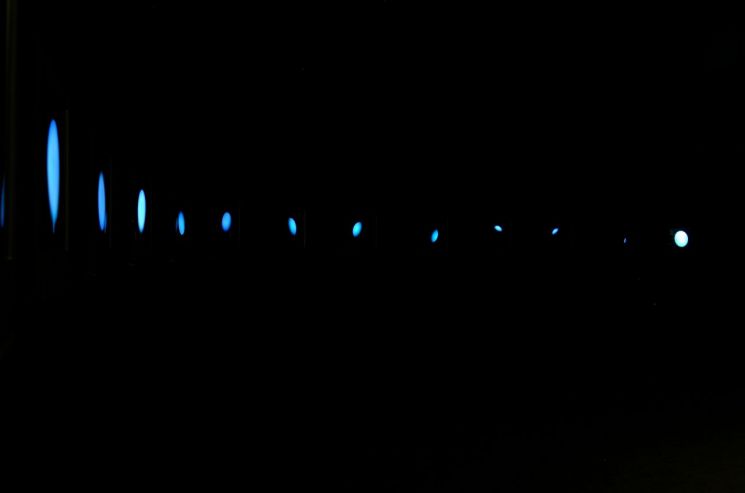
Nam June Paik's first work in 1964, "The Moon is the Oldest TV," created the shape of the moon by attaching an electromagnet to a black-and-white TV, temporarily disturbing the flow of the electron beam. It visualized abstract time, and Paik explained in an interview with German ARD broadcasting, "Time can be felt but cannot be seen. I wanted to capture a part of time and place it in space."
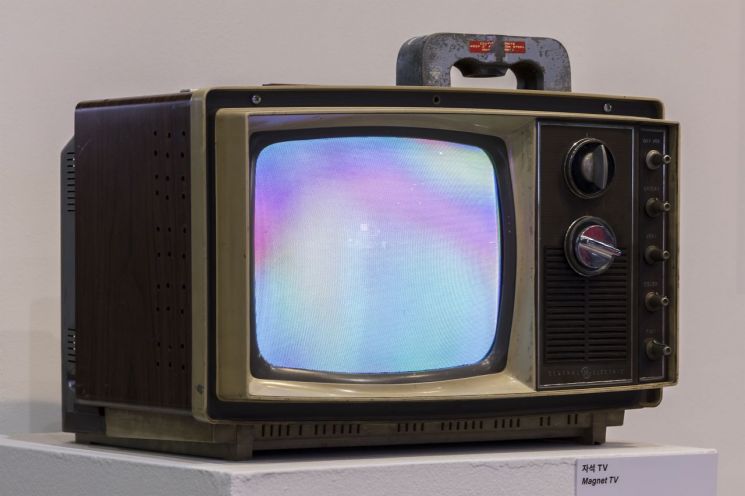
The "Magnet TV" work was also created by moving a magnet near the TV, causing the internal fluorescent material and electron beam to collide and emit light. The electron beam inside the TV is disturbed by the magnet, creating distorted red, green, and blue tri-color screens that produce abstract movements. Visitors can directly move the magnet to experience the ever-changing visual art in real time.
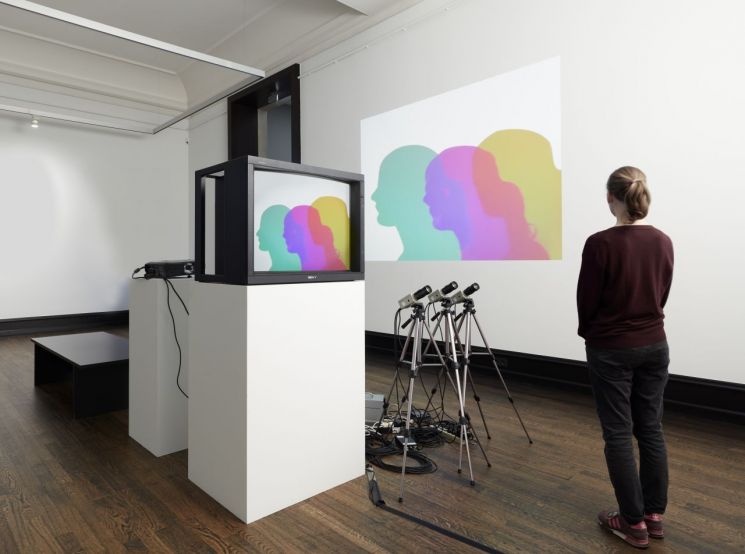
The work "Participation of Three Cameras" uses three black-and-white cameras to display visitors' images in red, green, and blue. As an interactive exhibition piece, it encourages viewers to reconsider perception and expression of reality through the three-color images.
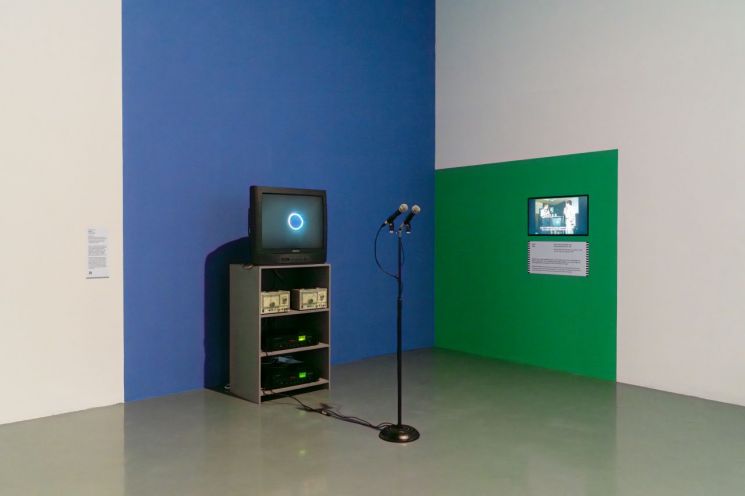
"Participation TV" converts the sounds that visitors speak into a microphone into irregular pattern images. This work was first introduced at Paik's solo exhibition in 1963, where the ribbon-shaped "Dancing Pattern" changes shape according to the visitors' voices.
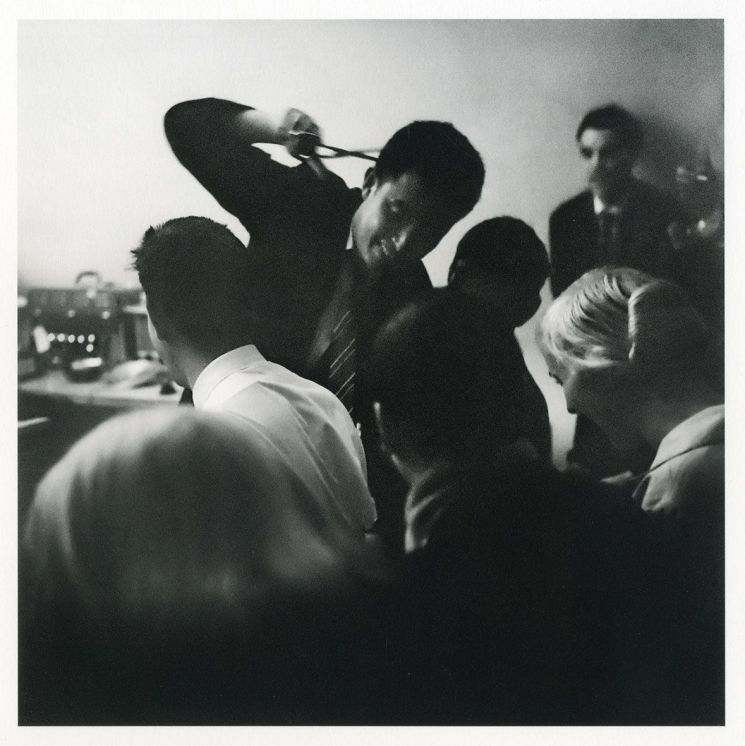
Five photographs capturing Nam June Paik's 1960 concert "Etude for Piano Forte" introduce his radical performance. At the time, Paik played Chopin, then smashed the piano, cut John Cage's tie in the audience, and ran out. Such rebellious behavior made viewers momentarily aware of the existence of time. Curator Su-Young Lee explained, "Although Paik's performance is remembered as violent and aggressive, the original intention was to convey the shock of catharsis and the extreme electronic impulses and astonishment."
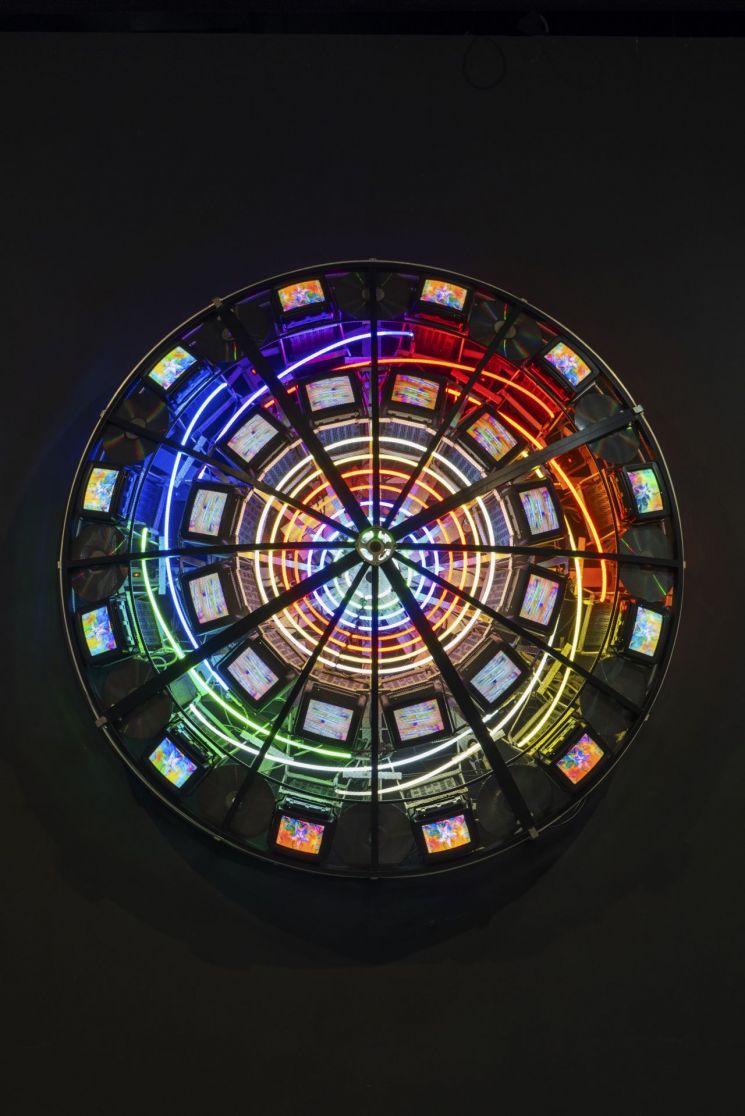
The work "Uranus" expands Nam June Paik's artistic imagination into space, displaying diverse images through 24 monitors. As the seventh planet of the solar system, Uranus is depicted with a turquoise hue from methane and faint ice, expressed with brilliant neon lights. Director Nam-Hee Park speculated, "Perhaps Paik wanted to obsessively discuss time and speed through Uranus, the darkest and slowest-moving planet." The Uranus exhibition, owned by the Leeum Museum of Art, is being shown for the first time since 2006. Paik presented a series of planetary works including "Sun and Moon," "Venus," "Mars," and "Neptune," but these works are currently unaccounted for.
Curator Sang-A Lee said, "You can enjoy the exhibition like a montage, traversing time and space, or compare the differently flowing times in each work to experience the diverse directions of time. The works flow with fast-forward, rewind, plus time (memory), and minus time (forgetting). I hope visitors also feel Paik's teaching that 'there is no rewind in life, so live straight forward.'"
© The Asia Business Daily(www.asiae.co.kr). All rights reserved.



















