After Changes in the Criminal Justice System
Sharp Rise in Long-Term Unsolved Cases, Greater Public Harm
Supplementary Measures Needed to Restore Trust
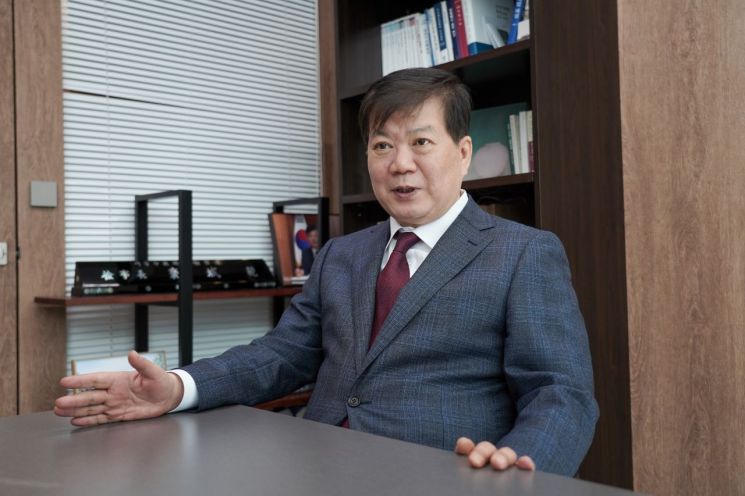 On the afternoon of the 9th, Bae Seong-beom, former high-ranking prosecutor, is being interviewed by Asia Economy at the YK Law Firm office in Yeoksam-dong, Seoul.
"Investigations without accountability, investigations significantly delayed compared to the past, and on top of that, trial delays?these are truly major problems."
On the 9th, at an office in Yeoksam-dong, Gangnam-gu, Seoul, former High Prosecutor Bae Seong-beom said, "Things that were not visible inside have become visible once outside."
Having served 27 years in the prosecution, culminating as the head of the Legal Research and Training Institute (High Prosecutor), after serving as Chief Prosecutor of Changwon, Gwangju, and Seoul Central District Prosecutors' Offices, he left the prosecution. Last year, after the three-year employment restriction period under the Public Officials Ethics Act expired, he joined the law firm YK as the lead criminal defense attorney.
We asked former High Prosecutor Bae about his firsthand experience of the criminal justice system, which has changed significantly over the past five years at the frontline. This is his first media interview since retirement.
Below is a Q&A with former High Prosecutor Bae.
-There have been major changes in the criminal justice field around the time you left the prosecution in 2021.
▲Since the legislative adjustment of investigative authority between the prosecution and police, not only the investigative agencies whose powers and procedures have changed significantly, but also ordinary citizens who become parties to criminal procedures have experienced great confusion and inconvenience. There was an expectation that the police, as the main investigative body, would perform their duties with greater responsibility, but from the perspective of the citizens involved in cases, the investigation stage has become more complicated, and the overall progress of judicial procedures such as investigation and trial has been severely delayed, causing suffering that is felt at the frontline of the legal profession. To restore trust in the criminal justice system, I believe fundamental supplementary measures to address these issues must be prepared even now.
-What do you think needs improvement in the investigation process?
▲First, in practical investigations, there are many cases where investigations have been significantly delayed due to repeated transfers of cases between the prosecution and police. Statistically, the number of long-term unsolved cases under investigation for more than six months has more than doubled compared to before the criminal law revision. In cases where ordinary citizens have suffered damages and filed complaints, repeated police decisions not to prosecute, objection procedures, prosecution requests for supplementary investigations, and transfers have caused great inconvenience and distress to complainants due to procedural complexity and frequent changes in investigative authorities. The same applies to suspects. Also, the fact that police decisions not to prosecute in complaint cases cannot be appealed is a setback for human rights protection in public interest complaints, such as those involving the rights of persons with disabilities.
-What would you say is the biggest cause of investigation delays?
▲In the past, the prosecution's standard for long-term unsolved cases was three months. Even when prosecutors directed investigations and sent cases to the police, they still considered the cases as their own. If the police delayed investigations, prosecutors would be reprimanded by their superiors as the time the prosecutor held the case also elapsed, and they had to urge investigations to manage unsolved cases. According to prosecution guidelines, after two months, prosecutors had to receive reports from the police on reasons for no progress, and cases over one year were under focused monitoring. However, currently, once a prosecutor requests supplementary investigation from the police, the case is no longer considered theirs. Even if the case returns to the prosecution later, it is treated as a new case, so there is no urgency. As cases bounce back and forth between police and prosecution, two or three years can pass, which is a nightmare for complainants, but from the prosecutor's perspective, it becomes a new case with a new case number.
-You also pointed out trial delays.
▲In criminal trials, the evidentiary power of prosecution records is limited, increasing the need for courtroom testimony, which has severely prolonged trials. If a suspect interrogation record prepared by a prosecutor is denied in court, it loses evidentiary power, so witnesses or informants must be summoned to testify in court. Some avoid testifying, some flee, and even those who appear may have memories contaminated by the passage of time. The rule to try detained defendants within six months was based on a social system where that period was sufficient, but under current circumstances, trials are prolonged, and detained defendants may have to be released.
-What is the most memorable case during your prosecution career?
▲I remember cases involving pseudo-religious investigations and organized crime handled in the special and organized crime divisions, high-ranking public official corruption, and major corruption crimes that caused social uproar. Personally, large-scale financial fraud, voice phishing organized crime, highly controversial bizarre murder cases, and investigations into shipping corruption immediately after the Sewol ferry disaster were the most challenging. Beyond investigations, I consider my involvement in establishing the Ministry of Justice's human rights protection investigation guidelines, legislation to protect child victims of sexual crimes, and the establishment of the Financial Services Commission's Capital Market Investigation Unit as particularly rewarding during my public service. I served as head of seven institutions during my prosecution career, which I understand is a very rare case.
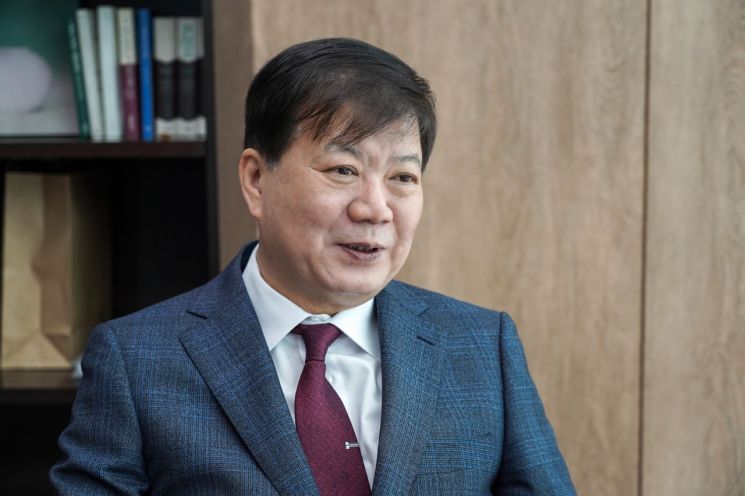 On the afternoon of the 9th, Bae Seong-beom, former high-ranking prosecutor, is being interviewed by Asia Economy at the YK Law Firm office in Yeoksam-dong, Seoul.
-What role do you play at YK? Why did you choose to join YK?
▲As the head of the criminal division at law firm YK, I oversee advice and defense in major criminal cases where the firm needs to focus its capabilities, including corporate governance disputes, embezzlement, and typical corporate criminal cases, as well as criminal matters related to finance, serious accidents, and labor. Originally strong in criminal cases and litigation, YK has recently expanded its practice to overall corporate law and has grown into one of the top seven law firms nationwide as of the end of 2024. Especially in areas such as taxation, fair trade, corporate succession, finance, and corporate crime, YK has set new visions and is making creative challenges through intensive talent recruitment, night and holiday consultation systems, and IT infrastructure development. I joined because I resonate with YK's ambitious and innovative goals.
-What differentiates YK from other law firms?
▲While major law firms have generally focused on Seoul-centered, large corporation legal services, YK aims to provide high-level legal services comparable to large firms to many medium-sized, small, and regional companies in advisory, investigative assistance, and litigation. Unlike other law firms' branch offices that operate independently, YK's 32 branch offices nationwide operate under a fully unified ONE-FIRM structure, with centralized lawyer placement, staff employment, and litigation performance. Particularly, through the Corporate General Center and Content Center located at the Seoul main office, YK strives to provide advisory and litigation services for regional cases at the same level as the main office promptly. Collaboration is conducted in the most suitable way from investigation stages to courtroom defense through joint defense teams and video conferences for drafting opinions and attending investigations.
-What have you felt while working as a lawyer?
▲Above all, a lawyer must communicate sincerely based on sufficient empathy for the client's difficulties. Those who communicate sincerely with clients, thoroughly review facts and legal principles, and pay attention to details in their defense left the strongest impression on me. To survive in an era of changing circumstances, increasing numbers of lawyers, and the emergence of legal IT, I believe continuous reflection and effort are necessary to understand what ordinary citizens and companies expect and demand.
◆He is...
-Masan High School
-Seoul National University, Department of Law
-Passed the 33rd Judicial Examination
-Completed the 23rd Judicial Research and Training Institute
-Chief of Ansan Branch, Suwon District Prosecutors' Office
-Head of the Violent Crime Division, Supreme Prosecutors' Office
-Acting Chief Prosecutor, Busan District Prosecutors' Office
-Chief Prosecutor, Changwon District Prosecutors' Office
-Chief Prosecutor, Gwangju District Prosecutors' Office
-Chief Prosecutor, Seoul Central District Prosecutors' Office
-Director, Legal Research and Training Institute (High Prosecutor)
-Lead Criminal Defense Attorney, Law Firm YK
© The Asia Business Daily(www.asiae.co.kr). All rights reserved.


















