Reciprocal Tariffs Take Effect for 86 Countries at Midnight, Eastern Time
Trump Prioritizes Allies Like South Korea and Japan in Tariff Negotiations
U.S. Warns "Retaliation Is a Mistake"... Pushes Ahead with 104% Tariff on China
China Strongly Protests... Concerns Grow Over Prolonged U.S.-China Trade War
On the 9th (local time) at 12:01 a.m., the United States fully implemented reciprocal tariffs ranging from 11% to 50% targeting 86 countries and will begin individual negotiations with each country. Officials from the Donald Trump administration stated that they will prioritize negotiations with allies such as South Korea and Japan. Meanwhile, as President Trump warned the day before, the U.S. plans to impose an additional cumulative 104% tariff on China during his second term, raising concerns that the U.S.-China trade war could become a prolonged conflict.
Trump Talks with Acting President of South Korea... Prioritizes Allies like South Korea and Japan in Reciprocal Tariff Negotiations
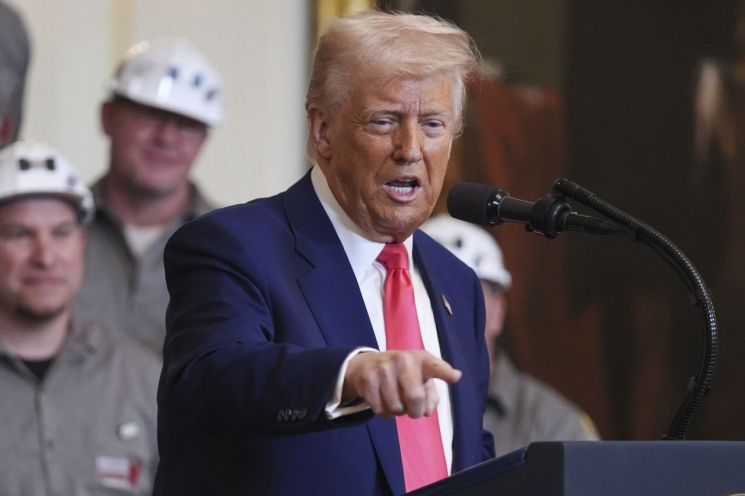
On the morning of the 8th, President Trump spoke with Han Duck-soo, Acting President and Prime Minister of South Korea, discussing a wide range of topics including tariffs, shipbuilding, the purchase of U.S.-made liquefied natural gas (LNG), and defense cost-sharing (costs for U.S. troops stationed in South Korea). In a post on his social media platform Truth Social, which he created, Trump said, "Had a good call with South Korea's Acting President," and added, "Their best team boarded a plane to the U.S., and things look good." This indicated the start of negotiations with South Korea ahead of the full implementation of reciprocal tariffs on the 9th. Jung In-kyo, Director General for Trade Negotiations, arrived in the U.S. that day to engage in tariff talks.
Jaimison Greer, U.S. Trade Representative (USTR), who will lead the reciprocal tariff negotiations, also expressed willingness to negotiate, stating that he was in talks with about 50 countries. Appearing before the Senate Finance Committee, he said, "If there is a better plan to achieve reciprocity and reduce our trade deficit, I want to talk and negotiate with other countries," adding, "We are open." Scott Vestent, U.S. Treasury Secretary, who will co-lead the tariff negotiations with Greer, also mentioned contact with about 70 countries, signaling upcoming tariff talks.
On the 5th, the U.S. implemented a basic 10% tariff on all global trading partners, and from the 9th, it will impose punitive additional tariffs varying by country on the "worst offenders." The statements from President Trump and his aides about negotiations confirm the previously announced policy of "tariffs first, negotiations later," indicating that after the full implementation of reciprocal tariffs at midnight on the 9th, negotiations with each country will commence. This has cautiously raised hopes that the tariff war initiated by Trump may find a breakthrough without escalating into a global full-scale conflict.
The Trump administration also confirmed its policy to prioritize allies during tariff negotiations. Kevin Hassett, Chairman of the White House National Economic Council (NEC), said in a Fox News interview that President Trump has set a policy to negotiate first with allies like South Korea and Japan in trade talks. It is also analyzed that this is based on the calculation that quickly reducing the U.S. trade deficit by swiftly concluding negotiations with countries like South Korea and Japan, which have large trade surpluses with the U.S., is advantageous. Given the intertwined interests in various issues beyond trade as economic and security allies, there may be pressure to reach an early agreement. In fact, President Trump, White House Press Secretary Caroline Levitt, and USTR Greer have expressed their intention to conclude deals through a "one-stop shopping" or package deal approach that covers not only trade but also major issues such as economic security and defense. In South Korea's case, issues like the increase in defense cost-sharing, which President Trump has demanded, are expected to be included on the negotiation table.
"Retaliation is a Mistake" ? U.S. to Enforce 104% Additional Tariffs on China... Concerns Over Prolonged U.S.-China Trade War
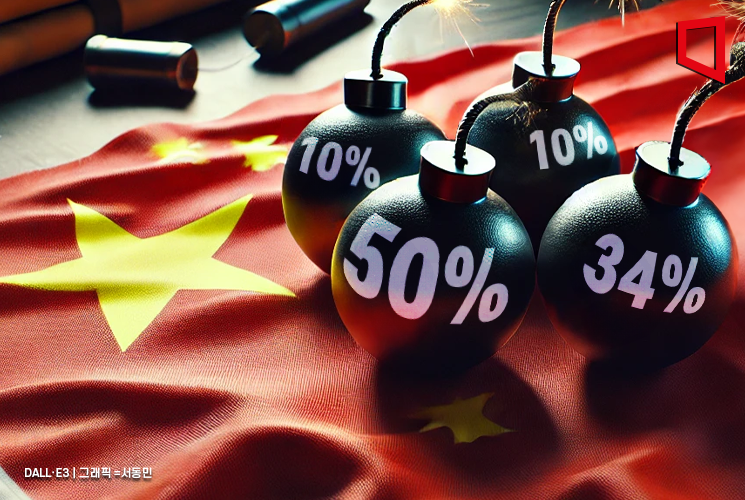
On the other hand, the U.S. confirmed its determination to impose a cumulative 104% tariff on China since the start of Trump's second term, despite China's announcement of retaliatory measures. Press Secretary Levitt stated at a briefing that the 50% additional tariff on China will "take effect at 12:01 a.m. on the 9th." She emphasized, "If retaliation occurs, it is China's mistake, and the U.S. will respond even more strongly," explaining, "That is why the 104% tariff is being implemented."
Earlier, after taking office on January 20, President Trump imposed two rounds of 10% additional tariffs on China and announced that from the 9th, a 34% reciprocal tariff would be applied to China. When China strongly opposed and retaliated with tariffs at the same level, President Trump threatened to impose an additional 50% tariff as a counter-retaliation. If the U.S. implements the reciprocal tariffs as planned, the additional tariffs on China during Trump's second term will rise to 104% starting on the 9th.
China has stated it will not yield to the U.S. threat of a 50% additional tariff. The Chinese Ministry of Commerce called the U.S. reciprocal tariffs "completely baseless and a typical unilateral bullying act," warning that "if the U.S. insists on this path, China will definitely resist to the end" and promised a strong response.
Although President Trump and the White House have said they are waiting for contact from China and have left the door open for dialogue, the imposition of over 100% additional tariffs on China by the U.S. makes a "strong versus strong" confrontation unavoidable. If both sides fall into a vicious cycle of tariffs, retaliatory tariffs, and counter-retaliations, there is growing concern that the U.S.-China trade conflict could escalate into a no-compromise chicken game, prolonging the trade war.
© The Asia Business Daily(www.asiae.co.kr). All rights reserved.


















