Jameson Greer: "Open to Negotiations"
Suggests Possibility of Economic Security Cooperation Beyond Trade
Trump Also Highlights 'One-Stop Shopping' in Emphasizing Package Deals
Jameson Greer, the United States Trade Representative (USTR), stated on the 9th (local time) that after fully implementing reciprocal tariffs, negotiations could take place if trading partners present alternatives to resolve trade imbalances. However, he drew a line on the possibility of short-term exemptions or exceptions to reciprocal tariffs.
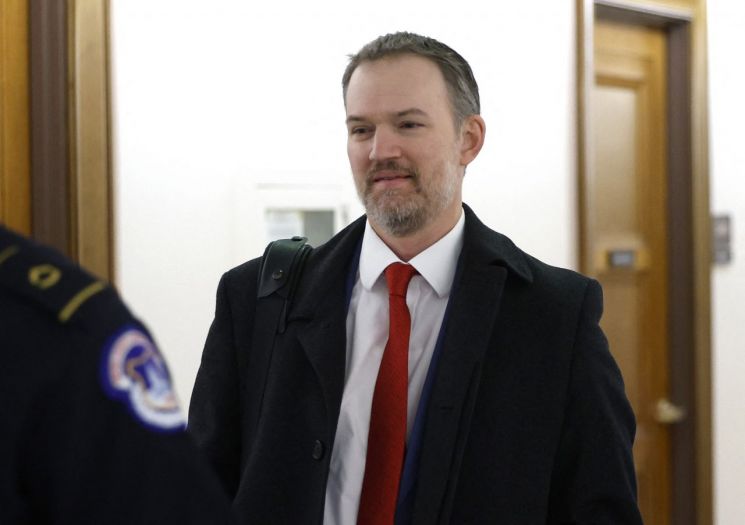
At a Senate Finance Committee hearing on the 8th, Representative Greer conveyed to other countries that "if there are better ideas to achieve reciprocity and reduce our trade deficits, we want to engage in dialogue and negotiations."
He explained, "I do not want to prejudge negotiations, but if other countries can present alternative plans that can advance the goals, we are open to it."
He particularly emphasized the need to address unfair trade practices, subsidies, tariffs, and quota systems of trading partners, and predicted that negotiation outcomes would vary by country.
Representative Greer said, "There will be countries that completely eliminate non-tariff barriers, tariffs, and trade deficits, and others that will not," adding, "The President will have options to reach agreements with these countries."
However, he dismissed the possibility of exceptions or exemptions to reciprocal tariffs by comparing such measures to 'Swiss cheese' with holes. He also reiterated that President Trump has stated he will not allow short-term exemptions or exceptions.
Greer revealed that he is in talks with about 50 countries, most of which have no intention of retaliating against the U.S. He also introduced negotiations with Japan, explaining, "Even if it is not purely a trade issue, there are things we can do with trading partners related to economic security."
It is analyzed that in reciprocal tariff negotiations, a comprehensive 'package deal' that bundles various issues such as industry and security, not just trade, could be an alternative. President Trump also mentioned after a call with Acting President and Prime Minister Han Duck-soo that morning, "Like with South Korea, we are raising other topics not covered by trade and tariffs and conducting negotiations," adding, "One-stop shopping is a beautiful and efficient process." Earlier, U.S. Treasury Secretary Scott Vestent suggested in an interview with CNBC that the Alaska oil and natural gas development project could be considered as an alternative in tariff negotiations with South Korea, Japan, and Taiwan.
Meanwhile, President Trump has instructed to prioritize allies in reciprocal tariff negotiations. Kevin Hassett, Chairman of the White House National Economic Council (NEC), stated in a Fox News interview that President Trump has set a policy to negotiate first with allies such as South Korea and Japan in trade talks. On the other hand, the U.S. has implemented retaliatory measures as announced against China, which responded to U.S. reciprocal tariffs with counter-tariffs, imposing a total of 104% additional tariffs since the start of Trump's second term, effective from 12:01 a.m. on the 9th.
© The Asia Business Daily(www.asiae.co.kr). All rights reserved.


















