Submission of Official Statement... Emphasizing Korea's Contribution to the U.S. Supply Chain
The Korea International Trade Association (KITA) announced on the 8th that it submitted an official statement reflecting the opinions of our trade industry to the U.S. Department of Commerce on the 1st in response to the U.S. national security threat investigation on imported copper.
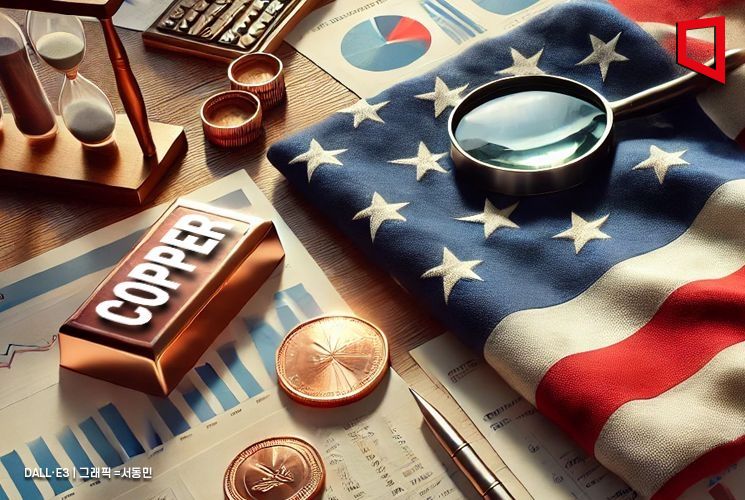
On the 10th of last month, the United States initiated a national security threat investigation on imported copper and derivative products based on Section 232 of the Trade Expansion Act and conducted a stakeholder consultation process until the 1st of this month.
In its statement, KITA argued that Korean copper products pose no risk to national security and should be excluded from the Section 232 measures. It emphasized that Korea’s share of U.S. copper imports was only 3.5% as of last year, and that for the U.S., which is highly dependent on copper imports, investments by Korean companies contribute to increasing production capacity and enhancing self-sufficiency.
KITA cited LS Cable & System and Poongsan as examples of Korean companies’ investments benefiting the U.S. LS Cable & System, which produces power cables using copper, is investing approximately $800 million in Virginia and began construction of an undersea power cable manufacturing plant this month. Poongsan, which manufactures industrial products using copper, has invested about $500 million in Iowa and has been producing approximately 54,000 tons of copper rolled products annually since 1992.
KITA also expressed concerns that imposing tariffs on derivative products could negatively impact demand industries and the expansion of essential power infrastructure in the U.S. It explained to the U.S. side that tariffs on derivative products such as copper wire, copper plates, copper foil, and extruded products could shift the burden onto demand industries including batteries, information technology (IT) components, transformers, and construction materials. Furthermore, imposing tariffs on cables and wires could severely disrupt the expansion of power infrastructure essential for fostering advanced industries such as artificial intelligence (AI).
Additionally, KITA requested that if excluding Korean copper products from tariffs is difficult, the U.S. should consider narrowing the scope of derivative products subject to tariffs or applying tariff measures gradually to provide companies with the minimum time needed to adjust their supply chains and minimize damage to demand industries.
Cho Sung-dae, head of KITA’s Trade Research Division, stated, "Tariffs have already been imposed on steel, aluminum, automobiles, and auto parts, and investigations on semiconductors and pharmaceuticals are expected to begin soon. To minimize the damage caused by trade measures, we will closely cooperate with the industry and focus on providing information to support smooth government negotiations."
© The Asia Business Daily(www.asiae.co.kr). All rights reserved.

















