"A-share Value at a Historic Low"
Plan to Increase ETF Holdings
People's Bank of China Also Announces Support
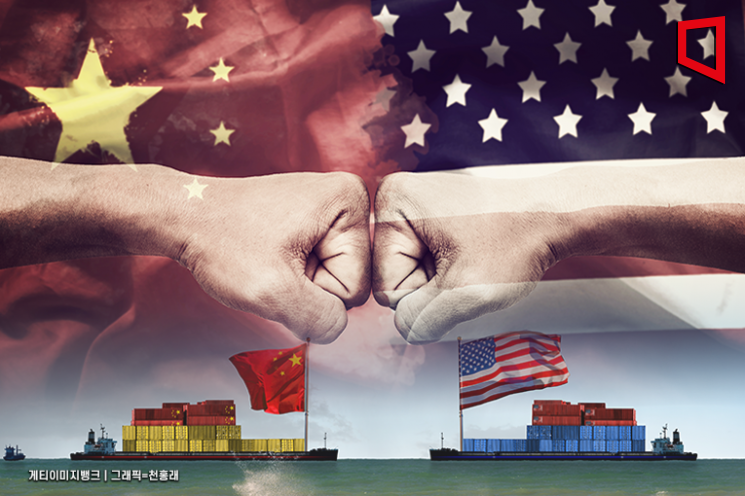
As Asian stock markets plummeted amid concerns over the US-China trade war, Chinese sovereign wealth funds have announced plans to increase their holdings of exchange-traded funds (ETFs) in a bid to stabilize the market.
On the morning of the 8th, before the opening of the Chinese stock market, Central Huijin, a Chinese state-owned investment company, posted a statement on its website emphasizing that "Central Huijin has always been an important strategic capability for stabilizing the capital market and serves as the national team of the capital market, playing the role of a 'balancing fund.'"
Central Huijin, affiliated with China Investment Corporation, the country's largest sovereign wealth fund, controls more than 20 major financial institutions in China, including the four largest state-owned banks. Following a sharp drop in the Chinese stock market?with the Shanghai Composite Index falling over 7% and the Shenzhen Composite Index dropping more than 9% the previous day?Central Huijin announced in the afternoon that it would continue to increase its ETF holdings.
It added, "With the in-depth promotion of comprehensive reforms in capital market investment and financing, the quality of A-share (Shanghai and Shenzhen listed stocks) companies is gradually improving, and the proportion of listed companies representing new quality productive forces and scientific and technological innovation is increasing," further stating that "the overall value of A-shares remains at historically low levels." Central Huijin reiterated its commitment to increasing ETF holdings following the significant market declines.
The People's Bank of China, the central bank, expressed strong support for Central Huijin's intervention in the stock market in a morning announcement, stating, "We firmly support Central Huijin and will provide sufficient re-lending support if necessary to firmly safeguard the stable operation of the capital market."
According to China Central Television (CCTV), in addition to Central Huijin, China Chengtong Group announced plans to expand its holdings of ETFs and state-owned enterprise stocks, while China Guoxin declared it would invest 80 billion yuan (approximately 16 trillion won) to increase its holdings in state-owned enterprises, science and technology innovation stocks, and ETFs. Furthermore, China Electronics Technology Group revealed it had purchased more than 2 billion yuan (approximately 4 trillion won) worth of shares in its listed subsidiaries.
The previous day, Chinese stock markets fell sharply after the Trump administration in the US imposed a general tariff of 20% in February and March, followed by an additional 34% reciprocal tariff. The Shanghai Composite Index dropped 7.34%, and the Shenzhen Composite Index fell 9.66%. The Hong Kong Hang Seng Index recorded a 13.22% plunge, the largest since the 1997 Asian financial crisis.
The situation in Taiwan was similar. After receiving notice of a 32% reciprocal tariff from the US, Taiwan's main export industries faced expected damage, and the Taiex Index fell 9.7% the previous day, marking its largest decline ever.
Taiwan is considering intervening in the market with a national financial stabilization fund worth 500 billion New Taiwan dollars (approximately 22 trillion won). On the 5th, Su Tseng-chang, Premier of Taiwan's Executive Yuan (equivalent to Prime Minister), convened a high-level meeting attended by the central bank governor and finance minister to receive reports on measures related to the US tariff shock, emphasizing the need to "be mentally prepared and ready for the impact." Taiwanese media have predicted that a provisional meeting to manage the stabilization fund could be convened as early as the 9th.
© The Asia Business Daily(www.asiae.co.kr). All rights reserved.