Sales Near Record High at 79 Trillion KRW
MX Division Drives Growth with Over 4 Trillion KRW in Profit
DS Division Faces Lower HBM Demand, but DRAM Shipments Hold Steady
Samsung Electronics exceeded market expectations, which initially anticipated operating profits around 5 trillion KRW, by posting over 6 trillion KRW in operating profit in the first quarter of this year. The Galaxy S25 model received strong consumer response and showed robust sales, while DRAM shipments also performed relatively well, playing a driving role.
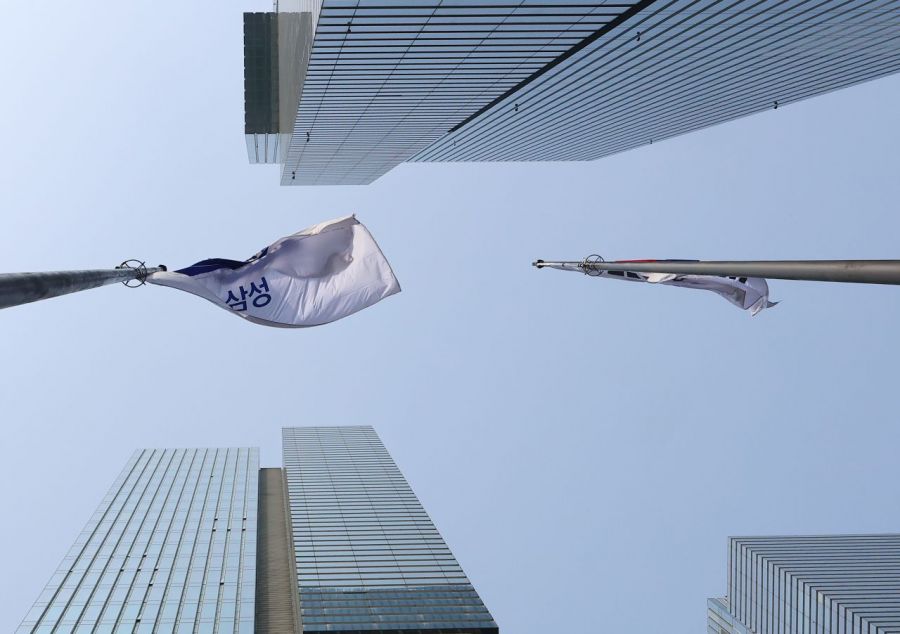
Samsung Electronics announced on the 8th that its consolidated operating profit for the first quarter of this year (January to March) was preliminarily estimated at 6.6 trillion KRW, a 0.15% decrease compared to the same period last year. Sales reached 79 trillion KRW, up 9.84% from the same period last year. This figure is close to the quarterly record set in the third quarter of last year (79.1 trillion KRW).
This announcement is based on preliminary results, and detailed breakdowns by business division were not disclosed. However, securities firms analyze that the Mobile Experience (MX) division, responsible for smartphones, likely accounted for over 4 trillion KRW in operating profit. Considering industry forecasts that the Device Solutions (DS) division, which handles the semiconductor business, remained around the 1 trillion KRW level in operating profit, it can be said that the strong performance of MX effectively offset the DS division’s poor results.
The DS division is still struggling with losses in the foundry (semiconductor contract manufacturing) and System LSI business units, and the recent decline in sales volume of High Bandwidth Memory (HBM) likely caused a significant drop in quarterly operating profit. Typically, the first quarter is known as the 'semiconductor off-season,' when memory products do not sell well. Additionally, the 5th generation HBM3E 8-stack and 12-stack products have yet to pass Nvidia’s quality test (Qual Test), which has hindered a rebound.
However, recent trends in the Chinese market, a major sales destination for Samsung’s memory products, are expected to have partially offset losses in the DS division. Thanks to China’s 'Yijiu Huanshin (以舊換新, support for replacing old products with new ones)' policy, smartphone demand in China increased by 15% compared to the same period last year, resulting in higher-than-expected demand in memory-related upstream industries and significant improvement in memory inventory. Additionally, proactive increases in shipment volumes in preparation for the Trump-era 'tariff bomb' likely had a positive impact on Samsung’s DRAM shipments.
On the other hand, the MX division enjoyed a boom with the Galaxy S25 series, released in February, achieving a record of 1 million units sold domestically in just 21 days, the shortest period among all Galaxy series. Kim Rok-ho, a researcher at Hana Securities, stated, "The MX division is expected to have demonstrated solid profitability due to the Galaxy S25 effect and efficient cost management."
© The Asia Business Daily(www.asiae.co.kr). All rights reserved.

















