Further Commitment to Cultivating High-Quality Professionals
The amendment to the law recognizing the eligibility of remote university (cyber university) students to take the national examination for language rehabilitation therapists was passed at the National Assembly plenary session on the 2nd.
As a result, graduates of remote universities who lost the opportunity to take the exam due to last year’s Supreme Court ruling now have a clear path to sit for the exam again.
At the 3rd plenary session of the 423rd National Assembly, the “Partial Amendment to the Welfare of Disabled Persons Act,” which includes remote university degree holders as eligible candidates for the language rehabilitation therapist exam, was approved.
This bill, first proposed by Joo Ho-young of the People Power Party in November last year, clearly stipulates that graduates of remote universities who have completed field training courses as specified by the Ministry of Health and Welfare are eligible to take the national exam.
Previously, in October last year, the Supreme Court dismissed without deliberation the lawsuit filed by the Korea Association of Language Rehabilitation Therapists to cancel the “Announcement of Language Rehabilitation Therapist Exam Implementation Plan.”
This ruling stated that, under the current Welfare of Disabled Persons Act, graduates of remote universities were not included among those eligible to take the language rehabilitation therapist qualification exam. As a result, students from remote universities, who had been eligible for over a decade, were excluded from the exam, prompting strong opposition and calls for action from students and educational institutions.
In particular, Lee Geunyong, president of Daegu Cyber University, and students held a head-shaving protest in front of the Ministry of Health and Welfare in November last year, demanding a legal amendment. The National Human Rights Commission also recommended that the government rectify the situation, stating that such restrictions on eligibility amounted to discrimination.
The Ministry of Health and Welfare also stated, “Personnel who became language rehabilitation therapists after graduating from remote universities have contributed to language rehabilitation for children with developmental disabilities and delays in the field,” adding, “It should be considered that other national qualification exams, such as for social workers, rehabilitation counselors for the disabled, and clinical psychologists, also recognize degrees from remote universities.”
Notably, Daegu Cyber University has produced numerous outstanding language rehabilitation therapists, including top scorers in both Level 1 and Level 2 exams over the past decade, and has actively carried out free volunteer work to promote language therapy in the local community.
Lee Geunyong, president of Daegu Cyber University, said, “With the restoration of eligibility through this legal amendment, we will leverage the unique characteristics of remote education to provide language rehabilitation therapist training opportunities to diverse students nationwide, thereby helping to bridge regional gaps in language therapy services,” and added, “We will do our utmost to serve as a cradle for nurturing professional language rehabilitation therapists who bring hope to children and families experiencing language development disorders.”
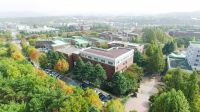 Daegu Cyber University.
© The Asia Business Daily(www.asiae.co.kr). All rights reserved.
















