[Hyundai Motor Company, Over the Mobility] (12)
Asking ChatGPT About the Changing Images of Hyundai Motor Company and Kia
Hyundai Motor Company and Kia, Differentiating Innovative Mobility Marketing
Hyundai Motor Company Emphasizes Image of Leading Technology with High Performance and Hydrogen
Kia Transforms into a Popular and Practical Mobility Brand
Kia Changes Its Name and Logo... The Story Behind the Logo Change
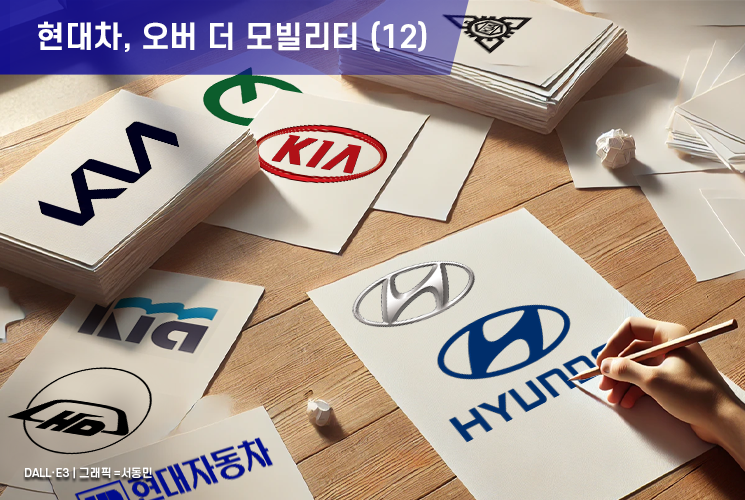
"Draw me the image of Hyundai Motor Company and Kia in the 1990s and 2020s."
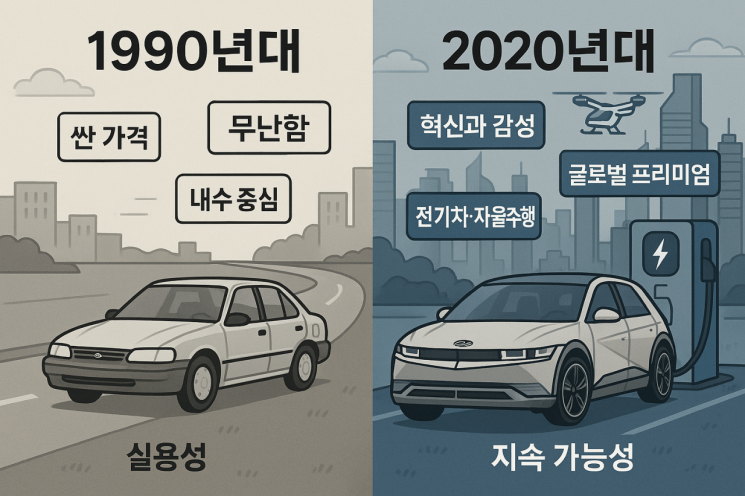
We asked the generative AI ChatGPT to draw impressions of Hyundai Motor Company and Kia brands in the 1990s and 2020s. The image representing Hyundai Motor Company in the 1990s featured the round-shaped sedan Excel along with keywords such as ▲low price ▲moderation ▲domestic market focus ▲practicality. In the 2020s, the electric sports utility vehicle (SUV) Ioniq 5 with emphasized straight-line design was placed at the center, accompanied by keywords like ▲innovation and emotion ▲global premium ▲electric vehicles and autonomous driving ▲sustainability. The background also included future air mobility (AAM), the next-generation mobility means.
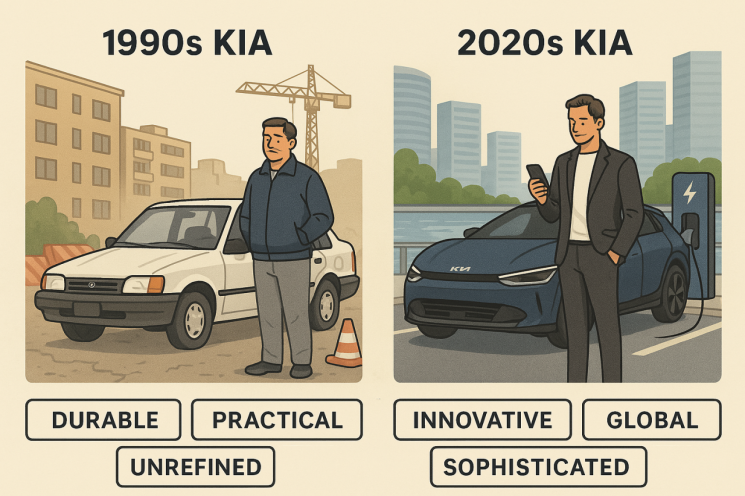
ChatGPT also instantly depicted the image change of Kia over the past 30 years. The picture representing Kia in the 1990s placed the representative model Pride at the forefront, with a construction site in the background and a middle-aged man wearing a jumper. The main keywords were ▲durable ▲practical ▲rough. In contrast, Kia’s image 30 years later completely changed to keywords like ▲innovative ▲global ▲sophisticated. The representative model symbolizing Kia in the 2020s became the charging electric vehicle EV6, and the character was depicted as a stylish young man holding a smartphone against the backdrop of a skyscraper.
The brand status changes of Hyundai Motor Company and Kia over the past 30 years, organized by AI in a virtual space, are also clearly reflected in reality. In the 2024 brand valuation announced by the global brand consulting firm Interbrand, Hyundai Motor Company’s brand value rose 63% over the past five years to $23 billion. Among all brands worldwide, it ranked 30th, and 6th among complete car brands. Although it trailed Toyota, Mercedes-Benz, and Tesla, it surpassed strong contenders such as Volkswagen, Porsche, Audi, and Ford. During the same period, Kia barely entered the top 100 at 86th place, but its rank has been rising sharply for four consecutive years, which is noteworthy. Kia’s brand value in 2024 was $8.1 billion, up 39% in four years.
Hyundai Motor Company also possesses its own diagnostic system (tool) for measuring brand value. It conducts brand perception surveys by sampling from over 40 countries and performs quantitative and qualitative evaluations. Sungwon Ji, Executive Vice President of Hyundai Motor Company’s Brand Marketing Division, said, "We consistently conduct surveys measuring brand perception through precise sampling by gender, age, buyers or prospective buyers," adding, "Through this, we quantify and track perception differences by market or comparisons with competitors."
Premium, High Performance, Hydrogen... Innovation through Technological Leadership
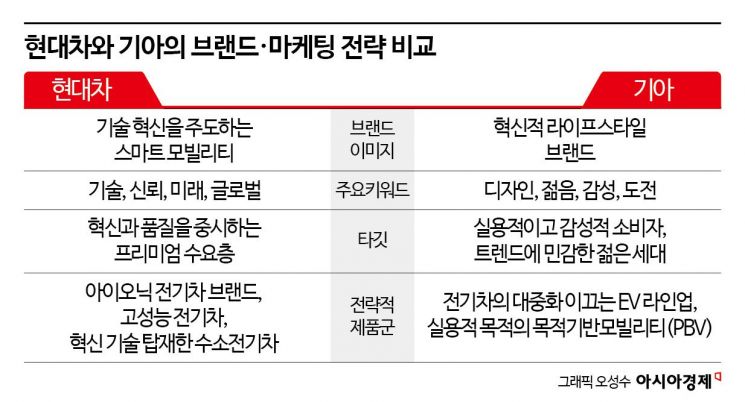
Let’s compare the images Hyundai Motor Company and Kia imprint on the public through online and offline media. Hyundai Motor Company emphasizes innovation through technological leadership and a premium image leveraging Genesis, while Kia advocates a popular and practical lifestyle brand.
Hyundai Motor Company highlights a premium strategy using Genesis, strengthening the high-performance N brand, and continuous investment in future growth engines such as AAM and robotics. Through this, it emphasizes the image of an innovative brand leading advanced technology.
By launching Genesis as an independent brand, Hyundai Motor Company aimed for a premium image to follow as Genesis’s luxury image was highlighted. Before Genesis became an independent brand in 2015, Hyundai Motor Company was regarded only as a cost-effective (price-performance) and accessible mass-market car. After Genesis’s success, Hyundai Motor Company was recognized as a technologically capable company that can also produce luxury cars. Especially in the North American market, Genesis ranked first several times in the local quality survey (J.D. Power Initial Quality Study), naturally elevating Hyundai Motor Company’s technological status.
Hyundai Motor Group applies new innovative technologies first to Genesis. Advanced technologies such as adaptive cruise control linked with navigation and driver assistance systems that automatically change lanes when the turn signal is on were first installed in higher-end Genesis models. This externally emphasizes Genesis’s image as a luxury car with advanced technology. The same technologies are later applied to Hyundai Motor Company models with a time lag, allowing Hyundai Motor Company to also acquire an advanced premium image.
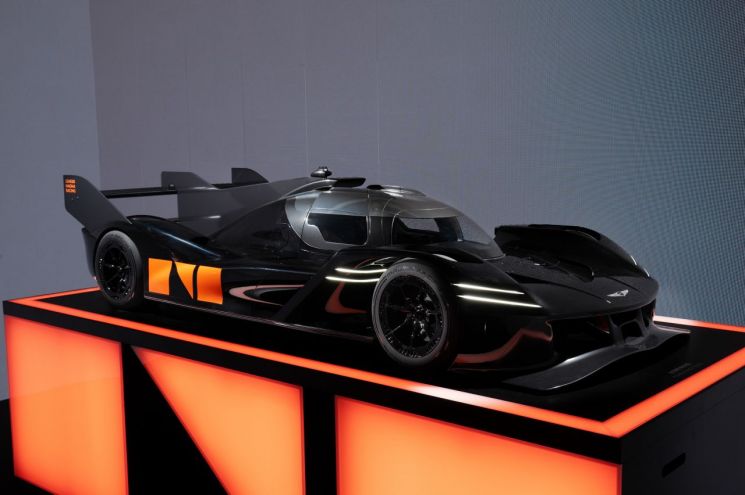 Genesis high-performance GMR-001 hypercar design unveiled at the 2025 Seoul Mobility Show. Provided by Genesis
Emphasizing high-performance brands for Genesis and Hyundai Motor Company is also part of a similar technology marketing strategy. In 2015, Hyundai Motor Company launched the high-performance N brand and began active technology promotion. By frequently exposing motorsports victories and participation to the public, it instilled the perception of a technologically capable brand. It created various concept high-performance eco-friendly cars such as the high-performance version of the electric vehicle Ioniq 5 N, the electrified high-performance concept car RN 22e, and the hydrogen hybrid concept car N Vision 74, and is preparing to enter motorsports with a high-performance lineup for Genesis as well. This not only boasts excellent electrification technology but also shows the possibility that Hyundai Motor Company can make fun cars for 'driving enjoyment.' Such investments lead to fandom for the brand. Fandom brings brand enhancement effects that cannot be measured by money.
Hyundai Motor Company actively utilizes hydrogen energy to create a brand differentiation point in sustainability. Among competitors, brands strategically using hydrogen energy include Hyundai Motor Company, Toyota, and Honda. Among them, Hyundai Motor Company leads the global hydrogen ecosystem and builds an image leading the hydrogen society. Hyundai Motor Company is not just a car brand selling hydrogen electric vehicles but advocates an eco-friendly brand encompassing the hydrogen value chain from production, transportation, distribution, storage, to utilization.
Hyundai Motor Company has conducted global campaigns using hydrogen, such as the 'H2U (Hydrogen to You)' campaign promoting the utility of the hydrogen electric vehicle Nexo starting in Europe, and the 'Because of You' campaign in collaboration with global stars BTS to convey hydrogen’s eco-friendliness to the MZ generation (Millennials + Generation Z), inducing a shift in hydrogen perception.
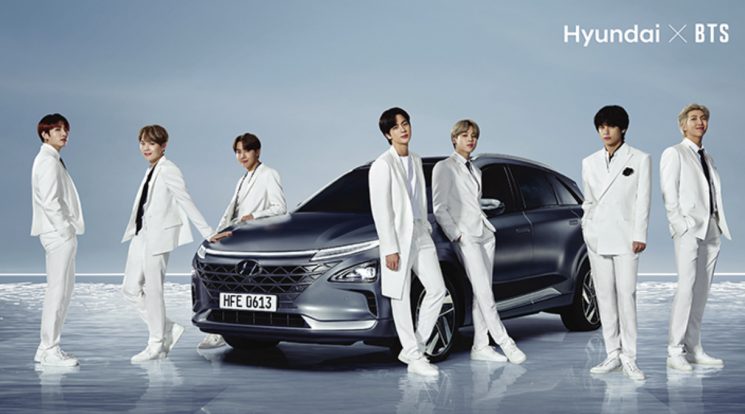 As part of the hydrogen campaign with Hyundai Motor Company, BTS is being photographed with Hyundai's hydrogen electric vehicle, Nexo. Photo by Hyundai Motor Company
At CES 2024, the world’s largest electronics and IT exhibition, Hyundai Motor Group announced its ambition to expand the existing fuel cell brand 'HTWO' into a hydrogen value chain business brand. Each group affiliate will take a role in the hydrogen business to form an overall hydrogen ecosystem.
For example, Hyundai Construction operates plants producing hydrogen based on water electrolysis and is responsible for designing and constructing charging infrastructure or hydrogen production facilities. Hyundai Steel produces blue and gray hydrogen by utilizing by-products and waste heat from steelmaking processes, while Hyundai Glovis safely transports hydrogen in liquid or high-pressure gas forms. Hyundai Motor Company manufactures hydrogen electric vehicles that can be used in daily mobility. This hydrogen ecosystem formation across all affiliates instills the perception that Hyundai Motor Company is an eco-friendly brand concerned with climate crisis response and carbon neutrality for a sustainable future.
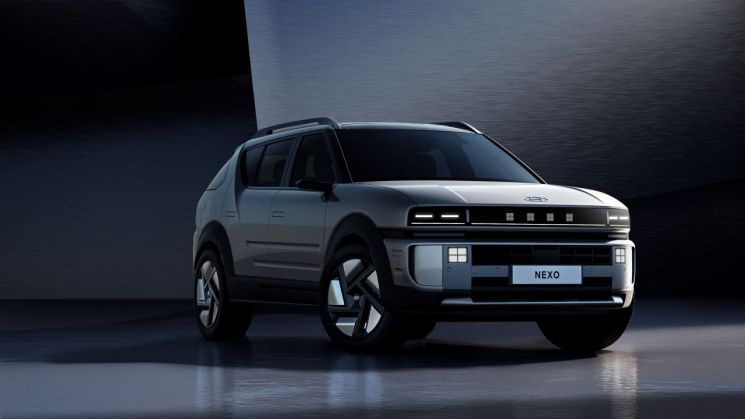
Kia, a Popular and Practical Mobility Brand
In 2021, Kia attempted brand redefinition through changing its name, new slogan, and corporate identity (CI). Kia removed 'motors' from its name and was reborn as the 'KIA' brand. This was 30 years after changing its name from Kia Industry to Kia Motors in 1990. It expressed its intention to transform from a traditional complete car business to a full-fledged mobility solutions provider. Kia also changed its slogan from 'The Power to Surprise' to 'Movement that Inspires.' The CI logo changed from the previous red 'KIA' logo inside a round border to a handwritten-style logo spelling 'KIA.'
The new logo was born by chance. Since around 2015, Kia sought to change its brand image. It spent a large amount on consulting from external agencies and conducted long-term internal research. While its global image was relatively young and practical, the problem was the domestic market. In Korea, the response was mostly that Kia was old-fashioned, unsophisticated, and outdated. Especially among the older generation, Kia was perceived as a company that went bankrupt during the foreign exchange crisis, so the image of decline and collapse was strong. To overcome this, Kia’s management carried out brand remodeling over several years.
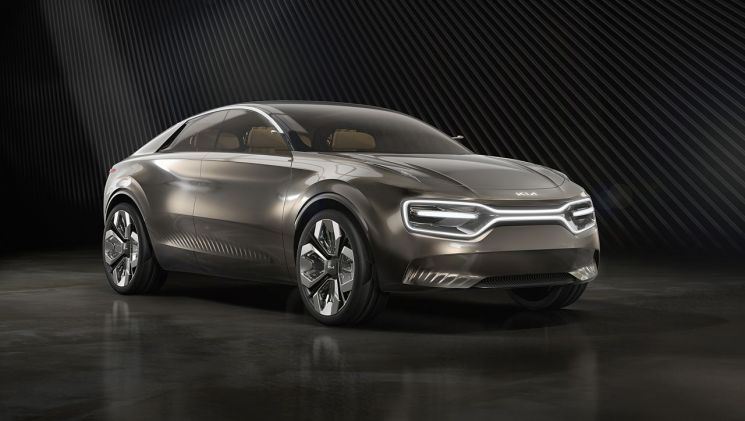
The current new logo started with the 'Imagine by Kia' concept car unveiled at the 2019 Geneva International Motor Show. The concept car’s design was completed, but the existing red 'KIA' logo inside a round oval did not fit at all. The European design studio quickly created a logo suitable for the concept car, which received a better-than-expected response. Later, Kia spent a lot on consulting to change the brand logo but found no satisfactory drafts. Then the logo made at the Geneva Motor Show came to mind, and when the staff reported it to management, it was immediately approved. After refining the logo’s proportions and letter sizes, the result was the current handwritten-style 'KIA' logo placed on Kia car trunks.
After brand redefinition, Kia transformed into an eco-friendly mobility brand leading the popularization of electric vehicles. It especially emphasized a young and practical brand image valuing emotion and customer experience. To this end, it created customer experience spaces to expand consumer touchpoints. Locations formerly called dealerships and showrooms were renamed 'Kia Store,' and design standards giving a warm and cozy feeling were established. It allowed customers to experience and view products as if visiting an art gallery.
Kia conducted joint marketing with various latest lifestyle brands such as fashion brand Musinsa and global coffee chain Starbucks, and collaborated with artists including indie bands popular among the MZ generation. Global sports marketing is also a field Kia focuses on. Kia has been the longest-running sponsor of the Australian Open (AO) global tennis tournament for 24 years and appointed world-renowned tennis star Rafael Nadal as a global ambassador.
From a product marketing perspective, Kia consistently delivers the message of 'popular and practical electric vehicles' to the market. Starting with the launch of the small EV3 priced around 30 million KRW, it announced plans to complete its electric vehicle lineup with the mid-size sedan EV4 and entry-level SUV EV2. It is expanding the purpose-built vehicle (PBV) business for customer-tailored commercial electric vehicles and setting a strategy to expand electric vehicle adoption emphasizing practicality.
© The Asia Business Daily(www.asiae.co.kr). All rights reserved.
![Clutching a Stolen Dior Bag, Saying "I Hate Being Poor but Real"... The Grotesque Con of a "Human Knockoff" [Slate]](https://cwcontent.asiae.co.kr/asiaresize/183/2026021902243444107_1771435474.jpg)


















