Mexico Promotes "USMCA Tariff-Free Advantage... Companies, Come Here"
Lula Cautions Against U.S. Tariffs... Milei "Satisfied"
France: "Cruel and Unfounded Decision"... Canada Imposes "25% Retaliatory Tariff on U.S. Cars"
Amid global condemnation following the announcement of reciprocal tariffs by the United States, countries' responses have shown varying degrees of intensity, drawing attention. Mexico, excluded from the reciprocal tariffs, has sought to attract global companies. Meanwhile, Canada, also excluded, took a tough stance by imposing retaliatory tariffs in response to automobile tariffs. France, a member of the European Union (EU), urged its domestic companies to halt investments in the U.S. Additionally, Brazil and Argentina, major representatives of South America, showed contrasting reactions despite being subjected to similar levels of tariffs.
Mexico: "Active Support for the Automotive Industry... Most Favorable Trade Conditions"
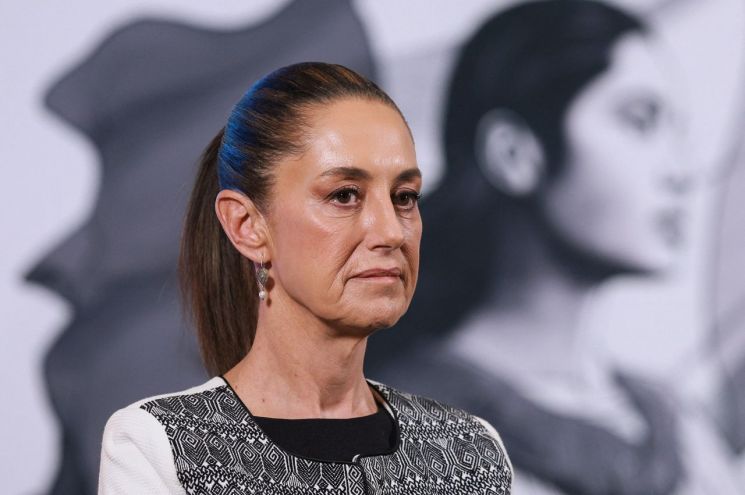
On the 3rd (local time), Claudia Sheinbaum, President of Mexico, stated at a regular press conference, "It is welcome that Mexico, along with Canada, was excluded from the basic and reciprocal tariffs imposed by the Donald Trump U.S. administration," adding, "Companies affected by tariffs in other countries can invest in Mexico by utilizing the USMCA that served as the basis for this exclusion."
The Mexican government emphasized that it has prepared plans to turn the 'crisis into an opportunity' amid the upheaval in the trade order. Marcelo Ebrard, Mexico's Minister of Economy, said, "Maintaining tariff-free measures on items compliant with the USMCA is a significant achievement. It was not something that could be taken for granted amid the threat to the free trade agreement's existence," adding, "Many countries competing with Mexico worldwide have become more disadvantaged. We have the most favorable trade conditions."
In particular, the Mexican government repeatedly stressed its commitment to supporting the automotive industry. Mexico's automotive sector has rapidly grown recently, thanks to investments by companies aiming to benefit from nearshoring effects under the USMCA, including the U.S. 'Big 3' automakers?General Motors (GM), Ford, and Stellantis. Kia of South Korea has also been competing with American, Japanese, and Chinese companies since establishing a production subsidiary in the northern state of Nuevo Le?n. According to the Mexican Automotive Industry Association (AMIA), these companies produced 3,964,012 vehicles last year, about 70% of which were exported to the United States.
The Mexican Ministry of Economy reported that approximately 84% of vehicles exported from Mexico to the U.S. last year met the USMCA criteria and thus qualified for '0% tariffs.' President Sheinbaum said, "The automotive production chains between Mexico and the U.S. are highly integrated. The U.S. government is aware of this and is in dialogue with us," adding, "We will do what we can, such as in steel and aluminum, to strengthen competitiveness within Mexico."
Furthermore, the Mexican government plans to focus on negotiations to mitigate the impact of the 25% tariffs imposed by the U.S. under the pretext of 'responsibility for fentanyl trafficking and illegal immigration.' President Sheinbaum stated, "If Mexico's efforts to curb fentanyl trafficking advance further, we could reach a preferential tariff rate of 12% instead of 25%," adding, "We are still actively communicating on this matter."
France Urges "Halt to U.S. Investments"... Canada Imposes "Retaliatory Tariffs" on U.S. Cars
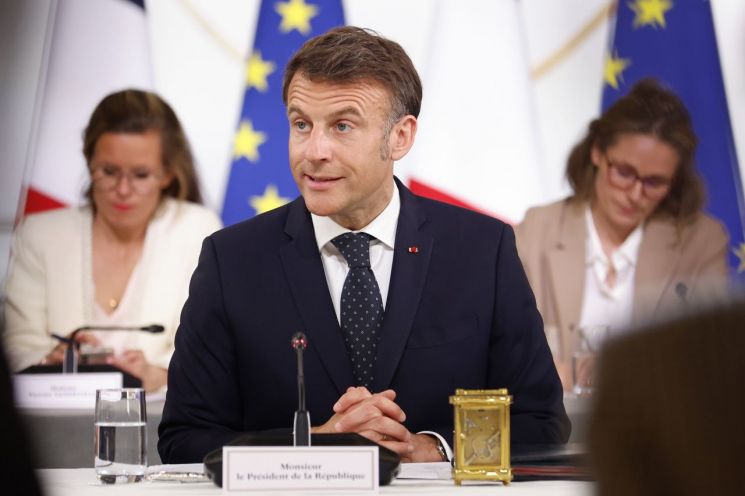
On the same day, Emmanuel Macron, President of France, called on French companies to stop investing in the U.S. in response to the Trump administration's decision to impose 20% reciprocal tariffs on the European Union (EU).
According to Bloomberg and Politico Europe, President Macron met with representatives of the U.S. export industry at the ?lys?e Palace in the afternoon to discuss countermeasures against the U.S. reciprocal tariffs. The emergency meeting included representatives from France's key industries such as aerospace, chemicals, wine, automobiles, pharmaceuticals, and fashion. Employer organizations and key government figures, including Prime Minister Fran?ois Bayrou, also participated.
President Macron condemned the U.S. tariff imposition as a "cruel and unfounded decision," stating, "Future investments or those announced in recent weeks should be put on hold until the issues with the U.S. are resolved." He added, "What message would it send if major European companies invest billions of euros in the U.S. economy while they are attacking us? We must stand united as a collective."
Macron emphasized, "We are a market of 450 million people," and stressed, "Europeans must unite and respond in a balanced and unified manner." He also said, "Nothing is off the table," indicating that retaliatory tariffs, coercive measures, digital taxes, or financial actions could be considered.
Canadian Prime Minister Mark Carney also took a tough stance by announcing retaliatory tariffs of 25% on U.S.-made automobiles in response to the Trump administration's 25% auto tariffs. According to the Associated Press and others, Carney said at a press conference, "We will take measures that maximize the impact on the U.S. while minimizing the impact on Canada."
Carney also stated that previously imposed Canadian retaliatory tariffs would remain in place. He said, "The U.S. administration will eventually have to change course considering the potential harm to its citizens," adding, "Their policy will hurt American households, but I think they will not change direction until the pain becomes significant." He further noted, "Therefore, the path to that point could be very long," and "It will be very difficult for Canada, as it is for other U.S. trading partners."
He continued, "The U.S. has exercised global economic leadership for the past 80 years, during which it strengthened alliances based on trust and mutual respect while advocating for free and open trade," adding, "That era is now over."
The day before, President Trump signed an executive order imposing high reciprocal tariffs on global trading partners. However, Canada and Mexico were excluded from the reciprocal tariff imposition on that day.
Brazil: "Will Use All Means to Respond"... Argentina: "Proceeding as Planned"
Brazil, the largest economy in South America by gross domestic product (GDP), expressed caution over the 10% basic tariff imposition. According to AFP and others, on the same day, Luiz In?cio Lula da Silva, President of Brazil, reaffirmed his commitment to multilateralism and free trade at a government performance event held in the capital Bras?lia, stating, "Facing the U.S. decision to impose tariffs on Brazilian products, we will take all appropriate measures to protect businesses and workers."
Earlier, the Brazilian Congress passed a bill granting the government authority to counter trade barriers in response to U.S. tariffs. This legislation provides the legal basis for the Brazilian government to impose retaliatory measures such as tariffs when Brazilian goods face unilateral trade actions.
Brazil, which exports oil, coffee, and steel to the U.S., recorded a trade deficit of 40 billion reais (approximately 10 trillion won) in trade with the U.S. last year. With tariffs added to this already unfavorable trade balance, the Brazilian government stated it is "evaluating all possible measures to ensure reciprocity in bilateral trade, including utilizing the World Trade Organization (WTO) to protect legitimate national interests," signaling its intention to respond through international organizations.
Argentina, a competitor of Brazil, was also subjected to a 10% tariff but showed a completely opposite stance. Manuel Adorni, spokesperson for the Argentine presidential office, said at a press conference that "we are satisfied with the lowest level of tariffs imposed."
Argentine President Javier Milei also expressed a positive reaction on social media platform X (formerly Twitter), posting "A friend remains a friend" along with the Spanish acronym TMAP, meaning "everything is proceeding as planned."
© The Asia Business Daily(www.asiae.co.kr). All rights reserved.
![Clutching a Stolen Dior Bag, Saying "I Hate Being Poor but Real"... The Grotesque Con of a "Human Knockoff" [Slate]](https://cwcontent.asiae.co.kr/asiaresize/183/2026021902243444107_1771435474.jpg)

















