Byeolbit Sinsari Commercial District Emerges as a Leading Alleyway Business Area in Seoul
Results of 8 Billion KRW Investment Over Five Years
Three Key Achievements: Sales Growth, Resident Satisfaction, and Enhanced Self-Sustainability
Sales Up About 28%, Annual Foot Traffic Increases by Around 42,000
The Byeolbit Sinsari commercial district has transformed into the new center of the area. Despite challenging environmental factors such as prolonged economic recession and the COVID-19 pandemic, the Sinsari commercial district achieved remarkable growth, with sales increasing by 28.65% in 2025 compared to the first quarter of 2020, and an annual increase of approximately 42,000 in foot traffic.
This is the result of the 'Commercial District Renaissance Project' promoted by Gwanak-gu (District Mayor Park Junhee) over five years starting in 2020, through a public contest by the Ministry of SMEs and Startups.
The 'Commercial District Renaissance Project' is a flagship alleyway commercial district support policy by the Ministry of SMEs and Startups. Gwanak-gu was selected in the nationwide contest in 2019 and invested a total project cost of 8 billion KRW over five years from 2020 to 2025 in the Sinsari commercial district (including Shinwon Market and Seowon-dong shopping area, covering approximately 62,000㎡ with 715 stores).
The district successfully concluded the project at the end of March 2025, laying a solid foundation for the practical recovery and self-sustainability enhancement of the local commercial district.
Although the Sinsari commercial district had positive factors such as transportation accessibility and nearby residential complexes, it had been declining due to aging infrastructure and changes in consumer patterns. However, through this project, the Sinsari commercial district has regained attention as a core of the local economy.
The district designated the traditional market and adjacent commercial areas as a single integrated zone and supported 20 detailed projects based on the promotion strategies of ▲‘ROAD Byeolsari’ (commercial infrastructure development), ▲‘CONTENTS Byeolcheonji’ (commercial content development), and ▲‘HUMAN Byeolmuri’ (merchant capacity building).
In particular, despite extreme consumption contraction caused by the COVID-19 pandemic from 2020 to 2022 and abnormal crimes within the commercial district in 2023, the stable increase in commercial district sales proves the practical effectiveness of the project.
Moreover, satisfaction surveys of commercial district users showed that compared to the first year of the project, in the fifth year, indicators rose by ▲14.2% in usage satisfaction, ▲7.5% in merchant friendliness, and ▲8.6% in commercial district cleanliness, reflecting not only environmental improvements but also enhanced customer service capabilities of merchants and qualitative changes throughout the commercial district.
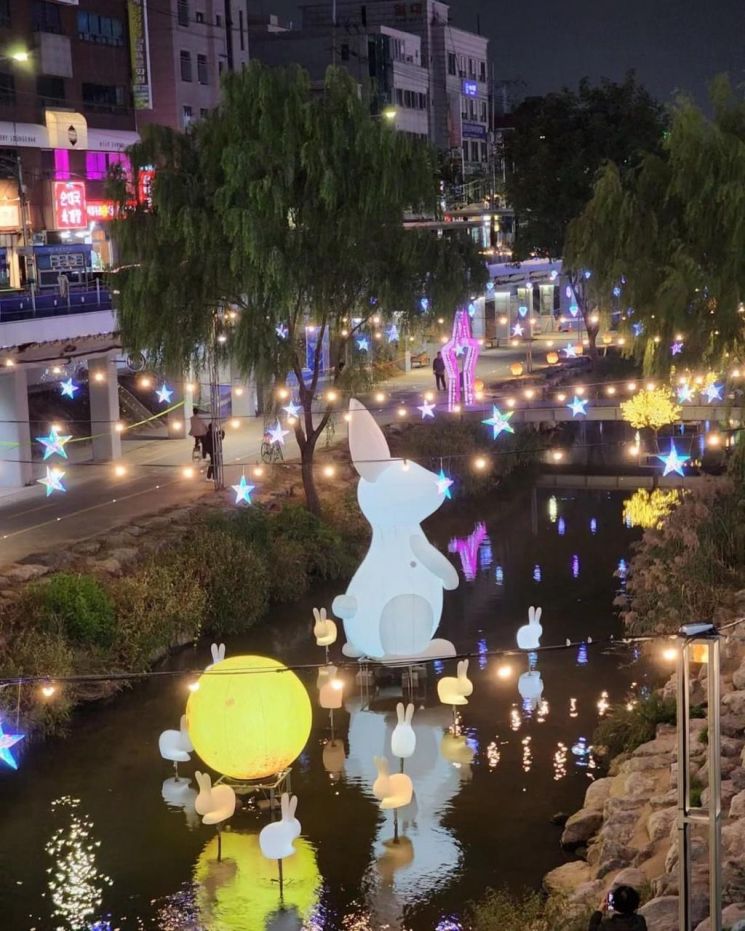
Additionally, to create commercial district landmarks and attract customers, the district linked Byeolbitnaerimcheon Stream and nearby commercial areas to pilot the lighting festival ‘Gwanak Byeolbit Sanchaek’ four times, drawing thousands of visitors each time and receiving enthusiastic responses.
Street performances and sculpture exhibitions under nighttime lighting were well received by family visitors as well as young and middle-aged groups. The combination of resident participation programs and local community cooperation revealed the potential for development as a regional festival.
Based on these achievements, the district plans to regularize the festival and accelerate the development of customized content reflecting residents’ opinions.
The ‘Byeolbit Sinsari Commercial District Renaissance Project’ is a successful example of structural change, meaning not just a simple physical remodeling project but a transformation into a people-centered commercial district and a culture-based commercial district created together with residents.
Building on accumulated experience, the district plans to continue promoting more systematic and creative local commercial district policies to create commercial areas that feel alive with the presence of people.
District Mayor Park Junhee said, “This Commercial District Renaissance Project is significant in that it established a new commercial ecosystem led proactively by residents and merchants beyond simple commercial district maintenance,” and added, “Even after the Renaissance Project, we will spare no administrative support in various ways so that the private sector can operate and grow independently.”
© The Asia Business Daily(www.asiae.co.kr). All rights reserved.

















