"If You Don't Retaliate, Tariffs Won't Be Raised Further"
The Donald Trump administration in the United States warned countries opposing reciprocal tariffs not to impose retaliatory tariffs but to accept the tariffs willingly.
On the 2nd (local time), U.S. Treasury Secretary Scott Besant stated in an interview with Fox News, "The advice to all countries right now is not to retaliate."
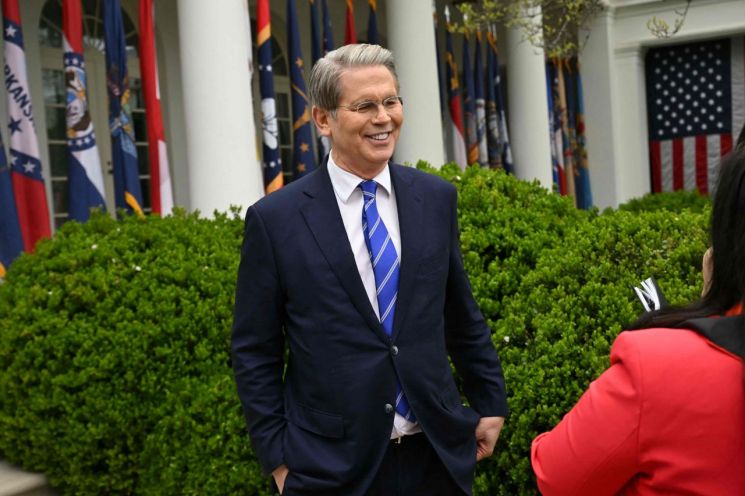
Secretary Besant said, "Sit down and accept it and see what happens. If you retaliate, the situation will worsen," adding, "If you do not retaliate, this will be the highest tariff rate."
This is interpreted as a signal that if trade partners impose retaliatory tariffs against reciprocal tariffs, the U.S. will engage in a full-scale trade war. In fact, the White House stated in a press release that President Trump has the authority to raise tariffs further against countries responding with reciprocal tariffs.
Russia and Belarus were not included in the list of tariff targets. Secretary Besant said that Russia and Belarus were not subjected to tariffs because they are under sanctions. However, according to the U.S. Trade Representative (USTR), the total trade volume of goods between the U.S. and Russia last year reached $3.5 billion.
When asked about predictions regarding China's response to the 34% reciprocal tariffs, he replied, "Let's see what they do."
Secretary Besant explained that the purpose of these tariffs is to lay the foundation for long-term economic growth. He criticized the massive government spending of the previous Joe Biden administration, saying, "We are getting back on a sound track."
On the same day, Steven Miron, chairman of the White House Council of Economic Advisers (CEA) and known as the architect of the Trump administration's tariff war, said in an interview with Fox Business, "There will be short-term shocks," but added, "What President Trump is focusing on is strengthening the sustainability and fairness of the U.S. economy globally."
© The Asia Business Daily(www.asiae.co.kr). All rights reserved.
![Clutching a Stolen Dior Bag, Saying "I Hate Being Poor but Real"... The Grotesque Con of a "Human Knockoff" [Slate]](https://cwcontent.asiae.co.kr/asiaresize/183/2026021902243444107_1771435474.jpg)











