"Yoon's Martial Law Declaration Leaves Irreparable Damage"
"Major Export Industries Expected to Take the Biggest Hit"
Lee Jun-seok, a member of the Reform New Party, stated on the 3rd regarding the announcement by the Donald Trump administration of the United States on 'reciprocal tariffs' against major trading partner countries including Korea, "We must also actively provide reshoring incentives to prevent our companies from relocating their production bases overseas." On that day, Lee posted on Facebook in the morning, "Starting with the imposition of a high tariff rate of 25% on our country, high tariffs have also been applied to countries such as Vietnam where our companies' production bases are located. As a country with a trade surplus with the U.S., a direct hit is expected mainly in key export industries such as automobiles and electronics."
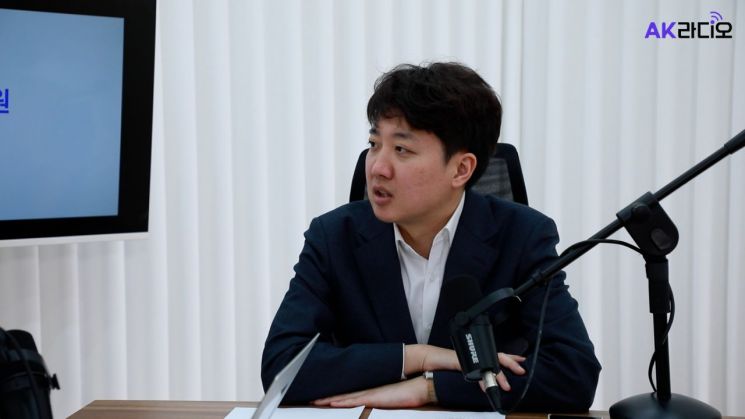 Lee Jun-seok, a member of the Reform New Party, stated on the 3rd regarding the announcement of 'reciprocal tariffs' by the Donald Trump administration on major trading partner countries including Korea, "We must also actively provide reshoring incentives to prevent companies from relocating their production bases overseas." Asia Economy
He continued, "This situation is like having to respond to unpredictable moves of the opponent in a complex chess game," and argued, "Each move can have a significant impact on the national economy, so careful and strategic responses are necessary." He also said, "Now, political leaders of the Republic of Korea should focus on encouraging corporate activities and swiftly abolishing regulations rather than distribution-oriented concerns such as basic income or free series," emphasizing, "It will be difficult to overcome this crisis without leaders who can respond agilely to the global environment and have a high understanding of the competition for scientific and technological hegemony, rather than leaders like 'Banggu-seok Yeopo' who are obsessed with eliminating political opponents within domestic politics."
He further pointed out, "It is regrettable that in recent years, during the gladiator politics of legal professionals, time was wasted trying to imprison someone or 'shield' someone," and criticized, "President Yoon Seok-yeol, who attempted martial law with delusions at a critical time, has left irreparable damage to the Republic of Korea."
Trump Abandons Korea-U.S. FTA, Imposes 25% Tariff on Korea
Earlier, on the 2nd (local time), the U.S. government officially announced that it would impose a 25% reciprocal tariff on all products produced in Korea and imported into the United States. This reciprocal tariff, under the pretext of resolving discrimination against U.S. companies due to tariffs and non-tariff trade barriers of other countries, consists of a basic tariff (effective on the 5th) and individual tariffs on so-called 'worst countries' (effective on the 9th). In addition to Korea, major U.S. trading partners such as China, Japan, the European Union (EU), and Taiwan were subjected to reciprocal tariffs higher than the basic tariff. The reciprocal tariff rates by country are ▲ China 34% ▲ European Union (EU) 20% ▲ Vietnam 46% ▲ Taiwan 32% ▲ Japan 24% ▲ India 26%. Also, ▲ Thailand 36% ▲ Switzerland 31% ▲ Indonesia 32% ▲ Malaysia 24% ▲ Cambodia 49% ▲ United Kingdom 10% ▲ South Africa 30% were applied.
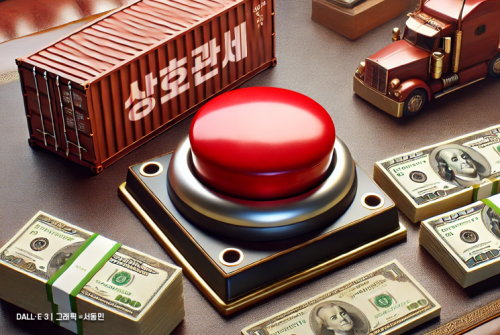 Earlier, the U.S. government officially announced on the 2nd (local time) that it will impose a 25% reciprocal tariff on all products produced in Korea and imported into the United States. This reciprocal tariff, aimed at eliminating discrimination against U.S. companies caused by tariffs and non-tariff trade barriers from other countries, consists of a basic tariff (effective on the 5th) and individual tariffs on so-called 'worst countries' (effective on the 9th). Asia Economy
Until now, Korea had virtually no tariffs because it had signed a Free Trade Agreement (FTA) with the United States. However, before announcing the reciprocal tariffs, the U.S. Trade Representative (USTR) released a country-specific annual trade barriers report at the end of last month, citing import bans on U.S. beef over 30 months old, offset trade regulations in the defense sector, and digital trade barriers as non-tariff barriers.
Amid this, with Korea in a state of national leadership vacuum, the intensification of the global tariff war has triggered an emergency response for Korea's export-oriented economic system. Last year, Korea's trade balance with the United States recorded a record high surplus of $55.7 billion. According to the Korea International Trade Association, Korea's exports to the U.S. last year increased by 10.4% from the previous year to $127.8 billion. Korea's major export items to the U.S. include ▲ automobiles ▲ semiconductors ▲ petroleum products ▲ batteries. According to the U.S. Census Bureau, Korea ranked 10th in import volume in January this year (3.4% of total volume).
© The Asia Business Daily(www.asiae.co.kr). All rights reserved.


















