Three Health and Welfare Laws Passed at National Assembly Plenary Session
Medical Care Assistance Payments to Be Provided Upon Final Acquittal
The amendment to the 'Framework Act on Health and Medical Services,' which mandates that the government-affiliated Medical Workforce Supply and Demand Forecasting Committee review the quotas for medical schools and other medical personnel starting from 2027, has passed the plenary session of the National Assembly.
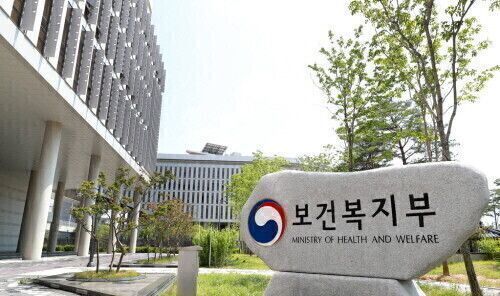
According to the Ministry of Health and Welfare on the 3rd, three laws under the ministry’s jurisdiction, including the partial amendment to the Framework Act on Health and Medical Services, were approved at the plenary session of the National Assembly the previous day.
The partial amendment to the Framework Act on Health and Medical Services primarily establishes an independent forecasting committee under the Minister of Health and Welfare to review the supply and demand forecasts for medical personnel by profession, including the medical school quotas for the 2027 academic year.
The amendment stipulates that the forecasting committee will be composed of up to 15 qualified experts without any government members, with a majority of experts recommended by providers, including medical institution organizations. It also requires the disclosure of meeting minutes, agendas, and forecasting results of the committee, and establishes the basis for designating and operating a Medical Workforce Supply and Demand Forecasting Center to support professional forecasting.
The Ministry of Health and Welfare expressed expectations that "by operating an expert-centered forecasting committee, objective and socially acceptable supply and demand forecasts by profession will be possible."
On the same day, a partial amendment to the 'Act on Welfare of Persons with Disabilities' was also passed. Accordingly, disabled children receiving livelihood or medical benefits will be able to receive disability child allowances without separate application.
The amendment also adds cyber universities and other remote universities to the eligibility criteria for applicants for level 1 and 2 speech therapists, requiring remote universities to complete field practice courses according to standards set by the Ministry of Health and Welfare. Graduates of remote universities who complete additional practice courses as prescribed by the ministry will be recognized as eligible to take the national examination for speech therapists. Those who obtain a related degree from a remote university and then acquire speech therapist qualifications will be recognized as rehabilitation therapists.
Additionally, the amendment establishes the basis for issuing mobile disability registration cards and revises regulations on penalties for fraudulent use. The mobile disability registration card will be piloted by the end of this year.
Furthermore, when formulating comprehensive disability policy plans, matters related to the culture, sports, and tourism of persons with disabilities must be included.
The partial amendment to the 'Medical Care Assistance Act,' which also passed the plenary session on the same day, allows those acquitted by court rulings, such as operators of sham hospitals, to receive previously withheld medical care assistance payments with interest.
These three amended laws will be implemented individually after being submitted to and approved by the State Council.
© The Asia Business Daily(www.asiae.co.kr). All rights reserved.
![Clutching a Stolen Dior Bag, Saying "I Hate Being Poor but Real"... The Grotesque Con of a "Human Knockoff" [Slate]](https://cwcontent.asiae.co.kr/asiaresize/183/2026021902243444107_1771435474.jpg)
















