Prevention of Rice Seed-Borne Diseases Such as Kidaribyung
Sunchang County in North Jeolla Province will operate 21 hot-water seed sterilizers at agricultural counseling centers in each town and township until next month to prevent rice seed-borne diseases such as Kidaribyung and other pests.
According to the county on the 2nd, hot-water sterilization of rice seeds involves soaking rice seeds in water at 60°C for 10 minutes, then cooling them in cold water, sprouting them, and transferring them to seedling trays.
This method is effective in removing pathogens attached to the surface of rice seeds, such as Kidaribyung, rice leaf nematode, rice blast, and bacterial rice grain blight. It is widely known as an eco-friendly rice farming technique because it does not hinder seed germination.
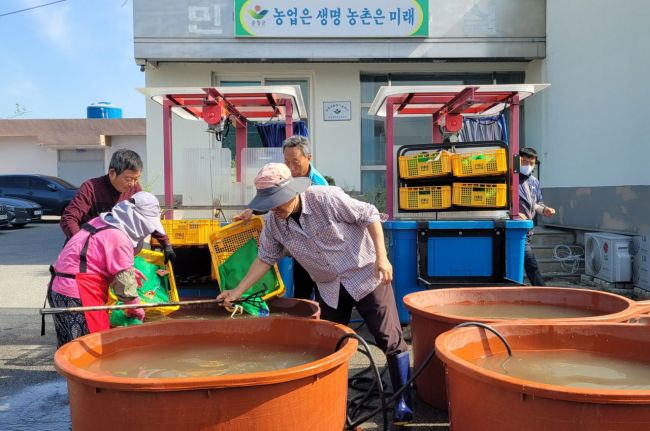 Sunchang County will operate 21 hot water sterilizers at agricultural consultation offices in each town and township until next month. Photo by Sunchang County
Farmers who wish to use the hot-water sterilization service should make a reservation in advance at their local agricultural counseling center and bring their seeds on the desired date for sterilization. Last year, 706 farms participated, sterilizing a total of 120 tons of rice seeds, and the number is expected to increase this year.
County Governor Choi Youngil said, "Combining hot-water sterilization with chemical sterilization can significantly enhance pest control effects compared to using only chemicals. We ask farmers to thoroughly carry out both chemical and hot-water sterilization before sowing."
© The Asia Business Daily(www.asiae.co.kr). All rights reserved.

















