Total Fines Reach 728.7 Billion KRW... Hyundai and Kia Fined 19.1 Billion KRW
UK Also Imposes 148 Billion KRW Penalty on 10 Companies and 2 Associations
On the 1st (local time), the European Union (EU) decided to impose fines totaling approximately 700 billion KRW on automobile manufacturers who colluded for a long time to save costs on the disposal of end-of-life vehicles (ELV).
A total fine of 458 million euros (about 728.7 billion KRW) was imposed on 15 companies. Among them, Hyundai Motor Company and Kia were fined 11.95 million euros (about 19.1 billion KRW).
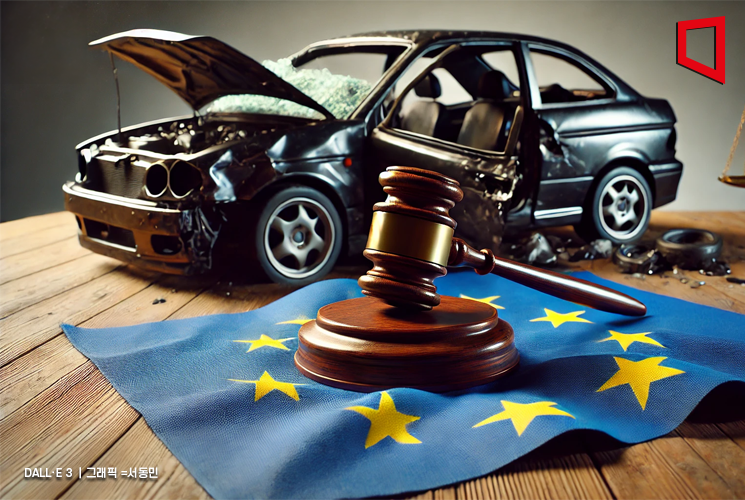
According to the investigation results announced by the EU Commission on the day, the European Automobile Manufacturers Association (ACEA) and manufacturers violated EU-related directives over a period of up to 15 years from 2002 to 2017, engaging in anti-competitive agreements and concerted practices related to ELV recycling. ACEA and the manufacturers were found to have agreed not to pay costs to ELV treatment companies on the grounds that the ELV recycling business was profitable.
The Commission also pointed out that they colluded not to advertise information to consumers about the vehicle recycling rate and the scale of recycled material usage. By doing so, they only needed to comply with the legally required minimum recycling rate.
According to EU directives, the final owner of an ELV-classified vehicle can dispose of the car free of charge through a treatment company. If costs arise, the manufacturer must bear them.
The fines were set differently for each manufacturer based on the number of vehicles violating regulations and the duration of the violation. Volkswagen was fined the most at 127.7 million euros (about 203.1 billion KRW), and Japanese manufacturers including Toyota, which was fined 23.55 million euros (about 3.75 billion KRW), were also included. Hyundai Motor Company and Kia were found to have participated in the collusion from 2006 to 2017.
The Commission stated that all companies admitted to the collusion during the investigation process, resulting in a 10% reduction in fines. Mercedes-Benz voluntarily reported the collusion and was the only involved company to receive a full exemption. Ford, Mitsubishi, and Stellantis were recognized for their cooperation in submitting evidence to prove the cartel investigation and received reductions ranging from 20% to 50%.
The Commission also noted that for Honda, Mazda, Mitsubishi, and Suzuki, the relatively lower involvement in collusion compared to other manufacturers was reflected in the fine calculations.
Theresa Ribera, EU Executive Vice-President for the Green Deal, Fairness, and Competition, said, "No form of cartel will be tolerated, including actions that undermine consumer awareness and demand for environmentally friendly products," adding, "Recycling in the automotive sector is key to achieving the circular economy goals of reducing waste and emissions, lowering external dependencies, cutting production costs, and building a more sustainable and competitive industrial model within Europe."
The investigation, which began in 2022, was also conducted jointly with the UK Competition and Markets Authority (CMA). The CMA announced that it imposed fines totaling 77.69 million pounds (about 148 billion KRW) on 10 automobile companies and 2 related industry associations on the same day.
The fined entities include BMW, Ford, Jaguar Land Rover, Peugeot Citro?n, Mitsubishi, Nissan, Renault, Toyota, Vauxhall, and Volkswagen. ACEA and the UK Society of Motor Manufacturers and Traders (SMMT) were also found to be involved in the illegal agreements of these companies. Among the companies, Ford was fined the most at 18.54 million pounds (35.3 billion KRW), followed by Volkswagen at 14.76 million pounds (28.1 billion KRW), and BMW at 11.06 million pounds (21 billion KRW). Mercedes-Benz also voluntarily reported to the CMA and received a full exemption from fines.
The CMA stated that these companies agreed not to compete in advertising the vehicle recycling rates, which may have limited consumer choice and reduced incentives for companies to invest in eco-friendly initiatives. Additionally, these companies were criticized for not paying third parties for the recycling processing costs of customers' end-of-life vehicles.
© The Asia Business Daily(www.asiae.co.kr). All rights reserved.

















